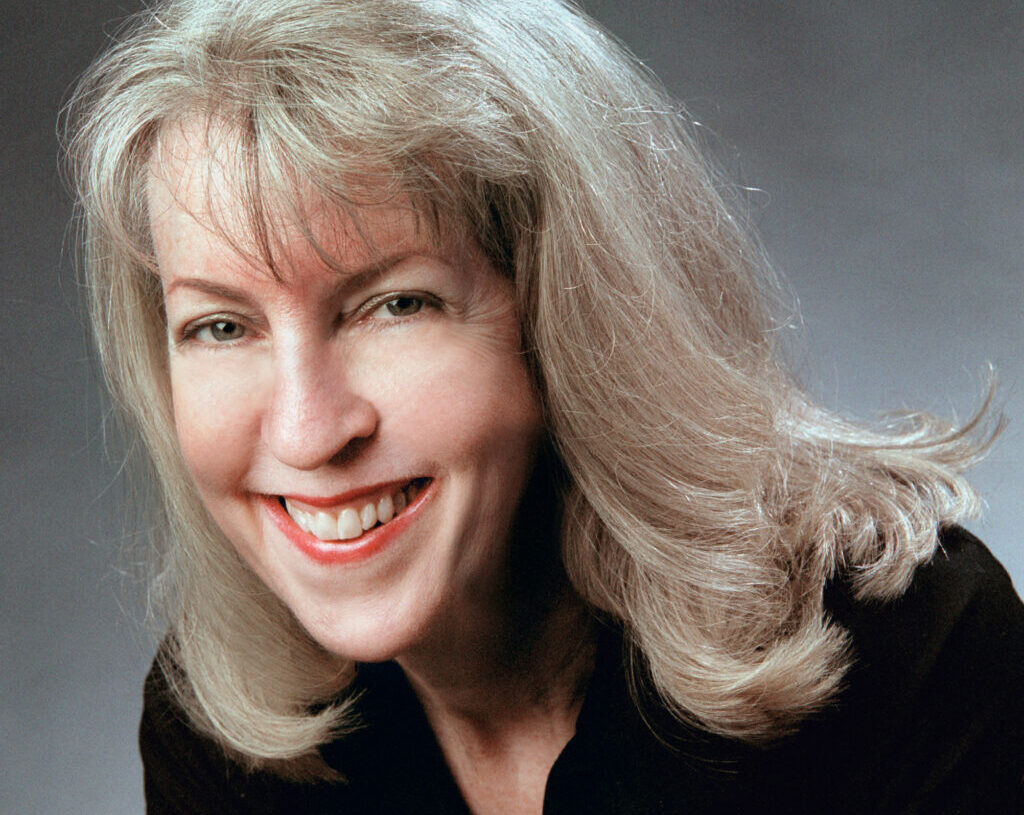
Caryle Murphy, a former Washington Post correspondent whose reporting from Kuwait during the Gulf War earned her a Pulitzer Prize for International Reporting, has died at 79.
The cause was pulmonary fibrosis, said her husband, Herb Howe.
An international correspondent who reported from the Middle East, South Africa and other places around the world, Ms. Murphy was best known for her vivid portrait of a nation under siege after Iraq invaded Kuwait in 1990.
She was one of the only Western correspondents to stay in the country after the invasion, and she filed some of her dispatches while hiding from Iraqi authorities.
“It was a case of an intrepid reporter being in the right place, at the right time, and then having the guts to stay and cover the story until the very end,” said David Ignatius, a longtime Washington Post editor and columnist who as international editor worked closely with Ms. Murphy.
Friends and colleagues say she was also known for her zest for life and adventure, and as a woman who gave her time to young people and those in need and had a strong moral compass.
She spent a month in Kuwait during the invasion, chronicling a war that began as a quarrel over oil money and was seen by many as Iraqi President Saddam Hussein’s attempt to gain control of the emirate’s wealth and install a compliant government.
Once or twice, she rolled a typewritten story into a tube, dressed as a jogger and ran past an embassy, throwing the tube over the wall, Howe said. The embassy then sent the story to The Post so it could be published.
She made it into Kuwait before Hussein’s army attacked and provided a riveting description of a nation caught off-guard, with beaches full of sunbathers and Western expatriates living worry-free.
“The Kuwaiti military was not even placed on alert, in deference to the idea that Saddam should not be provoked,” she wrote in a story dated Aug. 28, 1990, about four weeks after the invasion. “That didn’t change even when the Kuwaitis heard through foreign press accounts — their own papers were forbidden by censors to reveal the fact — that the Iraqis had amassed 100,000 troops on the border.
“It was a fatal mistake.”
Her stories, which also won the George Polk Award for Foreign Reporting, explored the brutal toll the occupation took on the country through fear, instability and lives lost.
“There is hardly a block in Kuwait City, the country’s capital, without a ransacked home or a family without someone killed, or imprisoned at one time,” she wrote a 1991 essay in The Post about her month in-country. “Hundreds were tortured or killed outright. Hundreds more, perhaps thousands, are missing.”
But her reportage went far beyond Kuwait. She is credited by Robert Gersony, a former consultant for the U.S. State Department, with writing an article that helped save lives in Uganda’s Luwero Triangle region as that country’s army tried to quash rebels in the 1980s.
Gersony said he could not get the attention of U.S. officials despite his myriad warnings of the atrocities being committed. Then he heard about a Washington Post reporter who, he was told, would likely be willing to listen.
Nervous and unsure if it spelled the end of his career before it barely started, Gersony met with Ms. Murphy at the Howard Johnson’s motel across the street from the Watergate Hotel in Washington.
She took careful, detailed notes, he said. Her story, which appeared on the front page of The Post on Sunday, Aug. 14, 1984, began like this: “The Ugandan Army has killed or intentionally starved to death thousands of civilians in the past few months as part of what appears to be an officially sanctioned get-tough policy in the Army’s three year old fight against rebels, according to well-informed sources.”
After the story published, Gersony said, “the killings stopped immediately.” Millions of dollars in international relief that had been blockaded started flowing to the Ugandan capital, Kampala.
“She did it because it was the right thing to do,” Gersony said. “Caryle’s journalism changed the history of that country, and saved tens of thousands of lives. She did a hell of a job.”
Ms. Murphy defied the stereotype of a grizzled, hardened foreign correspondent, those who knew her said. She had a gift for connecting with people, loved to socialize and possessed a disarming sense of humor.
Retired Washington Post reporter Carol Morello, a longtime friend and colleague, said she, Ms. Murphy and a third “Carol” — Carol Rosenberg, then a reporter for the Miami Herald and now with the New York Times — once attended a Washington social event for the visiting emir of Bahrain.
To break the ice, Ms. Murphy told jokes that she had learned in Egypt.
The emir, who came from a country where women’s rights were limited, found himself surrounded by three female journalists, laughing delightedly at Ms. Murphy’s quips, Morello recalled.
“That is the type of person and reporter she was,” Morello said. “She was comfortable talking with everybody, no matter who they were.”
To celebrate the engagement of Post reporter Ellen Nakashima, another friend and colleague, Ms. Murphy lured Nakashima to her apartment under the guise of meeting her mother. Then a white stretch limousine pulled up. Inside was champagne on ice.
A chauffeur drove a dozen or so friends around Washington to see the monuments at night, an impromptu bachelorette party. “We had a rip-roaring time,” Nakashima said. “That was Caryle. She loved champagne.”
Ms. Murphy herself married for the first time at 71, after initially meeting Howe in Washington decades earlier. They met again when she was in her late 60s and doing a presentation on Saudi youth at the Wilson Center, Sheridan said. It was love at second sight.
Among the guests at their wedding was Fareed Yasseen, a former Iraqi ambassador to the United States and a close friend. In an interview this week, Yasseen recalled a different wedding, in downtown Washington in 2003, where Ms. Murphy played a pivotal role.
The Iraqi father of the bride was having trouble getting a visa to attend. The soon-to-be-groom contacted Ms. Murphy, who wrote a story about his plight. Days later, the State Department approved the visa.
Colleagues said Ms. Murphy’s empathy and humanity shone through her work, even when the subject matter was disturbing.
In 2004, when she was working in Washington, a distraught man who claimed he had been wronged by the U.S. government after serving as an informant in the Middle East told Ms. Murphy he intended to immolate himself in front of the White House.
“Caryle tried to ease the man’s anxiety, patiently talking to him, reaching out to sources, all to no avail. It all moved very quickly,” said her editor at the time, Gabriel Escobar, now editor and senior vice president of the Philadelphia Inquirer.
Soon, Escobar learned a man had set himself on fire on Pennsylvania Avenue, near the White House.
“I delivered the news to Caryle at her desk,” Escobar said. “I will always remember her reaction. A brief moment of painful reflection, followed by turning to the job at hand, which was writing the story.”
Born on Nov. 16, 1946, to Thomas J. Murphy, a pediatrician, and Muriel K. Murphy, a homemaker, in Hartford, Connecticut, Ms. Murphy graduated from Trinity University in Washington in 1968 and earned a master’s degree from Johns Hopkins University’s School of Advanced International Studies.
She began her career as a freelancer, traveling to Angola during that country’s civil war. She also reported for The Post from South Africa and served as the Cairo bureau chief in charge of Arab world coverage.
She left The Post in 2006 and spent three years as a freelance journalist in Saudi Arabia, writing for the Christian Science Monitor, Global Post and The National. She was a public policy scholar at the Woodrow Wilson International Center for Scholarship in 2011 and 2012.
Ms. Murphy was the author of two books, “Passion for Islam: Shaping the Modern Middle East: The Egyptian Experience,” and “A Kingdom’s Future: Saudi Arabia Through the Eyes of its Twentysomethings.”
She took a great interest in young people, friends said. She brought her two nephews on river rafting trips in the Grand Canyon and took her goddaughter to shows every Christmas for years.
She volunteered with Moms Demand Action, which pushed for an end to gun violence. More recently, she and her husband delivered food to Latino families in Washington who were staying home to avoid the Trump administration’s immigration crackdown.
In addition to her husband, Ms. Murphy is survived by two sisters, Karen Burke and Colleen Kirchgessner, and two brothers, Kevin Murphy and Kenan Murphy.
Howe said his wife’s ashes will be spread at the base of a tree in Cape Cod, a place where she and her family spent many summers by the sea.
“I like the image of Caryle still giving life after she dies and these branches reaching up into the sky,” he said.
The post Caryle Murphy, who won the Pulitzer Prize reporting from Kuwait, dies at 79 appeared first on Washington Post.