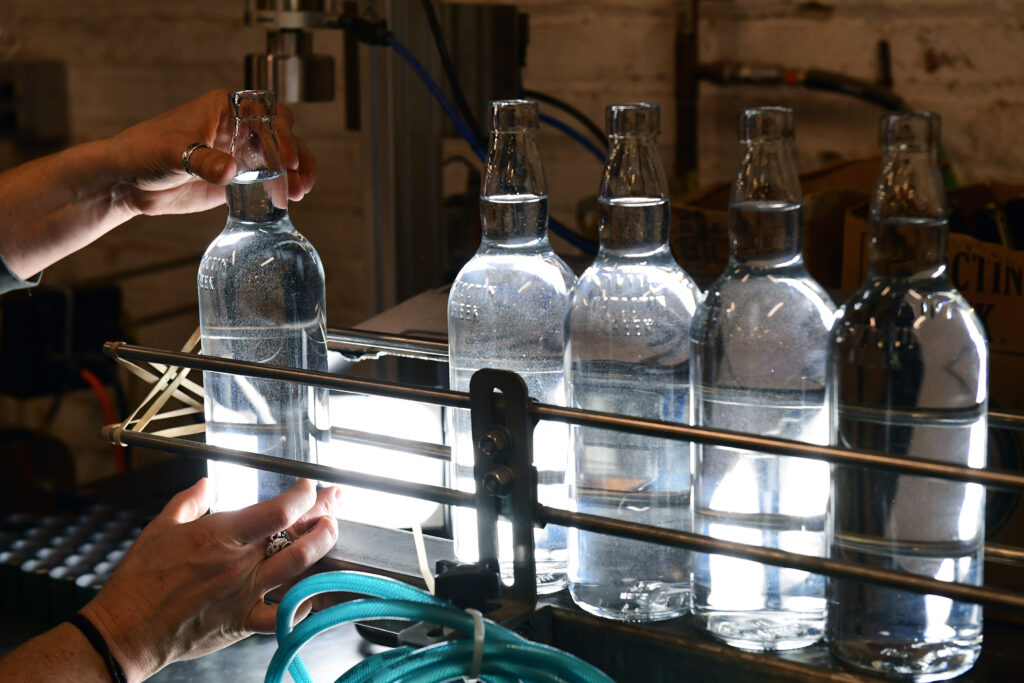
It’s been nearly 160 years since you could distill liquor at home without breaking federal law, but Americans may soon toast an end to that era. The Supreme Court announced Monday that it will consider whether Congress exceeded its authority by banning the practice in 1868.
The Constitution enumerates limited powers for the legislative branch. One is that Congress may “lay and collect Taxes,” as it has on distilled spirits since the early days of the republic. But legislators went further amid pressure from the temperance movement by enacting an outright ban on home distilling. The penalties: up to $10,000 in fines, five years in prison or both.
Lawmakers in 1868 worried that citizens would evade paying taxes by making whiskey at home, and the government today argues in Department of Justice v. McNutt that the ban merely exercises Congress’s power to make laws “necessary and proper” to levy taxes. But Scott McNutt, who wants to “tinker around” with home distilling, argues that the archaic law reaches beyond Congress’s authority because outlawing activity that could be taxed does not help collect revenue.
The government’s logic runs afoul of the Constitution, and its policy reasoning is at loggerheads with economic freedom. The presumption in a free society should be that Americans may make and sell lawful products unless the government has a compelling reason to prohibit them. Administrative convenience is not such a reason. The possibility that some people might evade a tax hardly justifies a federal prohibition on every other American from engaging in an otherwise legitimate activity.
The U.S. Court of Appeals for the 5th Circuit agreed with the hobbyists in McNutt. The ban aims to “reduce revenue instead of raising it,” the court said, and allowing the law to stay on the books would “expand the federal government and necessarily infringe on state sovereignty.” In a similar case from Ohio, however, the U.S. Court of Appeals for the 6th Circuit said that “evading excise taxes on liquor has been nearly a national pastime,” and the home ban is therefore necessary.
If the government prevails at the high court, the justices will have ratified a new, expansive federal power to regulate all kinds of conduct. If Congress can justify a ban on home distilling as preventing tax evasion, what is the limiting principle? As Jarrett Dieterle of the Manhattan Institute asked in our pages this summer: Would preventing the misuse of home-office tax deductions “justify a federal crackdown on remote work?”
Federal law lets Americans make up to 200 gallons annually of beer and wine at home without paying federal excise tax. Why is fermenting grapes fine but distilling the resulting alcohol a felony?
Today’s successful craft-distilling industry underscores why Uncle Sam needs to get out of the home still. Businesses often start as hobbies in garages, kitchens and workshops. Regulations that turn fun experiments into federal crimes protect incumbents from competitors and make it harder for entrepreneurs to get started.
The high court’s ruling could have even broader consequences if it addresses another justification offered by the government. At the district court level in McNutt, the Justice Department said Congress’s power to regulate commerce “among the several states” allows a ban on homemade liquor. That’s a broad claim to authority, but the court has repeatedly allowed similar power grabs under the Constitution’s commerce clause. In Wickard v. Filburn (1942), the court let Congress regulate how much wheat a farmer could grow for his own consumption, even if it never made it to market.
The justices probably took up this case to resolve the circuit split on the “necessary and proper” reasoning, and striking down the distilling ban would be good on its own. But this case gives the court the ingredients for a stronger constitutional cocktail, if it wants to shake up, or stir, commerce clause jurisprudence as well.
The post Let Americans make their own whiskey appeared first on Washington Post.