This feature is from THE SELF-DESTRUCTION ISSUE of VICE magazine. Find it in a store near you, or get 4 issues each year sent straight to your door, by subscribing.
The Yakuza is shrinking.
From approximately 180,000 members in the 1960s, an official 2024 estimate placed numbers closer to 18,000. Aggressive legislation has isolated members economically, removing their bank accounts and restricting where they can live and travel. Once inside the crime organization’s rigid structures, leaving is nearly impossible, and the traditional irezumi full-body tattoos that once symbolized endurance and status have become social shackles as owners have been banned from public spaces including baths and gyms. Today, the Yakuza exist in what some describe as a “golden cage,” bound by loyalty and trapped by regulation. All the while, Japan is changing, through technological acceleration, demographic decline, and increasing influence from outside cultures. So, how exactly does an ultra-traditional criminal brotherhood established in the 17th century survive the emerging world?
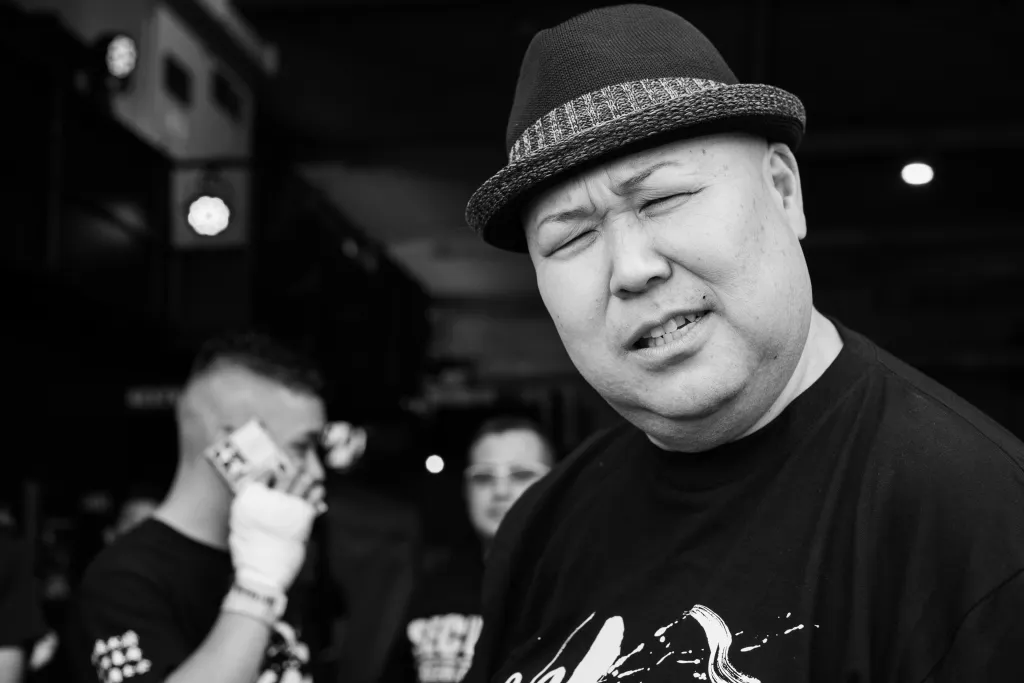
Part of the answer lies in combat sports. For the new Yakuza generation, MMA provides visibility, legitimacy, and a route to wealth, as well as an arena where gang ties help rather than hinder. Fighters’ entourages arrive openly sporting crime-family crests and cash-filled envelopes circulate before bouts. In a combat context, the elements of Yakuza culture that have fascinated observers for centuries—the mythology, the symbolism, the ceremony, the tattoos—all add to the theater.


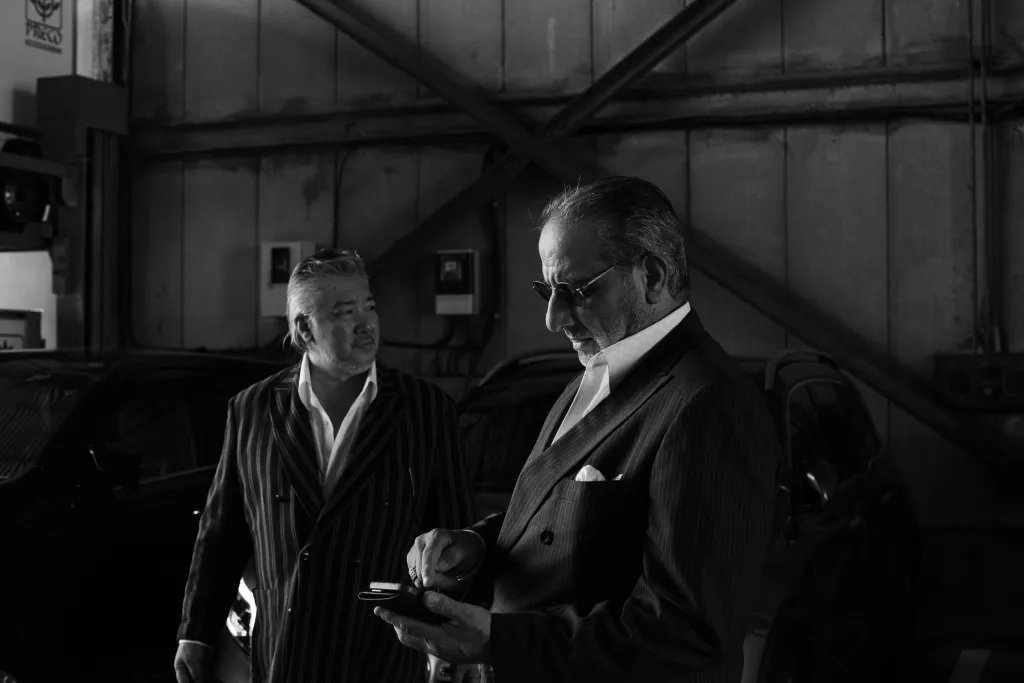
My entry into this world of competitive Yakuza fighters came through Mario Luciano. A New York-born Italian allegedly descended from “Lucky” Luciano, one of the founding fathers of the American Mafia, Mario arrived in Japan in his early twenties. He now owns a members-only Italian restaurant in Tokyo, which is exactly as you would imagine: checkered red-and-white tablecloth, Dean Martin over the speakers, walls lined with framed photos of politicians and celebrities. But other pictures show him fraternizing with high-ranking Yakuza bosses, including figures affiliated with the Yamaguchi-gumi—Japan’s largest and most powerful Yakuza syndicate. At one point, while reaching for a glass, I noticed a Carl-Gustaf rocket launcher concealed by a row of bottles. Outside, Mario’s brand new Bentley had a bulletproof vest in the back seat.
Through Mario, I met Miyamoto-san, a former member of the Sumiyoshi-kai, Japan’s second-largest Yakuza family. He had performed yubitsume: the ritual severing of part of a finger as penance. “He’s not a good pianist anymore,” joked an acquaintance. Today, he manages the promising MMA careers of his son Ryuko and daughter Rei, as well as a fighting organization called Kiokushikai, which is growing fast.
He invited me to his home. The walls were reinforced with steel to deflect bullets. Inside, he showed me his collection of bōsōzoku motorcycles and openly discussed his ambitions in cinema. He was affable and charismatic.

As the traditional syndicates contract, something looser is emerging. Decentralized groups—fluid, digitally coordinated, less formal—are taking shape. These networks lack the theatrical visibility of the old guard. No elaborate sake ceremonies. No public-facing headquarters with brass nameplates. No irezumi, which in the glory days of yore were created with toxic pigments and unsanitary methods to which some older Yakuza attribute their liver disease. Instead: encrypted chats, financial scams, and temporary alliances between criminals hiring through small job websites. The term used to describe this new breed is Tokuryū: anonymous, semi-organized actors operating in the gray area between gang and network. The transformation is not cinematic. It is bureaucratic, digital, and quiet.
For younger generations, it makes increasingly less sense to submit to a lifetime of surveillance and restrictions when digital anonymity offers faster profits with less risk. The mythology of the Yakuza—immortalized in film and romanticized abroad—belongs to a fading structure. The question is not whether organized crime in Japan will survive. It is whether the Yakuza can survive in a world that rewards invisibility.
The age of the tattooed patriarch may be coming to an end. The age of anonymity has already begun.


Arnaud’s new VICE documentary about the Yakuza, Tokyo Sunset, is coming late 2026.
This feature is from THE SELF-DESTRUCTION ISSUE of VICE magazine. Find it in a store near you, or get 4 issues each year sent straight to your door, by subscribing.
The post Tokyo Sunset: Golden Age Turns to Gilded Cage for the Yakuza appeared first on VICE.