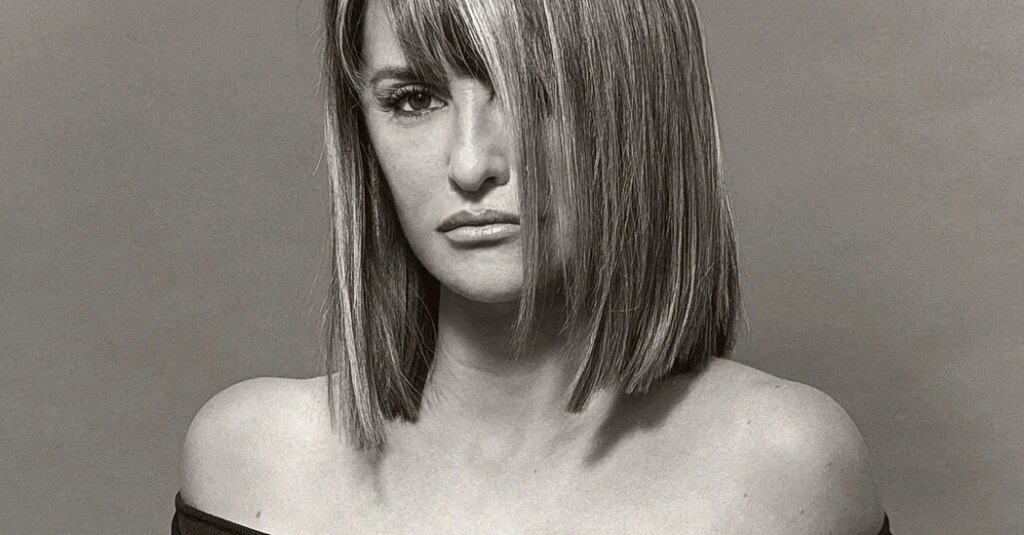
“There’s nothing that ruins a movie like a bad wig,” the director Olivia Wilde said. So when the actor Penélope Cruz told her, about two weeks before they started shooting “The Invite,” that she wanted to make her character blond, Wilde felt she might have “a full-on heart attack.”
During the 10 days that they rehearsed the film — a comedy involving two couples at a swinging dinner party — Wilde, who also stars in the film, encouraged the actors to be the architects of their characters. She and Seth Rogen took the lead on developing her anxious stay-at-home wife and his embittered music teacher, while Cruz and Edward Norton fleshed out her acerbic sex therapist and his unbuttoned former firefighter. Cruz consulted with the popular psychotherapist Esther Perel to ensure that her character’s marital wisdom rang true. This building phase was over, however, when Cruz told Wilde that she wanted to go blond.
At first, the director tried to persuade Cruz that no changes were needed. Everything was already terrific! But Cruz insisted, Come see it.
“Olivia kind of grabbed me by the elbow and said, Will you come look at something with me?” Norton recalled. “We walked down the hall and we turned the corner and Penélope was sitting there in the wig and our jaws just hit the floor because it was like, Oh, she’s gone, and there’s this thing here — this Spanish Esther Perel.”
“I just watched her shape-shift,” Wilde said. “She took a character that could have simply been alluring and enigmatic and made her surprising and unpredictable.” That shift seeds the movie with a tension that makes viewers eager to laugh.
Creating explosive, original comedy doesn’t just happen, Rogen emphasized. Actors have to make it happen. “And you have to make it happen in a way where it does not look like you are trying to make it happen,” Rogen added. “Penélope is someone who can do that.”
This year Cruz, who is 52, appears in three starkly different roles that showcase her astonishing virtuosity. In this summer’s “The Invite,” she displays cool comic timing and a gift for deadpan delivery. In Javier Calvo and Javier Ambrossi’s historical drama “La Bola Negra” (“The Black Ball”), which arrives in theaters this month, she sings and dances with aplomb. And in Florian Zeller’s upcoming thriller “Bunker,” she smolders as a book editor losing faith in her famous husband. Cruz dialed down her acting schedule for several years after having two children. Now it appears that becoming choosier about when and with whom she works has allowed her to make another leap forward in her capacities.
Late one evening in California, I met Cruz for dinner at the Beverly Hills Hotel. She arrived in a black baseball cap, a leather jacket, jeans, flip-flops and minimal makeup. “I’m like a rag,” she told me as she sat down at our table on the patio. “I came straight from the production.” She’d spent all day and evening shooting a new movie with Nancy Meyers.
In person, among the flowering bougainvillea and fairy lights, Cruz was warm, gentle and watchful. We spoke mostly in Spanish so that she could articulate her thoughts more fully. As we chatted, I could feel her trying to read me, even as I was trying to read her. It reminded me of some of the dinner conversations I’ve had with professional psychologists, when they never quite turned off their powers of observation.
Like Brigitte Bardot and Sophia Loren, Cruz has an iconic look that she deploys in many of her best-known films. Bold eyebrows. Eyeliner and mascara heavily applied and smudged. A radiant smile edged in pink lipstick. Significant cleavage. Big, messy hair. The whole effect suggests beauty that can’t get a rest. The apogee of this look was created by the makeup artist Ana Lozano for Pedro Almodóvar’s 2006 film “Volver,” where Cruz appears as a hard-working single mother. With Lozano’s help, Cruz has reprised versions of this unkempt siren in seven other films, including “Vicky Cristina Barcelona,” “Nine” and “Pirates of the Caribbean: On Stranger Tides.”
Unlike many legendary actresses, however, Cruz loves tossing her glamour aside. She dons a huge auburn wig to play a sadistic film director in the 2021 satire “Official Competition.” She turns into a sleek, stiff blonde to play Donatella Versace in the “American Crime Story” series “The Assassination of Gianni Versace” (2018). She goes bald and appears topless with a mastectomy to play a cancer patient in “Ma Ma” (2015).
“I choose to work with people who will make those decisions from the same place I do: What does that character need?” Cruz told me. “It’s not ‘Does that look good on me?’ That, luckily, doesn’t matter to me.”
Cooking, I learned, is her favorite metaphor for interpreting a character. “It’s like making a soup,” Cruz said. “I have an empty bowl that needs to be filled with things.” Her first ingredient is always a good script. Without one, she noted, it’s tough to work miracles. After that, she keeps adding elements: talking with people who remind her of the character, traveling to a museum to study a painting, listening to particular songs. If the character is based on a real person, she’ll study hours of video. Personal experiences also go into the soup, she said, but their flavors don’t get special preference. Costume decisions, like a wig, help, too. “You keep throwing ingredients into that soup and suddenly, if there’s luck, one day it clicks,” she explained. “You’re located in a spot where that person to whom you’re going to give life is already in you.”
Cruz is such a naturalistic actor that it’s easy to overlook how much intelligence and effort she pours into her performances. She has been nominated for 14 Goya Awards (Spain’s equivalent of the Oscars) and won three. She has been nominated for four Academy Awards and won for best supporting actress in Woody Allen’s “Vicky Cristina Barcelona,” where she plays a temperamental painter totally unlike herself. Yet people still describe Cruz as an intuitive actor, as if a career as varied as hers could be made from gut instincts alone. In fact, Cruz’s training as a performer began at the age of 4, when she began studying ballet, a practice she continued until she shot her first movie at 17. And her training as an actor began when she was 14 and continues to this day.
Her first teacher, Cristina Rota, fled Buenos Aires in 1978, after her partner was disappeared by Argentina’s military dictatorship. Settling in Madrid with her three children, she established an acting school, where Cruz began studying in 1988.
In Argentina, Rota had studied with the renowned acting teacher Hedy Crilla, who had escaped Nazi Germany via France and landed in Buenos Aires in the 1940s with the Comédie Française. “She brought Stanislavsky, Grotowski, Lajos Egri to us firsthand,” Rota recalls in her memoir, describing how Crilla imported naturalistic acting methods to Argentina.
About a year into her studies at Rota’s school, Cruz took on Jean Genet’s play “The Maids.” In it, two sisters take turns playing a scathing game of master-and-servant while their rich, hated mistress is out of the house; one of them ends up dead. “It wasn’t very logical material for someone of that age, but it stirred a lot of things in me,” Cruz said. She spent a year obsessively preparing all three parts. When she performed it in class, Rota’s tears persuaded her to stick with acting as a career. “I’ll never forget that day,” Cruz said. “It was like an injection of self-confidence.”
Her big break arrived in 1992 with the cult director Bigas Luna’s movie “Jamón Jamón.” Nominated for six Goyas, this semi-explicit art house film, in which Cruz plays the daughter of a small-town prostitute, was a sensation in Spain. Cruz was only 17 when she shot the sex scenes. Yet even at that young age, she brought a luminous sadness and vulnerability to the role of a teenager who yearns for love but becomes an object of predation.
Javier Bardem — the handsome scion of a prestigious, left-leaning film family — also stars in the project, as a callous gigolo looking to escape poverty. The two actors were not romantically involved during “Jamón Jamón” and did not become partners for another 16 years, after they worked together on “Vicky Cristina Barcelona.” Yet the scene where Bardem roars up and down a dirt road on a new motorcycle while Cruz walks along its edge, refusing to get on his ride, has become a classic in Spanish cinema. She carries a basket of groceries and wears a short red dress and espadrilles. She smiles only when he can’t see her face.
During the press tour for the film, and for years afterward, male journalists leered at the young Cruz, one speculating about whether she’d added silicone to her breasts. After “Jamón Jamón,” she rejected roles that required her to bare her body. This decision probably saved her career, countering the rush to typecast her as a sex kitten.
“It was really confusing, and there were a lot of people who were like, Are you crazy?” she told me. They predicted that she was ruining her future. “My heart is telling me that right now the noes for the things that I don’t feel are right for this moment are going to actually extend my career,” she recalled. “But it was like betting in a very dangerous casino.”
Fortunately, before “Jamón Jamón” hit theaters, Cruz’s agent, Katrina Bayonas, tricked the director Fernando Trueba into considering Cruz for the part of a girlish virgin in his 1992 comedy, “Belle Époque.” When Bayonas first suggested Cruz, Trueba refused to audition her. Cruz’s early work in television and music videos made her look like a “sex bomb,” he told me, and he needed an innocent.
So Bayonas offered to record a bunch of her young clients performing a scene from his script and to send him the tape. Trueba had never done this before, but it sounded like a smart way to save time casting a small part. Bayonas put Cruz in the middle of the tape. When she appeared, Trueba stopped the video in frustration. He’d told Katrina he didn’t want Penélope!
“Then I hit play and watched the audition,” he told me. “Then I stopped. Rewind. I watched the audition again. I stopped. I watched it three times in a row. You’re an idiot. Why did you have this prejudice? She’s incredible. She’s perfect.”
The sulky teenager trapped in bows, ponytails and Peter Pan collars was a supporting role in Trueba’s film. But for Cruz, it was decisive. It proved she had dramatic range and comic timing. “Belle Époque” won nine Goya Awards and an Oscar for best foreign language film. In 1998, Trueba also brought Cruz her first Goya Award for best actress with another tremendous comedy, “The Girl of Your Dreams.” (Think “The Producers” set in Nazi Germany with Spanish actors.)
Since then, Cruz’s movies often have landed in opposing pairs, as if she’s fighting to never be trapped in one type of role. The outrageous success of her first two films also drew her closer to her family. In her early 20s, as her career took off, she moved back into her mother’s house, where she lived with her two siblings. At that age, she explained, success can really disorient you. “But there, again,” she told me, “family is what saves you.”
The Princess of Wales Theater in Toronto was thick with emotion as “La Bola Negra” ended. In the dress circle, where I sat one night in September, there were tears and gasps and the pressing of hands into faces. People near me stood up and started clapping in the darkness as the credits rolled, even before the theater’s lights came up and the whole audience rose to their feet. Five days later, the film received the Toronto International Film Festival’s People’s Choice Award.
The power and beauty of “La Bola Negra” are hard to overstate. Some of its shots could hang in the Prado Museum next to paintings by Francisco de Goya and Jusepe de Ribera: a truck bed full of gray bodies splattered with red, a man asleep in a hospital bathed in a shaft of golden light. The film is set in three time periods: right before the Spanish Civil War, during the war and 80 years later in contemporary Spain. It is at once a war drama, a romance, a tragedy and a mystery.
Above all, “La Bola Negra” is an ode to the poet and dramatist Federico García Lorca and an examination of the ways in which Spain has punished and hidden loving relationships between men. Early in the film, a father in Andalusia recalls seeing the body of a gay teenager left to rot in public for 100 days, after a group of young men dragged the victim through the streets and drowned him in a trough. “Outside this door,” the father warns his son, “you must be what you must be.”
Cruz’s part in this two-and-a-half-hour masterpiece runs only about 10 minutes — but you feel it like lightning. Ambrossi and Calvo told me they wrote it for her after they received a call from Bayonas last year. By then, the directors — who were once a couple and are fondly known as Los Javis in Spain — had already established themselves as some of the country’s hottest talent with two television series: a sexy biography of the transgender pioneer La Veneno and a surreal musical thriller, “La Mesías” (“The Messiah”). Bayonas knew Cruz wanted to work with them.
“After that, Javi and I turned over everything,” Ambrossi said, “to create a universe, a minifilm for her, so that when she read it, it would be sufficiently rich so that she would say yes.” They were inspired, in part, by a moment Calvo loves in Francis Ford Coppola’s “Apocalypse Now,” when three Playboy models arrive by helicopter and dance for an audience of soldiers, giving them a brief escape from the horrors of the Vietnam War. Cruz’s character, Nené Romero, is a cupletista, one of the bawdy cafe singers popular in Madrid during the 1920s. She performs for an army unit that’s on leave from a military hospital and interrogation site. Sashaying like Mae West, tossing out double entendres, Cruz incites the soldiers with a confident eroticism.
She’s also nearly unrecognizable. Her dark hair is marcelled flat against her head; her eyebrows are drawn pencil thin. Even her voice is different. Cruz loves mastering accents. Over the years, she performed roles in Colombian, Cuban and Andalusian versions of Spanish, as well as in Italian and in English accented by Italian. Altering your speech patterns, she says, is a portal to complete immersion in a character.
“You have months of research and hard work to grasp it and be able to do it even asleep,” she explained, “but then it also creates a distance for you with yourself that makes it easy to fly and step into another’s shoes.” Cruz spent months studying video and audio recordings of cupletistas and practiced her lines with Olga María Ramos, the daughter of a famous cupletista, to learn the high, round and elaborately precise enunciation favored by these singers. She worked with the choreographer Belén Martí Lluch as well to perfect her two song and dance numbers, one of which starts on a moving army tank.
Cruz also appears in a more vulnerable scene. Between acts, Nené turns tricks offstage to survive, and the violence of her last john has left her furious and shaken. A young soldier named Sebastián — played with poignant naïveté by the pop star Guitarricadelafuente — watches her from a stairway. She senses instantly that he isn’t looking for sex. Still recovering from her previous encounter, Nené invites him up and beguiles him with stories about Madrid’s cabaret life and its performers, introducing Sebastián to the existence of a place where men may transform themselves into women and sleep with other men. In Madrid before the war, she explains, “we lived happily in mortal sin.”
Sebastián lights up as if he’s been tapped with a wand. It’s a fairy godmother moment. But for anyone familiar with the history of 20th-century Spain, it’s also tragic, because when Franco and the Spanish fascists won the civil war in 1939, they burned Madrid’s feminist and gay subcultures to the ground.
“This type of woman lived in a world where they believed they would always be free,” Calvo said. “Then came the dictatorships. They were hunted. They were jailed. Some disappeared. So she reminds Sebastián that there exists this possibility, but she also reminds us that there’s a possibility of losing it all.”
Cruz read the entire script when deciding to take the part. “Even if it was only one scene, I needed to be part of something like this,” she told me. “It seems to me that they’ve created something almost revolutionary, something so profound.”
Among the ideas that Rota tried to teach her students is the belief that theater serves an important social function. “The artist is the one responsible for mobilizing and energizing society,” Rota told me. Cruz’s feelings on this topic are complicated. In Toronto, she insisted that she doesn’t go looking for characters who share her opinions. Yet she has a long history of signing on to projects that portray gay relationships sympathetically, or that recall how fascism once dominated Spain. In Trueba’s 2016 film “The Queen of Spain,” she plays a movie star who literally talks back to Franco.
“La Bola Negra” showcases both these issues. The movie’s last line — “Watch out, they’re still stalking us” — is taken from a love poem that García Lorca wrote in the 1930s, not long before he was murdered by Spain’s far right. It is incredible, Cruz noted, that almost a century later the line still resonates. “How true it is,” she told me.
When Nené drags off her brunette wig and stands at the top of the stairs with her shoulders slumped, Cruz makes you feel the devastation that is still to come for Spain. Sebastián doesn’t catch the shift. He’s too smitten with the vision of a liberated life. He’s going to move to Madrid after the war, he declares. “Sure,” Nené says, with a brave smile. “We’ll see each other there.”
The first time I saw Cruz in person, she was on set for Pedro Almodóvar’s 2021 movie, “Parallel Mothers.” Her role, as a single mother who might lose her only child, was harrowing for her, and she was so consumed by it that she couldn’t talk to press. But I watched Almodóvar shoot Cruz’s close-ups as she ran through a tricky bit of dialogue at a kitchen table. She had to move from hope to sorrow and back again in just a few lines, finishing with a smile and eyes that brimmed with tears.
Earlier, when Almodóvar rehearsed Cruz and her co-star Milena Smit, he’d given them directions in a soft voice as they ran through their lines. He said almost nothing to Cruz now as they did three takes. Again and again, Cruz smiled, slipped into the difficult memory, reached the point of moist eyes, and never dropped a tear. It was like watching a ballerina perform fouettés, spinning circle after circle on one leg with perfect control.
“Will you let me do one more?” she asked Almodóvar after the third take.
“Of course.” This time he revised one of her lines, adding three words that gave Cruz one more beat to dig into the sorrow. Action! Her mouth, eyebrows and voice refracted the emotions — joy, grief, hope — like a prism splitting white light into colors. Cut.
Cruz and Almodóvar began working together in 1997. After seeing her in “Jamón Jamón” and “Belle Époque,” he gave her a small part in “Live Flesh” when she was 23. Set in 1970, when Franco declared yet another state of emergency that snatched away citizens’ basic civil rights, the story features Cruz as a sex worker who goes into labor on a bus during a citywide curfew. During her seven minutes onscreen, she doesn’t get to do much more than moan and sweat, but she does it so convincingly that Almodóvar went on to cast her in six more films, assigning her bigger and bigger parts.
“There’s a lot of chemistry between us, as actor and director,” Almodóvar wrote me via email. “When she gives herself, she’s a miracle. To my films, her characters have brought passion and truth.”
Almodóvar’s superb direction and writing helped Cruz develop into a virtuoso who can deliver an octave of emotions in a few beats. But she has not relied on only him to keep extending her prowess; her overall approach to acting is patterned on the dance training she received as a child. In her adolescence, she often danced four hours a day, learning to perform with a smile even when her feet were bleeding. Great ballerinas train ferociously, yet give themselves over to something more soulful when they take the stage. This is Cruz’s method, and her most frequent partner in this process is the acting teacher Juan Carlos Corazza, another émigré to Madrid from Buenos Aires.
In 2008, Cruz approached Corazza, who also taught Bardem, about helping her prepare the role of María Elena for “Vicky Cristina Barcelona.” By then Cruz had already crossed over to Hollywood — starring in both “Vanilla Sky” with Tom Cruise and “Blow” with Johnny Depp in 2001 — and had already won more than a dozen awards in Europe and North America. Yet she was still determined to get better.
Since 2008, Corazza has helped Cruz prepare roughly half her roles. “I think Penélope is always developing a way to embody the character, to capture the physicality of the character,” Corazza told me. “A characteristic of our work, of our creative relationship, is humor. It’s to play and to do the most, let’s say, horrible versions, the most awkward, and also to search for the most refined.”
Defining specific physicality for each character is part of what makes Cruz’s performances so compelling. The brusque, pained movements she found for the suicidal painter María Elena, for example, are nothing like the smooth, assertive gestures she gives the therapist in “The Invite,” who often stands with one hand on her hip — or the depressed walk she adopted for Laura in Michael Mann’s “Ferrari” (2023). Each of her performances is a soup made from scratch, though all her women convey dignity and resilience.
Cruz and Corazza analyze scripts together to identify the contradictions in characters. Corazza honed this approach by studying Anton Chekhov, whose plays, he noted, inspired the revolution in acting that Stanislavsky codified. “He doesn’t condemn the character, but he doesn’t save them either, and that’s difficult,” Corazza explained. “Penélope is always ready for the game of ‘Let’s not save her so much, let’s not idealize her, and let’s not condemn her either.’”
Cruz speaks of Rota, Almodóvar and Corazza with reverence. She keeps growing as an actor, it seems, because she loves assuming the role of protégée. She likes to visit Corazza’s school when they work together. “I often go there with my notes and my backpack to study and I’m happy,” she said. “Happy because you always have the chance to keep being the student in this profession.”
“I know she feels safe when she is protected behind a character,” the director Florian Zeller told me about Cruz. In his new film “Bunker,” however, he wanted her to try a different approach, one that placed a greater emphasis on using emotions derived from lived experiences. As part of that process, he cast Cruz and her husband of 17 years, Javier Bardem, as a book editor and an architect who have also been married 17 years.
“It was not about telling their story, of course,” Zeller clarified. Sofía and Miguel, the couple in “Bunker,” face challenges that are entirely fictional. “What we were trying to catch was something that smells like the truth, you know?”
As Sofía, Cruz gives one of her most restrained performances to date. Her demeanor is gentle, elegant, almost soft, yet even in this subdued mode Cruz performs with an intensity that makes her mesmerizing. She conveys her disappointment in her husband, and her growing attraction to an American author, in micro-expressions. When she gives a small smile to her phone while typing a text message, you feel she’s winked at the camera.
The tension between Sofía and Miguel crystallizes when a tech billionaire asks Miguel to design a palatial end-times bunker. The idea repulses Sofía. “Don’t you think it’s the most disgusting thing of our time?” she says when Miguel describes the project. These tech moguls have destroyed our world, she argues, and rather than use their riches to fix what they’ve smashed, they build fortresses that isolate them further from the conditions of ordinary people. “What’s the point for you as an architect?” she demands.
Zeller might have been interested in slipstreaming behind the emotions of Cruz and Bardem’s marriage, but Cruz herself seemed more interested in a different kind of realism: expressing her own outrage at the way technology has undermined human relationships and professional futures. “When a kid of 18 is now deciding what career he wants, first he has to ask himself: Which ones will be left? Which ones won’t be replaced by robots? By [expletive] robots,” she told me in Toronto. “So my blood boils with these issues.”
Cruz is a deeply private person, so it’s hard to discern the source of her ethics. When I asked, she would say only that her values come from her family. Her maternal grandfather might have been disappeared by Franco’s fascists. Her father was a salesman and loved to sing. Her mother was a hairdresser who played Tchaikovsky for her children. Growing up on the outskirts of Madrid, Cruz loved to spy on the women who frequented her mother’s salon. Camouflaged by schoolbooks, she studied them as they got their hair done and eavesdropped on their conversations. “I think they came, above all, to talk and to tell her their secrets,” Cruz said. She especially liked to listen for what they tried to hide. “I was always trying to figure out, What are they not saying?” Even as a girl she was honing a way of dissecting human behavior, noticing how women communicate not only through words but also through fleeting gestures and facial expressions, though silences, sighs and style.
These days, she says, her own children, Luna and Leonardo, are her top priority. She turns down projects that would require her to leave them for long stretches, preferring to shoot films in Madrid or during their breaks from school, when the family can travel together. She shot “The Invite” mostly during their Easter break, prepared “La Bola Negra” in Madrid while they were in school, and shot “Bunker” in a set that Zeller constructed 20 minutes from their home.
“She’s a very shy and very introverted and extremely un-egotistical person,” said Edward Norton, Cruz’s co-star and friend of more than 20 years. She’s also a disciplined artist who has shrewdly captained her own career. As Corazza would say, contradiction is what makes us human.
While we were in Canada, Cruz received a Special Tribute Award at a gala dinner held by the Toronto International Film Festival. During her acceptance speech, Cruz barely spoke of her work. Instead she paid tribute to Wilde, Zeller, Ambrossi, Calvo and Almodóvar. And she swerved off script to recognize Rogen in the crowd. “Seth, I know you’re there,” she called from the stage in a Garatti diamond necklace and black Chanel gown. “Don’t go without seeing me.”
During the dinner intermission, after the selfie requests and the crush of well-wishers subsided, Cruz made her way to a table Netflix had reserved for the cast of “La Bola Negra.” There she sat for a few minutes with Calvo and Ambrossi, who won the best director award at the Cannes Film Festival in May. The men have long been celebrities in Madrid, but their triumph at Cannes catapulted them to international fame. It was a little overwhelming, Ambrossi told me. He’d need to get away from all the red carpets before he could make sense of it all. But in Toronto they seized the opportunity to ask Cruz for advice. “She’s very discerning,” Calvo explained to me later. “And above all she has golden instincts.”
After hearing their ideas for the future, Cruz reassured them. “Don’t worry,” she said. “You’ll be fine because you’re good people.” She knew what kinds of temptations awaited them. The most important thing was to hold fast to your values. Then Bardem stood up at a table closer to the stage and held a plate of food high beside his head. He and Cruz had operated almost entirely independently at the gala, but the gesture showed he’d been thinking of her nevertheless. She needed to eat before they took away her plate. Ambrossi stood and offered Cruz his arm. They made their way through the concert hall, under the chandeliers, guests turning to admire them as she walked past.
Stylist: Freddy Alonso; Hair and makeup: Pablo Iglesias. Marcela Valdes is a staff writer for the magazine who has also written about the directors Pedro Almodóvar and Alfonso Cuarón.
The post How Penélope Cruz Masterminded One of the Most Versatile Careers in Hollywood appeared first on New York Times.