A DEAD WHITE: An Argument Against White Paint, by Wendy S. Walters
I was the target audience for Wendy S. Walters’s “A Dead White.” I still feel betrayed by the “restoration” of Chartres Cathedral to a uniform, matte ivory. I still grieve for the Depression-era brick of my childhood home, whitewashed by later owners.
So I was disappointed to find that this book, rather than diagnosing our often lazy dependence on a sometimes soulless pigment, instead spools over 250 pages of tepid memoir and assignment-driven research in very loose circles around its topic, and without much actual argument.
The main plot follows the author, who teaches nonfiction writing at Columbia and co-curated, in 2022, a smart, politically feisty exhibition about sculpture and slavery at the Metropolitan Museum. One morning, Walters finds her young son’s school renovated, its interior painted a very bright white, which unnerves her to a physical degree. “Behind my eyes,” she writes, “a cool and vaporous sensation persisted as a disturbance, a cloud trapped in my head. Its irritation lingered.”
Political division and local gentrification worsen this new anxiety. And white things continue to bother Walters: an airplane in the sky, a truck in the street, a house. Walters hires a house painter to spruce up her apartment, but opts for “a mix of white and gray” that proves way too bright. By book’s end, the school has shuttered because of insolvency, and Walters has been diagnosed with photophobia, a sensitivity to light caused, she writes, “by a troubled trigeminal nerve, which connects the eye to the brain.”
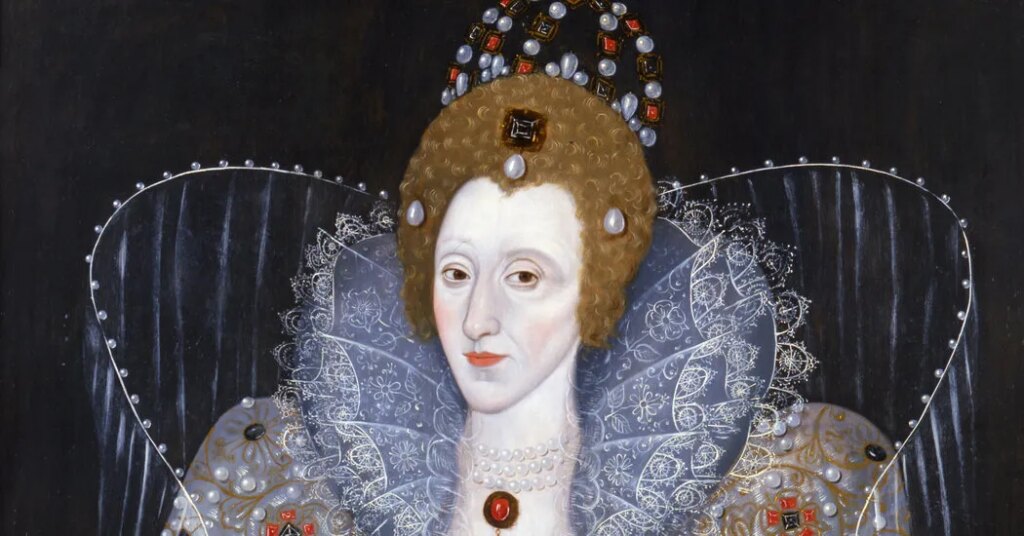
Braided into the memoir is a second thread, about white paint in history and art, bringing the book somewhat near the object studies of Mark Kurlansky or Michel Pastoureau. We learn about the early fabrication of white paint: lead soaked in vinegar, pulverized then mixed with a binder. We read about Elizabethan makeup, IBM’s branding, Frank Lloyd Wright’s entertaining struggle to keep his Guggenheim Museum from being painted white.
But rather than object history or design manifesto or one of the recent, decadent screeds against late-capitalist efficiency, this book reads as a hit piece. Walters approves of the Greek island Santorini and the painter Agnes Martin. “These were uses of white paint that were clearly affirmations of life,” she concedes. “But I was not thinking about these practices. Soon I would become a witness to the ways that white paint epitomized ill intentions, including ways it had been used to disrupt, obscure, silence, and even invite death.”
We dwell on lead poisoning, Puritan pamphlets against makeup, the design of torture rooms, the essential sadness of clowning, nationalist house-painting in post-bellum America, the possible visual pun between the National Lead Company slogan “I am a white-leader” and the implication of American white supremacy.
These anecdotes are interesting enough. But their collective enemy is never fully justified, nor the inverse (the beauty and benefits of white paint) sufficiently considered. The vendetta leads Walters into jarring, repeated equations of white paint with violence, rather than with mere design dullness, as when she refuses to name two characters in her narrative. One is “an American monochromatic and minimalist artist” (apparently Robert Ryman) presumed to have “hated color” and the other is the shooter who killed 51 in New Zealand mosques, in 2019, and wrote racist messages on his weapons with — yes — white paint.
Later on, when Walters walks into her newly painted, too-white apartment, she cuts to a memory of the emotional aftermath of Sandy Hook, 2012. An emotional bungee jump like that calls for a literary command unattained here. The reader will not doubt Walters’s feelings. But her topic is too big, and her vector too small — akin to railing against water because it can drown you.
While some critics attack Goliath subjects with swagger or scholarly inventiveness, Walters assumes a tone of contrived simplicity that can feel condescending, aphorism fueled by thesaurus: “Beauty invites curiosity, even when its contours are decipherable.”
Not even art lovers are safe from the book’s reductions (“Abstract Expressionism, a movement in painting that emphasized shapes and color over realistic representations the world”) and, at times, its factual claims. It is misleading to say that at the sprawling Bauhaus school Anni Albers “took over the school’s workshop,” as if there were only one. Albers led weaving, for a few months. And no historian I consulted for this review could see how Paul Cézanne “had been inspired by the decisive lines of West African sculpture.” Cézanne was insular, and that was the point.
All this smacks of research conducted for theme rather than story, and it casts doubt on other parts of the book — particularly a chapter against the use of reflective white paint to slow climate change.
Walters is smart, and one gets the sense that she feels this big topic getting away from her. “Our reaction to what we see is sometimes just so visceral,” Walters writes, “that there is no language that can supplant our experience of it.”
A DEAD WHITE: An Argument Against White Paint | By Wendy S. Walters | Scribner | 262 pp. | $30
The post An Argument Against White Paint No One Asked For appeared first on New York Times.