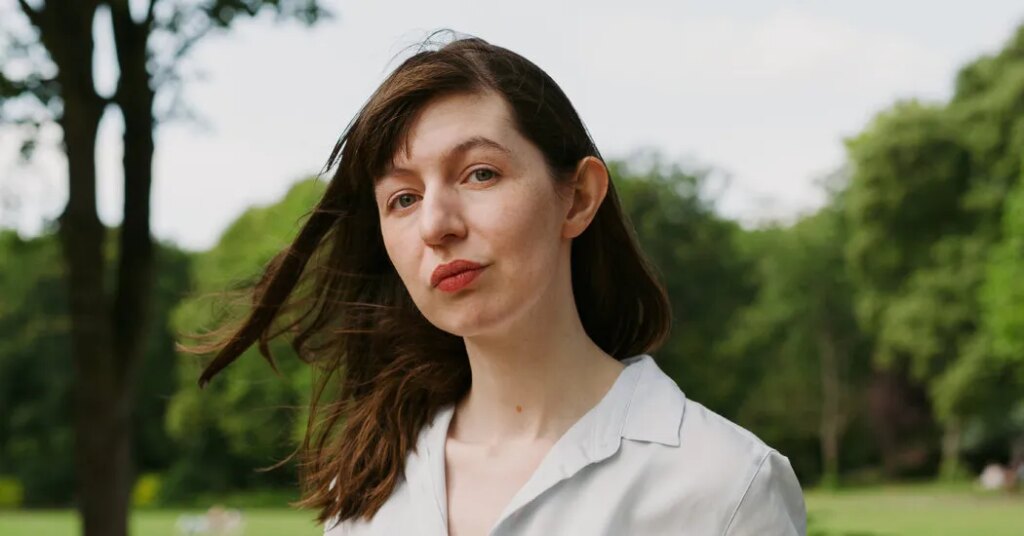
Sally Rooney and her publisher said Wednesday that her novels will no longer be sold in the United Kingdom because of her support for a pro-Palestinian protest group that the British government banned last year as a terrorist organization.
The publisher, Faber, said in a statement that “current legislation” meant it could no longer pay royalties from the United Kingdom to Ms. Rooney. It has therefore decided, the statement said, not to supply her work “in the U.K. in any format.”
Payment of royalties to Ms. Rooney could violate the law because she has promised to donate funds from her book sales to the banned group, Palestine Action.
Ms. Rooney said, in a statement released by her agent, that the publisher’s decision to halt U.K. sales had come “after a process of consultation and deliberation, and with my full agreement.”
The decision to withdraw her books means that Britons will no longer be able to buy best-selling novels including “Normal People” and “Conversations with Friends,” which have both been adapted for TV and proved highly popular.
The development will likely intensify the debate over the Labour government’s contentious decision in 2025 to use terrorism legislation to ban Palestine Action, which has claimed credit for several acts of vandalism but does not promote violence against individuals. The group’s members repeatedly damaged facilities linked to an Israeli weapons manufacturer and in June 2025 broke into R.A.F. Brize Norton, Britain’s largest air force base, spray-painting two aircraft.
The ban of Palestine Action was the first time the British government had used terrorism powers against a group for “serious damage to property,” rather than because of the use or threat of violence against people, prompting criticism from a broad range of human rights groups and international bodies.
As a result of the ban, more than 3,000 people have been arrested for expressing support for the group at demonstrations, including by holding signs or wearing T-shirts saying “I oppose genocide, I support Palestine Action.” The arrest of peaceful protesters has prompted a fierce debate over free speech and the right to protest.
It is has also put Ms. Rooney and her publisher at risk of breaking British law because, after Palestine Action was banned last year, Ms. Rooney said she would use money raised from her book sales to support the group. In an article in the Irish Times last year she wrote: “I want to be clear that I intend to use these proceeds of my work, as well as my public platform generally, to go on supporting Palestine Action.”
Giving any kind of support to organizations designated under the Terrorism Act is a criminal offense in Britain, and paying royalties to the author, given her open intentions, could therefore expose her publisher to prosecution.
In a statement released by her agent, Ms. Rooney reiterated her intention to support Palestine Action, “which is not a proscribed or otherwise prohibited group here in the Republic of Ireland,” even though publishing her work in the United Kingdom “could now constitute a serious criminal offense.”
Ms. Rooney said she had “made every effort to be honest with the public about my beliefs and intentions,” and was “wholly prepared to accept the consequences.”
In its statement, her publisher said that “to sell a writer’s work and not be able to pass on earnings is an unconscionable situation for a publisher.”
It added: “We remain the proud publisher of her remarkable body of work, which we will continue to sell in other territories.”
Britain’s home office, which introduced the ban on Palestine Action, said that the ban “followed a rigorous and evidence-based decision-making process, endorsed by Parliament.”
In a statement it added: “The proscription of Palestine Action does not affect lawful protest in support of the Palestinian cause, which remains a fundamental democratic right.”
Palestine Action’s co-founder, Huda Ammori, described the forced halt of sales of Ms. Rooney’s books in the U.K. as “a new low in the escalating assault on free speech caused by the proscription of Palestine Action.”
In a statement she added: “A world-renowned author fearing arrest and being forced to remove her books from our bookstores, exposes the chilling consequences of this authoritarian law, which has been used to make over 3,700 arrests for simply holding seven word signs.”
The ban on Palestine Action as a terrorist group has been challenged in a succession of legal hearings. Britain’s High Court initially found that the ban was unlawful, saying it was disproportionate and breached free speech rights. But judges in the Court of Appeal overruled that in June. Ms. Ammori appealed that ruling, and the ultimate decision now falls to the country’s Supreme Court, which is expected to hear the case next month.
The post Sally Rooney Says Her Novels Will No Longer Be Sold in U.K. appeared first on New York Times.