Many of President Trump’s policies have brought changes to the international order that will last long after his second term ends.
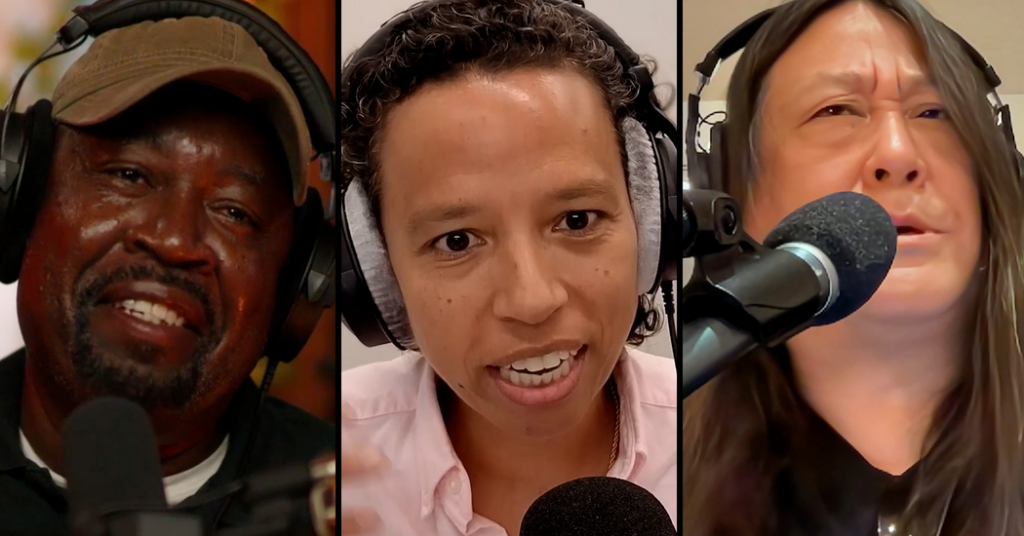
On this episode of “The Opinions,” the columnist Lydia Polgreen speaks with the political scientist Rahmane Idrissa and the “Sinica Podcast” host Kaiser Kuo about how the United States and China view global leadership and what their evolving positions mean for smaller nations.
Below is a transcript of an episode of “The Opinions.” We recommend listening to it in its original form for the full effect. You can do so using the player above or on the NYTimes app, Apple, Spotify, Amazon Music, YouTube, iHeartRadio or wherever you get your podcasts.
The transcript has been lightly edited for length and clarity.
Lydia Polgreen: I’m Lydia Polgreen, a columnist for New York Times Opinion. The global order that’s been in place since World War II is falling apart, and no one knows exactly what will replace it. The United States has been stepping away from its role as a leader, while China has emerged, in many ways, as a peer power.
Archival clip from CBS News: Not content to wait at the White House, President Trump choppered to Joint Base Andrews this afternoon to greet Chinese President Xi Jinping. It’s the first time a U.S. president has made that gesture for a foreign head of state since 1962.
As part of Opinion’s “New World Disorder” series, I wanted to have a conversation about what all this means for the rest of the world, especially middle powers — countries like Canada, South Africa and Brazil.
Joining me today are Rahmane Idrissa, a political scientist and historian based at Leiden University in the Netherlands, who focuses on the politics of democracy and state building, and Kaiser Kuo, based in Beijing and host of the “Sinica Podcast” on current affairs in China.
Good afternoon and evening to both of you, respectively.
Rahmane Idrissa: Good morning to you, Lydia.
Kaiser Kuo: Good morning to you, Lydia.
Polgreen: So before we get into anything else, I’m curious what you guys actually make of this thesis — the end of American hegemony. Is it, in fact, just a more inert anxiety from the West about the way that the world is changing?
Idrissa: Before we even speak of the decline and fall of the American hegemony, we probably need to understand what it was in the first place.
A hegemon is like a conductor in an orchestra, so he’s the figure that is irreplaceable. So it’s really this top of the stage, and everyone else is just a dispensable player. And then, all of a sudden, you have this other entity starting to play its own music — China — and you could not prevent it from doing so.
So from that moment, you’re no longer really a hegemon; you’re just a preponderant power. And a preponderant power tries to check rivals. It’s no longer the conductor that conducts the whole orchestra. It has a rival.
Polgreen: I just want to jump in and ask about this question of China’s role in breaking this hegemonic power that the United States had. Because I think that we tend to think of this as though it was a plan — like it was something that China wanted all along — and it may not be. They may have stumbled into becoming a peer power to the United States. I’m curious, Kaiser: Do you think China does seek to lead a new global order? And if they do, what would that order look like, do you think?
Kuo: Maybe it would be a little helpful if I talked about how China sees this whole question of American decline, because I think there’s a tendency, in a lot of the reportage, to just seize on a couple of phrases that Xi Jinping has uttered from time to time, or cherry-pick quotes from party publications to suggest that China’s all in on this idea that America’s day in the sun is at an end.
And I think for the Chinese strategic class, if I may be so bold as to generalize from all of the people that I’ve talked to, their belief is very conditional in this idea of an American decline. And it’s not as hubristic, I think, as it’s often been portrayed. There is, I think, a lot of caution and caveating. First of all, it’s always talked about in terms of a relative decline, not an absolute one. But they also recognize that much of it just had to do with the single person of Donald Trump.
And I think, more importantly, that they recognize there are still a lot of these pillars of American hegemonic strength that endure, that could spring back. It sees a lot of things, the whole innovation ecosystem in the United States, its preponderant military might still. It sees its excellent universities — those sorts of strength. Its ability to attract talent from around the world.
I am not here trying to defend this, but I think that you’re talking about this great question that gets asked again and again: What is it that China wants? Does it really want to displace the United States as a single global hegemon? I think that the answer is that China feels itself neither ready to do that, doesn’t have the capacity to do that, nor does it really want to. It still believes that there is something to be had from the preservation of certain aspects of the present order. So yeah, I think it’s a much more cautious approach.
Polgreen: Yeah, for sure. It’s interesting, because I think that when we talk about American decline and China’s rise, there is a desire to kind of impute authorship, right? I think that there was a lot of misapprehension and, frankly, hubris. America has this tendency to think of itself as the prime, and in many ways only, driver of global events. I think back to things like when the Communists managed to take power in China, the talk in the State Department was about the loss of China ——
Kuo: Who lost China, yeah.
Polgreen: As if China was something for America to win or lose, as opposed to being a driver in its own right. And all of these other countries are watching as these huge, powerful countries are building out, are reacting, are figuring out how they’re going to exist in a world that is dominated, in many ways, by one power that is clearly changing/declining. And another that may or may not have ideas about what the shape of the world should be, but is clearly having a huge amount of influence.
And I’m curious: How are other countries responding to these competing models of what the future might look like? Rahmane, you want to start with that?
Idrissa: Speaking from an African perspective, I guess this is kind of bringing me back to the Vladimir Putin moment. What was important in it was not the invasion of Ukraine itself, but the way in which other countries responded. When this American hegemonic system tried to rally the world against Putin, then just found that, OK, many, many other countries were saying no. Yeah, they were very lukewarm or even kind of reluctant, reticent, et cetera; and China even, in the end, aided Putin. And the reaction of the African countries was interesting in that regard, because they were the weak link — the soft underbelly of the world that was used to being ordered about, and they didn’t fall in line.
And this is when you have this talk of global south emerging from the West. It did not start in the south. It is not the people in the south that started to call themselves “the global south.” It’s people in the West, because they realized, oh, there is some kind of weird resistance or vague power emerging in that direction. And this is something that also set the hegemony in crisis.
But I think this emergence of the global south, that looks so abrupt from the Western point of view, also was a very drawn-out process, in which China, of course, played a very big role in the case of Africa. Because what it did was to diversify the options of African countries, which until then had been in this kind of tête-à-tête with Western countries, and where the terms of the tête-à-tête were set by the Western countries.
And this had a kind of hypocritical aspect to it, because in many respects, when some vital interests of the West are at play, these normative conditions tend to disappear. We see it in the issue of migration, for instance, where Western countries — European countries in particular are very much ready to work with authoritarian regimes in North Africa, even with Omar al-Bashir, who was a genocide perpetrator ——
Polgreen: In Sudan, yeah.
Idrissa: They were ready to work with him. So, it was very problematic, and the existence and activity of China all of a sudden created this diversification. And I think, from the perspective of Africa, this has been going on for a while. It also explains why many countries in Africa were sympathetic to Russia, because it was also seen as this entity that was being bullied by the West.
Polgreen: Yeah. It’s interesting. I mean, there is this very large bill, for years, of hypocrisy — good for thee, but not for me. I grew up mostly in East and West Africa, very much among aid workers and people who were doing development work for Western governments. My father was an American who worked in global development, in agriculture, and also as a correspondent in West Africa, South Africa and in India. I really saw how things like structural adjustment — these economic models that were imposed by American and European-dominated institutions — the kind of cynicism that they generated among these countries and what we now call the global south.
And Kaiser, I’m curious, because I think that alternatives have emerged. I’d love just to hear about that, from your perspective in Beijing, of how this unfolded.
Kuo: Yeah, I think that’s perhaps the most important thing that China’s story of development did, is it opened up the menu. It opened up an alternative. And a hegemon cannot abide there being an alternative to it when it insists so stubbornly on this Washington consensus that there needs to be only one path to development. China comes along, and it achieves it, and it does so in a way that doesn’t wear a Western face.
When a word like “affordability” becomes the most important word in electoral politics, that to me suggests that performance legitimacy is bearing a little more weight now, and that process legitimacy is bearing a little less in my native U.S. That advantage goes to China. And a lot of that is built on this argument that, hey, look, why were we not able to build even 100 miles of high-speed rail? In China, they rolled out 48,000 kilometers of it since 2008. How is that possible? So I think just the very existence of an alternative model is sort of inherently threatening ——
Polgreen: Threatening, yeah.
Idrissa: Isn’t this even a kind of winning model?
Kuo: Yeah, you’re very much correct.
Idrissa: I was noticing, these last few months, the existence on YouTube of this trend of “Chinamaxxing.” You have all these influencers producing all these videos about the glorious achievements of the Chinese. This English YouTuber who is explaining that China is a much better country than the U.K.
Archival clip of Jason Lightfoot, “Living in China”: I know at first glance this may look like an airport. This is better than the U.K.’s best airport. And this is just a — it’s a metro station.
Kuo: Yeah. I call that genre of video “infrastructure porn,” and I think a lot of young Americans are marinating in it. And I think there’s questions about how much of an active hand Chinese propaganda organs have in orchestrating it. But I think that a lot of it, and certainly enough of it, is organic to make it something that’s very worrisome to American leaders.
Polgreen: Yeah. I mean, it’s funny. I think Japan used to play that role — that people would go to visit Japan and ride the Shinkansen trains and just be like, why can’t we have this in America? It’s interesting though, because I think that there’s also this idea of democracy — and you referred to it, Kaiser — as a process, I guess. That this valorization of one particular way of doing things had a kind of inherent good, over and above the results that it delivers.
And recently, it was the U.N. General Assembly week here in New York. Mayor Zohran Mamdani of New York hosted a bunch of mayors from different countries. And at one of these panels, he talked about how we talk about democracy as if it’s a good in and of itself, rather than a means of delivering, and delivering with equity and with participation and with fairness to the greatest number of people.
We’re seeing trends towards autocracy in places like India, obviously in Turkey. These are very, very big, important countries that, for a long time, had traditions of democratic rule, that are sort of looking at the world and saying: “You know, actually, if we really want to get things done, maybe we just need to put up with a certain level of autocracy.”
Idrissa: Yes, but it doesn’t seem very convincing in terms of actually delivering. If we look at what is happening in India, I am not sure that it is delivering up to the expectations of what ambitious people in India would have wanted to see. And of course, Turkey is kind of mired in crisis.
To me, this is kind of an old debate, almost like it’s something that keeps coming back. We have that in Africa, where we started with some form of democracy, at least some kind of party rule. Didn’t work out very well, and then we moved to military dictatorships. Then with the military dictatorships, we had economic failure plus political oppression, so it became worse. Then we came back to democracy, and now people are complaining that democracy is not working very well. I think it’s not just the criticism of democracy that we see — it’s not just that it is not delivering, but it is also actually fostering bad governance, corruption, because you have all these parties, politicians, political classes that are completely corrupt. And how do we deal with that?
So there’s the temptation to go back to what people see as a clean, honest military rule. But an example from the region where I’m coming from, the Sahel, doesn’t really support that hope as well. So we are in a kind of, I would say, cacophonous moment nowadays, in terms of norms of politics.
Kuo: That certainly seems to be the case. I mean, I tend not to think of this simply in terms of regime type as the key to whether development is successful. Clearly, it’s not. We’ve had failures that were all sorts of different regime types. What puzzles me about the United States is its insistence that there is only one way that you have to privilege civil and political rights above economic rights, and that’s the only way that it can be done; that economic development will necessarily flow from the safeguarding of civil and political and property rights.
I think that we should maybe expand our thinking, and embrace a kind of pluralism when it comes to how different nations of the world prioritize these values — that it’s a valid thing — and I think probably one that much of the so-called global south would understand implicitly, because it’s based on that Maslow’s hierarchy of needs: that you need to take care of food, clothing and shelter first.
I don’t think it’s a matter of regime type. I think that much of it has to do simply with capacity building, with state capacity. However you arrive, however these people are placed into office, but putting a developmentally minded, more technologically or technocratically sophisticated class of politician into office.
Polgreen: Yeah, and particularly looking at middle powers, it seems that, in some ways, the opposite is happening. We’re seeing this rise of populism. It seems that the faith in democratic technocracy has really plummeted, and that in some places you’re not even seeing a choice between authoritarian-right or authoritarian-left technocracy. It’s really much more a politics of the gut, of blood and soil and ——
Kuo: Right. Resentment, yeah.
Polgreen: And resentment, exactly — things that feel quite removed. I mean, in this cacophonous moment, Rahmane, that you talked about, where are we seeing these energies bubble up and play out in either hopeful or destructive ways?
Idrissa: I must say, it’s a bit distressing because, as of now, I have the impression that this conservative trend is much more powerful than the progressive or liberal trend. And you can just assess it by the number of world leaders who belong to it: Trump, Putin, Modi, Erdogan in Turkey. Marine Le Pen seems to be on the verge of entering Élysée Palace. And in Africa, you have, of course, this conservative wave that glories in the rejection of human rights, L.G.B.T.Q.+ rights, et cetera. So it’s a global phenomenon. And what I’m not seeing, as of now, is the pushback from the other camp.
Kuo: Interestingly, it’s China that seems to have raised the old flag of globalism, and has tried to rally people around that. I think it’s notable that after Mark Carney’s famous Davos speech about the rupture ——
Archival clip of David Cochrane: Prime Minister Mark Carney didn’t mention President Donald Trump by name in that speech, but his message was clear that nations should band together as the U.S. weaponizes its power and unravels the world order.
Archival clip of Mark Carney: Let me be direct. We are in the midst of a rupture, not a transition. Over the past two decades, a series of crises in finance, health, energy and geopolitics have laid bare the risks of extreme global integration. But more recently, great powers have begun using economic integration as weapons, tariffs as leverage, financial infrastructure as coercion, supply chains as vulnerabilities to be exploited.
The reaction in China was, I think, a pretty clever one. Normally, the Chinese leadership likes to sell economic dynamism. The pitch is always about China’s fast growth and all these things. Of course, that’s not as much of an option as it was in years past — in the go-go years of yesterday. But nowadays, the sales pitch is all about stability. At the China Development Forum, at the World Economic Forum’s “Summer Davos,” these were the messages from the premier about China — as sort of this bastion of relative sanity and stability in this chaotic and tumultuous world — in this world where we are seeing this massive upsurge of right-wing populism. And yeah, as Rahmane rightly points out, that’s not geographically constrained. It’s happening in many corners of the world, notably not in China.
There are people, of course, who look at Xi Jinping’s leadership as a species of ethnonationalist right-wing populism. But I don’t think that it really fits the bill all the way down the line.
Polgreen: Yeah. I’m glad you brought up Mark Carney’s speech, because obviously, it does feel as though we are entering this era — or maybe we’re already quite deep in it — of much greater competition, and a sense that there are alliances to be made. There are new networks that are going to be built.
Sometimes they’ll be regional, sometimes they’ll be based on shared history and culture, like Canada and the European Union. But it does seem like this is a very ripe moment of fostering these kinds of different alliances. And I think countries are coming together under different banners than the one that was hoisted by the United States in the aftermath of World War II.
Rahmane, I’m curious, as you look around the world, where do you see these perhaps unlikely, or entirely predictable, groupings coming up?
Idrissa: Well, especially with regard to Canada and Europe, to me, this is just a reaction of jilted vassals. They really wanted the American hegemonic system to continue, because they drew lots of benefits from it — like the security guarantees of the Europeans, trade in the case of Canada.
But Trump has decided that the U.S. is no longer the conductor. The U.S. is now a player in the orchestra, a big-bully player. He came to power with this slogan, “Make America Great Again.” But what he’s doing, basically, is making America little at last. Because the idea is now: We are going to make America a nation-state like others. It’s no longer this kind of top power, this hegemon who is hovering around the world. And since it has this very, very large amount of power, it can pretty much do what it wants. Which, of course, the adventure in Iran is revealing that not to be the case. But this is the route that he has taken.
And so, this has traumatized the Western countries, like Canada and Western Europe. And so, now they’re trying to find a solution, an alternative to this situation. Of course, the situation can change once Trump is gone. But I think he has inflicted so much damage to the system that they see it as a wise path to try to form a bloc that would talk on a kind of equal footing, or something that looks like an equal footing, both to China and to the U.S., because it is not just the U.S. that they are worried about. It is also China, right? They have to engage these two.
Polgreen: Yeah. Kaiser, I’m curious, how does this look from your vantage point?
Kuo: Well, when I think about the post-rupture moment, I go back to the late Joe Nye. In 2017, he came up with this idea of — and it was really kind of a challenge to this idea of the “Thucydides Trap,” which has, has gained a lot of currency. He said the more dangerous trap is the “Kindleberger Trap,” wherein an incumbent power either refuses to or is unable to provide those public goods any longer, and the rising power in the world is unable to step in and do that in its place.
So we are in such a trap right now, I think, where the United States has abdicated its traditional role of provision of public goods, and it’s unclear that China is willing to do all of that. In some areas, it clearly is. In development, in infrastructure lending, in provision of manufactured goods, in absorbing all the demand for commodities. There are a lot of things in which China has stepped up, but it’s clearly shown no appetite for much of the rest of it. Look at its relative absence of a role in the Iran crisis. It’s not going to step in. And the United States doesn’t want it to. The United States seems hellbent on preventing China from filling that role.
So we’re then stuck with this question: Can you unbundle all of these things? Can all of these different public goods come from a disparate set of actors? Can Brussels provide regulatory public goods, while China does what it’s good at doing, the manufactured goods? The United States is abdicating it at a very, very difficult time, where we face unprecedented challenges from the advent of A.I. and all these other things. So I think that the waters are going to be choppy for a while.
Polgreen: I’m curious, Rahmane, are there possibilities of something different and newer and perhaps more equitable coming out of this time of great rupture?
Idrissa: I think there is the possibility of an aspiration. It has to be cultivated, because this situation of hegemony is actually quite rare in history. Actually, the U.S. situation, from the end of the Cold War to the age of Trump, is the one example that I can really think of as a hegemony that we have known since the Roman Empire, basically.
What has tended to exist in the past is those competing big powers that created endless wars. And in fact, the problem that we’re facing here is that we do not want to go back to that situation. When you remove the kind of hegemonic system, what you might end up having is big powers with ambitions. Even if they don’t fight each other, they can create wars elsewhere. So I think the problem that sliding into this new cacophonous world might present us with is this dire return of international war and conflicts. So to me, the direction to go is how to save international law from the ambitions of the big powers, because the big powers don’t like international law.
The Soviet Union and the United States are the two countries that refused to adhere to the international justice system when it was being born in the late 1940s. They didn’t want to be tied to that. And whichever country is reluctant to accept or adhere to international law, you may be sure it has bad intentions. And it’s usually those big powers. So in our case, it’s China and the U.S. But, and I agree with Kaiser here, the U.S. is proving to be even the worst case in this situation. They are practically attacking the international justice system, trying to destroy it and undermining it.
I think there is an aspiration of reviving international law that kind of exists in very small groups in many countries. The problem is that this has not coalesced into a movement, and also this is being a bit checked and contained by the fact that what really sustains the growth of international law is the reality of domestic law. In international law you don’t have an army. There’s no force behind it. The force that is behind it is a commitment of states. So if you have states that have good domestic laws, then you can have this system of international law emerging.
And so, I think we should be worried by all these processes of democratic backsliding and things like that, because they are, by definition, anti-law. They destroy domestic law and destroy the commitment of states to international law. So I think going forward, I don’t know what will happen. I cannot predict it. But if we really want to avoid going back to the horrors of the past, we have to fight for international law, and it has to start within our own respective countries.
Polgreen: Kaiser?
Kuo: I think, if we look at what China says, at least ostensibly, it wants to lean into the extant U.N. system. It’s been a very vocal proponent of existing multilateral institutions. And it’s quite clear. I mean, they’ve made clear that China’s preferred outcome — from all of this, when the dust settles — is a genuinely multipolar order with poles including, of course, China and the United States, the E.U., Brazil, India certainly, Russia. And I think we need to look at what else is on offer right now. The United States’ vision — at the Busan talks, afterward, Donald Trump called it “G2.” He re-invoked this old, dead word.
China is at least on record as being adamantly opposed to that. I don’t know whether China, in fact, in its heart of hearts, really dislikes the idea as much as it says it does. I think that for the middle powers, this is the worst possible outcome. They want to hedge. They want to be able to play the two powers off against one another. They want a voice in how decisions are made. They certainly don’t want the two powers, in condominium, making decisions over their heads. So I think that’s probably a terrible outcome, and one in which China’s vision of a more genuinely multipolar order probably has some purchase. So we shall see.
Polgreen: Yeah. We keep adding numbers after the G and then taking them away, and I think that tells you a lot about the state of global affairs.
But just to wrap this up in just a sentence or two — I’d love to hear from both of you. What are the opportunities for these middle powers, as their governments assert themselves in the absence of U.S. hegemony and encounter the rise of China?
Kuo: I think that in a world where we have these two rival aspirants to the throne, it’s possible to play them off against one another to exact concessions from each, because they are the jury; they are the audience to which these two powers are ultimately playing. In an ideal world, that keeps them on their best behavior, and they have resources that both need — I mean, you look at a country, a country like Indonesia with its near monopoly, really, on nickel, which is so important for electric vehicle batteries and for so many other things, and it’s able to exert that.
I think that in this world of mutually assured disruption, people are coming into their own. They’re realizing the kinds of chokehold power that they have. I think that there are going to be ways in which their hold on certain necessary minerals, and on critical resources, will be able to help them in exacting the kind of leverage, and will help them to hedge more successfully into balance.
Polgreen: Rahmane?
Idrissa: Well, they probably have to engage the big powers anyway. I mean, there is nothing that can be done without China or the U.S. in the picture. I guess they should probably exploit the fact that they no longer have to be beholden to the U.S. to create a different pathway that could be an alternative to pure domination.
Because in the end, when you are dealing with these very, very large powers, the inequality is such that even if they do not want to crush you, they will tend to crush you just by the sheer physics of the relationship. Whereas with the middle powers, you do not actually have that amount of radical inequality. And also, it is with the middle powers that this return to international law is more feasible, not with China or the U.S., especially not with the U.S. as it is today.
Polgreen: Yeah. The U.S. might change, but the world has already changed, and I don’t think that we will soon be seeing a return to the restoration of even the rhetoric of what drove U.S. hegemony for all those decades.
Kuo: Well, a boy can hope.
Polgreen: Thank you for coming together across these time zones and distance to have this really important conversation with me. I really, really enjoyed it, and I’m sure that our listeners will too.
Idrissa: Thank you. Thank you, Lydia.
Kuo: Thank you, Lydia.
Thoughts? Email us at [email protected].
This episode of “The Opinions” was produced by Derek Arthur. It was edited by Kaari Pitkin and Alison Bruzek. Mixing by Carole Sabouraud and Gautam Srikishan. Video editing by Brandon Belk-Yee and Britt Shacham Bernstein. The postproduction manager is Mike Puretz. Original music by Pat McCusker and Carole Sabouraud. Fact-checking by Mary Marge Locker and Kate Sinclair. Audience strategy by Shannon Busta, Kristina Samulewski and Ali Baluch. The director of Opinion Video is Jonah M. Kessel. The director of audio engineering is Isaac Jones. The deputy director of Opinion Shows is Alison Bruzek. The director of Opinion Shows is Annie-Rose Strasser. Special thanks to Daniel J. Wakin and Tim Schneider.
The Times is committed to publishing a diversity of letters to the editor. We’d like to hear what you think about this or any of our articles. Here are some tips. And here’s our email: [email protected].
Follow the New York Times Opinion section on Facebook, Instagram, TikTok, Bluesky, WhatsApp and Threads.
The post ‘The United States Is Abdicating’ appeared first on New York Times.