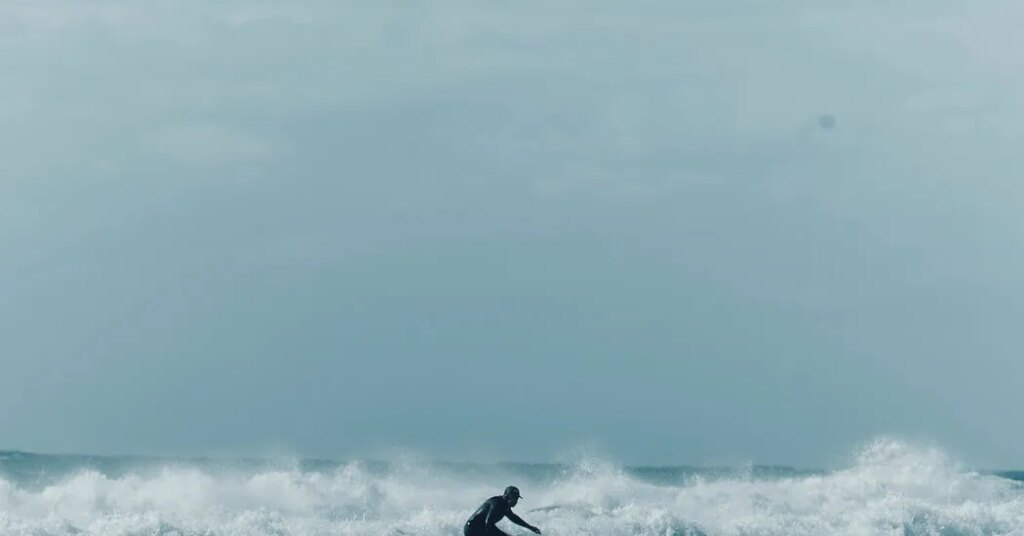
The first time Andrew Nathanson caught the surfing bug he was 14, on the beaches of Waikiki. His father was at a medical conference, and he was left to entertain himself. So he rented a big board and a stick of paraffin wax and went to the beach.
He picked it up quickly over the next couple days, catching waves and even turning his board a little. And to this day he remembers one wave in particular.
“You’re dragging your hand along the face of the wave, you’re in the crouch,” he said. Then, “things kind of slow down,” he added. “It’s just a smooth glide. If you spend some time out surfing, you’ll see pelicans that are riding the updraft of a wave. And the feathers are just, you know, skimming along the top of the wave. And they’re using that updraft to glide along. And that’s what you imagine it must be like to be a pelican — just, like, feeling the flow. That’s what riding a wave kind of feels like.”
In some ways, Dr. Nathanson, now 63 and a professor at Brown University, has spent his entire life chasing that feeling. In addition to becoming an expert in emergency medicine and marine injuries, he has surfed waves big and small across the world. And while he can’t paddle out or pop up like he once did, his passion for the sport is as strong as the day he traced his fingers along that first wave.
If you want to stay healthy as you age, you have to find new ways to cultivate a passion for exercising. Or as surfers say, “maintain the stoke.”
“Stoke is maintaining enthusiasm — doing something you love,” said Dr. Norman Vinn, an osteopathic physician who specializes in geriatrics. This often looks the same whether you are paddling out past the breakers or just walking around the block.
One of the most important parts of living a long life is finding ways to keep moving as you age. A 2022 analysis in the British Journal of Sports Medicine compiling 196 studies showed that 15 percent of premature deaths could be avoided if people simply exercised two and a half hours per week. But for many it can be tough to stay motivated, especially if it seems like your body is failing you. Whether because of an injury, a chronic condition or just the march of time, it can be difficult to maintain the enthusiasm to keep up a regular workout habit.
“People who are 65, 70, 80 — their motivation to exercise is very different from that of 20-year-olds,” said Joseph A. Mikels, a psychologist at DePaul University who has studied exercise motivation in older adults. “You’re not finding joy and happiness and purpose and meaning in the same things.”
Adjusting Your Baseline
Dr. Nathanson and Dr. Vinn are members of the Surfer’s Medical Association, a small group focused on the diseases and injuries that most affect the sport. A few years ago, several members realized that aging was often harder on surfers than broken bones. So, to help people embrace their aging bodies, they came up with a five-step framework called Surfiatrics (combining surfing and geriatrics).
It begins with recognition, understanding, acceptance, adaptation and ends with celebration. The first two involve recognizing that you’ve lost a step and then understanding how that works.
“In your mind you never feel as old as you are,” Dr. Nathanson said about recognition. “When you’re younger, you think 60 is really old. And then you turn 60 and you don’t feel like you’re 60.”
Understanding means starting early and being proactive, Dr. Vinn said. For instance, knowing that explosive, fast-twitch muscle fibers decline sooner than endurance ones. That means you have to strength train more to maintain your standard of living. It also might mean adding a little more intensity into your cardio exercise.
Accept and Adapt
At a certain point, it’s time to realize that weight training and sprinting only get you so far. Acceptance can be the hardest part of the process, and where many people get stuck.
“I was at this place called Cloudbreak [in Fiji] — a very heavy wave,” Dr. Vinn said. “I was sitting there with a friend of mine and said to him, ‘You know, Bill, I’m not sure we’re surfing anymore. We’re kind of bobbing out here.’”
So you adapt. That might mean changing where you run or how far. It might mean scaling back or using tools you previously eschewed. For surfers, it might mean trying a stand-up paddleboard or a surf foil, Dr. Vinn said.
But it also means finding people to exercise with and enjoying the camaraderie.
It almost doesn’t matter whom you choose, Dr. Mikels said.
“As we grow older, the competition angle, the social comparison angle, that’s not motivating,” he said. “Being part of the group is more important.”
It also means looking on the bright side. If you are retired, you might not surf like you once did, Dr. Nathanson said, but you can go out when everyone else is at work. And you can travel more.
“I’m 77 now and I’m getting ready to go on my fourth surf trip this year,” Dr. Vinn said. “The people I surf with are all mostly at least 20 years younger than I am. And I sit out in the water with them, I don’t catch too many waves, but we have a lot of fun.”
Prioritizing Joy
Even with the best tools or tricks, there may come a time when all of us, Dr. Nathanson and Dr. Vinn included, simply won’t be able to do what we love anymore — when it will be too dangerous to paddle out. But, Dr. Vinn said, even when the body fails, the stoke can still survive.
The last step in Surfiatrics is to celebrate the things you have done and enjoy the sport through the community around you. For a surfer, maybe that’s volunteering for beach cleanups and conservation projects or just hanging out at the beach remembering the old days. For a runner, perhaps it’s volunteering at a race, Dr. Mikels said.
But the key is to never give up and draw into yourself, which is the most dangerous thing, according to Dr. Vinn, who has seen his patients give up on activity. Whatever your thing is, find a way to stay close to it.
“What generates passion in you?” he asked. “Be aware of what generates stoke, whether it’s physical or mental, and pursue it. Stay focused on it. Don’t give up on it.”
The post The Surfer’s Guide to Living a Longer, More Active Life appeared first on New York Times.