I didn’t know the term yet, but early in the second year of my daughter Karuna’s life, I’d fallen into something psychologists call normalcy bias: the tendency to assume that things will continue as they always have, that nothing in our future will diverge too far from what we expect. I already had two healthy children, and assumed that our third would be the same.
My memories of Karuna’s first year of life are filled with joy. My younger son Sohaum squeezed her cheeks while saying gleefully, “You’re just mine, you’re all mine,” as she giggled and wiggled on the shaggy carpet next to her crib. My older son Abhay carefully held both her hands in our living room as she tried to take her first steps and then let her go to give her a chance to walk by herself. And my wife, Amisha, who had never seemed so tired, had also never looked so full of unabashed love.
It was the kind of year that feels like it will never end. We had reached the pinnacle, and now we were here to stay.
But a few months after her first birthday, Karuna began refusing meals. First, she refused the pureed vegetables, then the fruits. She was a bottomless pit for olives and loved rice and daal, but beyond that, she just didn’t eat much. She’s just a picky eater, I thought.
But a few months later, at her 18-month appointment, the standard graph that plotted a child’s weight against their age showed her weight slipping off the curve. She weighed less than 97% of children her age. We needed to do something about it, the pediatrician told us, but we still weren’t too worried.
We started consulting with a nutritionist to see if we could broaden her food preferences and started her on PediaSure to supplement her intake. She’ll be okay, I thought. She’ll catch up. But she got worse.
She stopped eating anything but olives. She became irritable. The nutritionist recommended one bottle of formula per day to supplement her intake, then two, and then multiple bottles per day.
By September 2019, she was sleeping more and tired all the time. We started getting calls from her day care center. While the other children played with blocks and crayons, sitting at their tables, Karuna just wanted to lie on a mat in the corner of the room.
When I noticed her breathing was labored, I took her back to the pediatrician, who listened to her lungs and thought she had pneumonia. After five days on antibiotics, Karuna was no better.
A few days before Karuna’s second birthday, Amisha and I noticed swelling around both of her eyes and fluid accumulating in her eyelids. She was crying, irritable, and breathing rapidly, but my parents had flown in from North Carolina to be with us for her second birthday. They looked so pleased, so melty with love for their first granddaughter, and so we lit the candles and cut the cake.
Normalcy bias means that despite all evidence to the contrary, our mind protects itself. It says: Even if things are bad, they can’t be that bad. It says: Bad things happen to other people, in other places, at other times. It says: Everything will be okay.
But it’s a bias, a logical fallacy, a cognitive blind spot.
The next day, we scheduled an urgent appointment at the clinic. There, the nurse practitioner suggested we get a chest X-ray at Boston Children’s Hospital.
Amisha and Karuna drove off while I went to pick up the boys. I had just arrived at their school when I got the call.
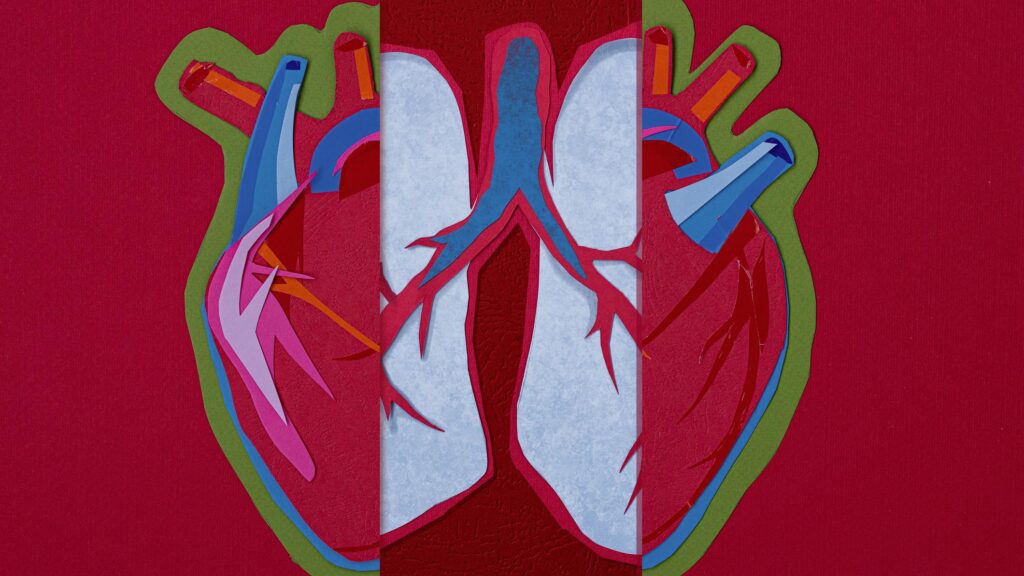
“The X-ray shows her heart is more than double the size of normal,” the doctor said. “Her lungs are filled with fluid.”
My own heart skipped and lurched. I had spent my medical career caring for patients with heart disease and other medical illnesses. I knew what that meant. Our daughter had heart failure.
In crises that develop gradually, like Karuna’s heart failure, we tend to ignore the signs until they reach an acute tipping point. With early signals that are ambiguous and without a clear shock, mobilization lags.
Crises eventually reach what researchers call a moment of liminality (from the Latin limen, meaning “threshold”)—the threshold between what was and what must now become.
After the doctor said heart failure, I knew there was no denying it: We were in crisis. Suddenly, reality set in. Our daughter’s life was on the line. Our family teetered on the cusp of something ragged and broken. Our sense of safety, our sense of normalcy, our sense that everything must be fine because it had been fine—all of that was crushed in the short minutes I spent on the phone that day while my boys tugged at my legs.
Karuna moved into Boston Children’s Hospital’s pediatric ICU, where Amisha and I spent countless sleepless nights. Those days went by in a blur, interrupted by sharp moments of urgency and clarity. I talked cold science with doctors. I held Amisha while nurses put a breathing tube down Karuna’s throat and trachea. I gripped my father when he took me in his arms and held me while sobs shook my chest.
By December, Karuna was back home.
The acute crisis had stabilized, but she was on nearly a dozen medications to support her heart and still didn’t have a clear diagnosis. Her heart cells had been infected with parvovirus B19, the virus that more commonly causes Fifth Disease. At the same time, genetic testing revealed a variation in her genetic code, though it was unclear whether it had caused her illness.
As for the future, the doctor laid out a few scenarios. Her condition could worsen. She might need a heart transplant, and if one was not available, she would die. Her heart might recover partially, but she could need medication to support its function for the rest of her life.
Or she might make a full recovery, though that could take months or years. In the uncertainty, we were meant, somehow, to go back to life as usual.
Four years after Karuna’s diagnosis, Amisha and I took our daughter to the cardiologist for her biannual visit. After recovering, she had come off all her medications. Her latest heart ultrasound looked normal. I watched her face soften with relief before turning to the doctor.
“So she’s okay now?” I asked. “We don’t need to come back?”
The doctor smiled gently.
“We still don’t know.”
Today, there is no more certainty than there was on the day Karuna was diagnosed. But maybe that’s the point.
Actively reflecting on her condition, I find I cherish the small moments with Karuna—watching her play with her brothers or teasing her grandparents—precisely because of the uncertainty inherent in it.
I wish she had never become so sick, but I also can’t imagine being so conscious of how precious life is if it had gone any other way. Our family has forged stronger relationships because of life’s uncertainty, not in spite of it.
Adapted from SAFER—A Playbook: Turning Fear into Action and Crisis into Community by Raj Panjabi, MD and reprinted with permission from HarperOne, an imprint of HarperCollins Publishers. Copyright 2026.
The post Normalcy Bias Prevented Me from Recognizing My Daughter’s Heart Failure appeared first on TIME.