Regarding the Oct. 7 news article “U.S. sends formal demand to Russia for transparency on reported plague”:
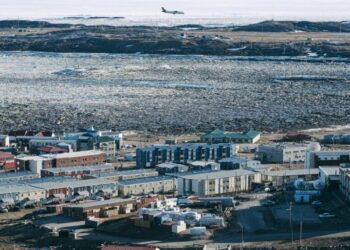
Moscow is asking the world to hold two ideas at once: that a young technician at the Irkutsk Antiplague Research Institute, which is dedicated to studying plague, died after being diagnosed with pneumonia of “unknown” origin, and that the fitting response was to examine her contacts, restrict hospitals and then claim that the Rospotrebnadzor was “providing all necessary information” regarding the case. Nothing says ordinary pneumonia quite like a cordon and a proper scolding.
Secretary of State Marco Rubio is correct that transparency is incumbent. Pneumonic plague is treatable and, on the evidence so far, not spreading. It is also fast enough to finish the patient before the communiqué. The International Health Regulations give a government 24 hours to share information about potential outbreaks with the World Health Organization. News that the technician’s close contacts tested negative for dangerous pathogens is welcome, but it does not explain what killed her.
A microbe does not take instruction from a press office. The Kremlin should open the laboratory record, the clinical record and the test results to international health experts.
David Woodard, Tampere, Finland
Cleaner cars save money
I disagree with the Sept. 30 editorial “Trump’s fuel efficiency rules do not doom climate goals.” The Trump administration’s reduction of fuel efficiency standards will cause harm to consumers, the climate and even automakers.
Congress passed Corporate Average Fuel Economy (CAFE) standards after the 1973 Arab oil embargo, requiring automakers to make cleaner, more efficient vehicles. Research shows the standards have saved consumers $5 trillion in fuel costs and prevented 14 billion metric tons of carbon from spewing into the atmosphere. The United States’ current predicament is the very situation auto-mileage and emissions standards were written for — high gas prices and worsening pollution.
The Trump administration said the new rules would lead to vehicle cost savings. However, the National Highway Traffic Safety Administration’s analysis admits the new standards will cost the average driver $1,624 more on gas over the life of a car bought under the proposed fuel rules, erasing any savings at the time of purchase.
By backing the new rules, U.S. carmakers are putting short-term profits ahead of their ability to compete with Chinese advanced-tech electric vehicles. The new rule is a Trojan SUV. U.S. manufacturers risk losing global market share and watching jobs and profits go up in smog. People around the world want electric vehicles because they don’t guzzle gas and spew pollution, and consumers save money on repairs and maintenance. Sure, the best hybrids burn roughly half the gas of conventional cars — but EVs burn none.
The CAFE law requires that fuel economy standards be set at the “maximum feasible” level. The Trump administration’s are not. Courts should ensure that this assault on consumers’ wallets and lungs is reversed.
Dan Becker, Washington
The writer is the director of the Center for Biological Diversity’s Safe Climate Transport Campaign.
This land is our land
I read every piece that George F. Will writes, including his Oct. 8 column, “A GOP senator challenges presidential family sleaze.”
I wish, however, that when Will wrote, “The federal government owns 64.4 percent of Utah’s land,” he would have said, “64.4 percent of Utah is public land.”
Utah has five national parks, nine national monuments, seven national forests, three national wildlife refuges, many federally protected wilderness areas, more than 2 million acres of wilderness study areas, and nearly 22.8 million acres of land managed by the Bureau of Land Management (BLM). The Park Service manages national parks, the U.S. Forest Service manages the national forests and the BLM manages the rangelands. National parks are for preservation and recreation. National forests and BLM lands are for conservation, with a sustained yield of grazing, water, timber, recreation and wildlife.
All are welcome to visit these public lands and enjoy stunning views, camping, hiking, backpacking, hunting, fishing, boating, river running, solitude, off-road driving, wildlife viewing and more. It is public land. Like Woody Guthrie said, “This land is your land, this land is my land.”
Michael Jablonski, River Heights, Utah
My $90 raises a $2 billion question
Regarding the Oct. 3 online news article “Trump announces plan to send $90 payments to millions of seniors”:
Today my wife and I each had $90 deposited to our bank accounts. These funds were originally authorized by Congress for the improvement of Medicare. That President Donald Trump authorized the federal government to give this money to me and the millions of other people who are on Medicare does little help to lower health care costs, and in no way can it be seen as an improvement of Medicare.
This money was drawn from about $2 billion set aside to improve Medicare’s hospital and medical insurance programs. Surely this misuse of funds should have been challenged and stopped. This of course isn’t the first time this administration has spent taxpayer money as it wishes, regardless of congressional authorization. Congress should step up and make sure it’s the last.
James Ryan, Silver Spring
Letter submissions
Send letters to [email protected].
Submissions must be exclusive to The Post and should include the writer’s address and day and evening telephone numbers. Letters are subject to editing and abridgment. Please do not send letters as attachments. Because of the volume of material we receive, we are unable to acknowledge submissions; writers whose letters are under consideration for publication will be contacted.
The post What happened inside Russia’s plague lab? appeared first on Washington Post.