Alani I. Bankhead is the Democratic nominee for U.S. Senate in Montana and a retired Air Force lieutenant colonel.
In March, Montana’s senior U.S. senator, Steve Daines (R), withdrew from his own primary race minutes before the filing deadline, just as his handpicked successor filed to run, leaving Republican voters without a real contest.
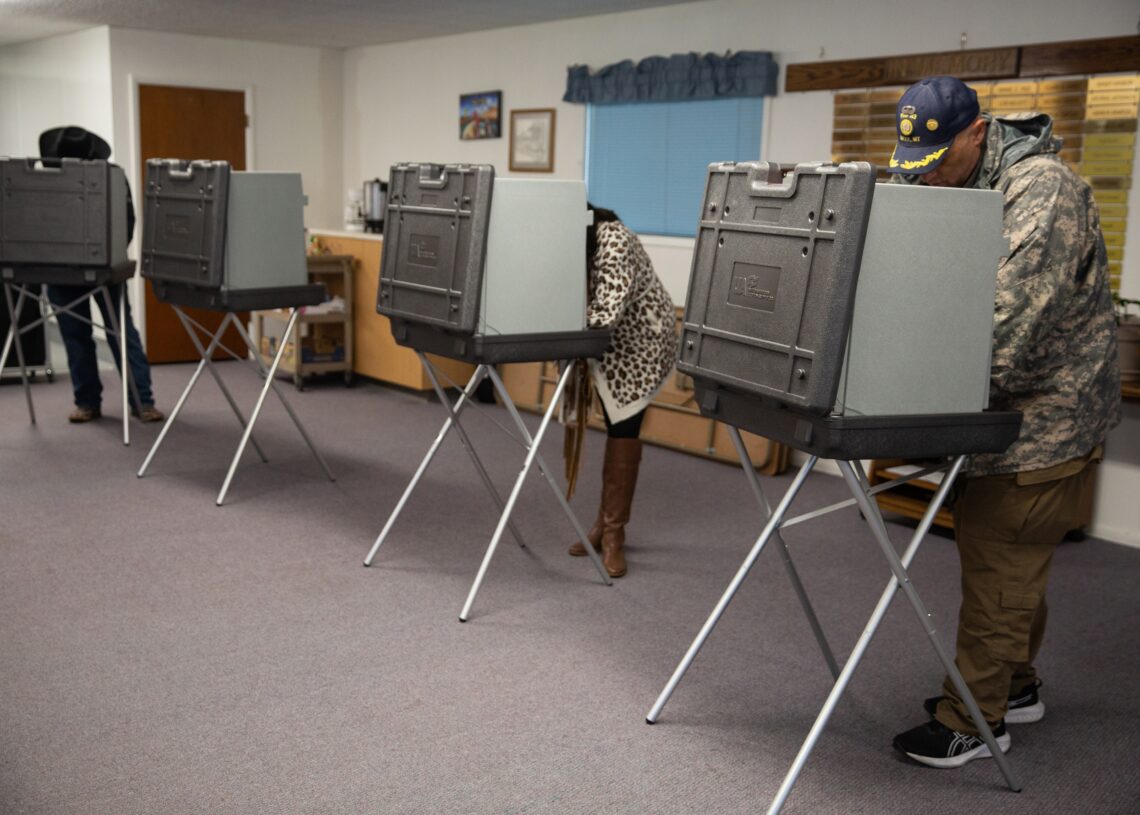
In the Democratic primary in June, nearly 49,000 Montanans chose me to represent them.
Today, Montana’s Senate race has three other candidates: Republican Kurt Alme; independent Seth Bodnar, who was propped up by former Democratic senator Jon Tester; and Libertarian Kyle Austin. Almost as soon as I won the primary, national Democrats and their allies began pressing me to drop out so Bodnar could face Alme one-on-one, on the theory that a Democrat can’t win here.
That theory misreads Montana. Here, community and pragmatism have always mattered more than labels. When a farmer is sick, neighbors plow the field. When someone is stuck in a snowdrift, the first car stops to help.
I can’t be bought or bullied out of this race. But the back room tried.
More than 200 people have emailed asking me to drop out. Twenty-two Democratic state legislators signed a letter urging me to quit. Then came the calls. A sitting U.S. senator offered me a job, presumably if I would leave the race. A sitting Democratic governor called and asked me to step aside. Former Montana governor Steve Bullock, a Democrat, invited me to coffee. And a former Cabinet official left a voicemail offering to “be a sounding board.” I refused them all.
During the primary, the Republican PAC More Jobs, Less Government, which has ties to Daines, spent nearly $2 million in the Democratic race attacking my main opponent as too liberal and telling voters I would work with Trump. At the same time, the brand-new Progressive Vet PAC spent about $2.3 million “supporting” me. Before the primary, Semafor reported that Democrats saw my opponent as more likely to split the vote. I looked easier to push out. After the primary, the same PAC declared that “a Democrat does not have a viable path.”
Across the country, political establishments on both sides are finding ways to control who represents voters. National Democrats pushed nominees in Nebraska, Idaho and South Dakota to clear the path for preferred independents. Nebraska’s Democratic nominee for Senate said from the start that she would step aside — which she did — if she couldn’t win the general election, and I have zero issues with that.
Rumors said I was a plant and would drop out after the primary. Less than four weeks before the election, I’m still here.
Why did I refuse? If I had dropped out, Montana law says the party “shall appoint” a replacement, and party lawyers had already drafted a memo outlining ways around the word “shall,” including imposing qualifications so strict that “no available candidate satisfies those requirements.” Party establishments would have handpicked Montana’s candidates or left Democrats with none at all. That would have denied voters their right to choose and might have discouraged future candidates.
Nobody in the national party’s back rooms asked why so many Montanans stopped trusting the Democratic name. They would rather swap the label and treat voters like puppets than take responsibility for the mess they’ve made of the party brand.
In 1899, the Montana copper king William Clark bribed his way into the U.S. Senate, back when state legislatures chose senators. Today, immense wealth still seeks influence over America’s future. Montanans are pushing back. A state ballot initiative this November would limit political spending by corporations, nonprofits, trade associations and other organizations.
I support that effort, because I support the right of ordinary people to choose their representatives.
Montana has stood up to political power before. We will do it again.
The post Democrats can ask and ask. I won’t drop out of Montana’s Senate race. appeared first on Washington Post.