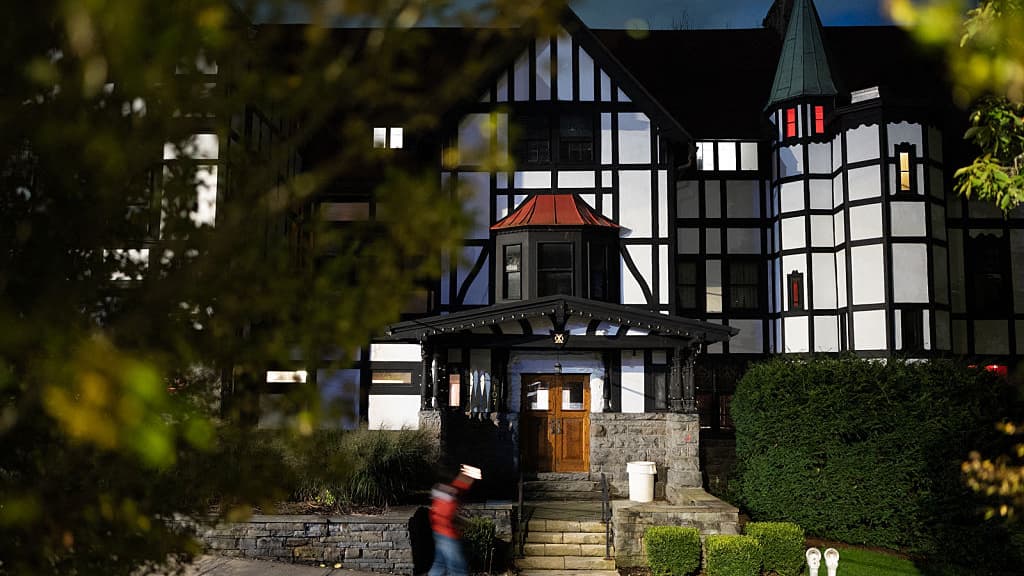
By now, most of America has heard about the young woman who says she was gang raped by fraternity brothers while she was a student at Cornell University.
The case has been dubbed the “Cornell 7” across mainstream and social media, after the seven Chi Phi members named in her recent lawsuit. The woman who filed the suit, referred to as Jane Doe, first reported her experience to Cornell campus police in November 2024. According to her lawyer, after Cornell’s Title IX process, two of the seven were expelled, and the other five were suspended, sent to workshops, and assigned essays. Cornell says none of them got off with only an essay.
At the time, the Tompkins County District Attorney declined to prosecute. After public outcry, the DA issued a statement explaining that Jane Doe’s original statement to police described the drug use and sex as “voluntary, conscious, and consensual.” “However, recognizing that the process of healing from trauma is personal and different for every human, my office has reopened this investigation,” he wrote. Now, New York Governor Kathy Hochul has appointed state Attorney General Letitia James as special prosecutor in the case.
How did the case come to light? It took The Cornell Daily Sun, the campus student newspaper, breaking the story roughly two years later for this to capture the hearts, minds, and headlines of Americans across the country. The story struck a nihilistic nerve.
This case lands squarely in a moment of massive frustration, disappointment, and anger over how the Jeffrey Epstein and Ghislaine Maxwell case was handled. New CDC data shows that nearly half of American women and one in six men have experienced some form of contact sexual violence. Based on how broad this issue is and based on how some of the most visible cases have turned out, apathy about our ability to see our way from a society steeped in rape culture to one where sexual violence is rare should come as no surprise.
As someone fully immersed in this work, even though I see a pathway forward, I understand these feelings from a very deep place in my spirit. We should be disgusted. We should be heartbroken. We should be enraged.
So what do we do with these feelings?
We provide an outpouring of support to Jane Doe and to other women who have come forward with their accounts of sexual assault, such as Kendall Francis, who took to TikTokto speak out about how her college, LSU, handled her Title IX case. According to ESPN, in July, the LSU Office of Civil Rights and Title IX found her alleged attacker, a football player, responsible for “forcible rape” and suspended him for two semesters. The player appealed and in August, Administrative Law Judge Janet Waguespack reduced his punishment to four semesters’ probation, allowing him to remain on campus. The player’s lawyers maintain that their client is innocent.
Again, Francis’ story struck a nerve, catching the attention of East Baton Rouge District Attorney Hillar Moore, whose office is now investigating the case.
The outpouring of support matters, both so these young women can get the justice they’re seeking and so survivors everywhere know that support is out here. But what many of us know is that for every Jane Doe and Kendall Francis who reports and seeks justice, there are hundreds, if not thousands, of survivors who won’t, for a lot of reasons. Chief among them is feeling alone in the fight. They aren’t alone. But I’ll admit it’s hard to tell when spotlights dim, headlines fade, and accountability seems stifled.
As if right on cue, something else happened this week while these cases took over headlines. The Trump Administration’s Department of Education altered Title IX rules, declaring that harassment has to be “severe, pervasive, and objectively offensive” before a school must act, that most off-campus violence falls outside a school’s responsibility, and that a college survivor can be cross-examined at a live hearing by the advisor her attacker chose.
This decision landing right as the Cornell 7 case came to light is telling. It’s one of the clearest illustrations of the direct line between the damage this administration has done to the fight against sexual and gender-based violence—especially among young people.
The Trump Administration’s decision to make it more burdensome to file a Title IX complaint only adds to the helplessness so many survivors feel. Patriarchy protects itself the way any system of power does. It writes the rules, staffs the offices, and then leaves survivors like Jane Doe and Kendall Francis to fight for justice on their own.
Of course, it is worth remembering the challenge we collectively face isn’t simply a matter of one rule or how it is applied; there are questions we must confront about where our culture has ended up. After all, these Cornell students were tweens when recordings of now-President Donald Trump leaked of him using crude language to describe how he treats women. The context may be different, but we have to ask: How far is the line between “grab ’em by the p—y” and “free p—y”, the message the lawsuit says one of the Cornell 7 sent his fraternity brothers, inviting them to join in the hours-long assault on Jane Doe?
Yet, in the face of these various challenges, we must also remember: We are not helpless.
On October 15, it’ll be nine years since #MeToo went viral. We’re far past the hashtag, but we’re still in the movement, and it’s a very real, very active movement fighting tooth and nail to destroy systems that prevent justice. The answer to such systems has always been the organized power of the people those systems harm. The rage people are feeling right now, from Baton Rouge to Ithaca, can be organized and directed exactly where it’s needed. That means our outrage can’t be selective. It can’t show up when Epstein or Cornell makes the news and disappear when the coverage moves on. Because when the next national story takes hold, there will still be students on high school and college campuses all over this country who are fundamentally unsafe.
We’ve made real progress in almost ten years of the MeToo movement, and lasting change will only come from constant demand. Frederick Douglass famously said: “Power concedes nothing without a demand.” Black people in the civil rights era didn’t wait for a government full of segregationists to find its conscience. They organized until it had no choice. Sexual and gender-based violence is solvable, but those solutions have to be demanded, and we have the numbers to demand them.
Too many survivors who stay silent believe they’d be fighting alone if they raise their voices. The CDC’s most recent national survey found that nearly 80 million American adults, close to 58 million women and more than 20 million men, have experienced contact sexual violence. For some people, those are just numbers. In reality, they’re a base of power: millions of people who know this trauma intimately and are primed to act.
What action against sexual violence can look like
First, you can join an organization dedicated to addressing sexual violence head-on. Several national organizations are working to bring survivors and our allies together to demand systemic change. Organizations like mine, me too. International, along with the National Women’s Law Center and UltraViolet, are on the front lines organizing survivor leaders, fighting for survivors in courtrooms, and keeping people engaged on these issues. Others, like Justice for Migrant Women, Educate Us, and the National Domestic Workers Alliance, work on where sexual and gender-based violence meets immigration, domestic work, and education. The Survivor Justice Network, a coalition of organizations fighting sexual and gender-based violence from a social and political standpoint, runs the Survivors Vote campaign to organize survivors as a voting bloc. And there are countless regional and local organizations fighting this fight every day, especially local rape crisis centers, many of which are struggling.
In April 2025, the Justice Department terminated hundreds of grants worth more than $800 million, including money for victim services, and this spring $200 million meant for violence against women programs was still sitting unspent. Centers like the DC Rape Crisis Center (DCRCC), the oldest in the country, don’t only provide direct services to local survivors. They take on the larger issue of sexual violence and how it’s affecting the people they serve.
Next, you can use your resources well. Speakimng of DCRCC, local rape crisis centers are the first line of defense, and when students can’t get support on campus, they often go looking for it at the rape crisis center in their college town. Find the survivor support organizations near you and give to them directly. It’s the best way to shore up the front line so survivors can get what they need and the fight can continue.
Third, you can get active in local politics.
Ask your elected officials where they stand on sexual and gender-based violence and on legislation they can move right now, like the Survivors’ Rights Restitution Act, which Rep. Ayanna Pressley introduced in September with Reps. Teresa Leger Fernández and Deborah Ross to compensate survivors whose federal rights were violated, including Epstein’s survivors. Pressure them to vote accordingly, and make your support heard and understood.
Lastly, we must unite around our shared challenges. National outrage helps shake people up enough to pay attention, but culture won’t shift just because we change laws and elect better politicians. People need to understand how sexual and gender-based violence shows up in their daily lives, how it intersects with the other issues they care about, and how long it stays with families, communities, and institutions. Until the whole of society sees this as an abomination, we won’t have the lasting cultural impact that makes sexual violence a rarity.
Jane Doe and Kendall Francis each refused to carry this quietly. The rest of us owe them and survivors like them more than a week of outrage.
We can let them see what it looks like to turn outrage into outcomes.
The post The Cornell 7 Case Demands More Than Outrage appeared first on TIME.