Good morning. It’s Thursday, and it’s opening day of New York Comic Con. We’ll find out about an image that will be on display there. We’ll also get details on the pilot program to deter subway fare beaters by putting gates at turnstiles.
The cosplayers are descending on New York Comic Con, which begins today at the Jacob K. Javits Center — Spider-Men and Spider-Women, Batmen and Catwomen, and other superheroes, villains and extraterrestrials. Donna Darbous is going as none of the above. No cosplaying for her.
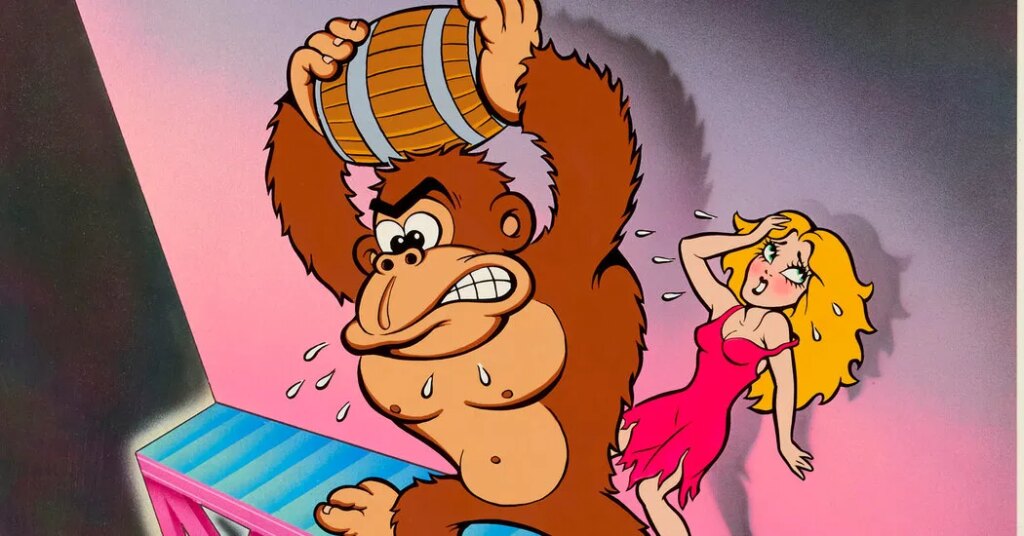
She will look in on a booth displaying an acrylic-on-celluloid painting from the 1980s that was used in advertising for a game from Nintendo. She pulled the image from a dumpster when she was working for Nintendo of America and a storage room was unexpectedly emptied out.
She didn’t realize then that the painting, in an envelope she grabbed, had been the first appearance of the Nintendo character Mario. The poster will go from Comic Con to the Rago/Wright Gallery at 501 West 20th Street from Oct. 20 through Oct. 23 before being auctioned on Oct. 28 in Lambertville, N.J. Travis Landry, the principal of Landry Pop Auctions, which will handle the bidding, said that the presale estimate was $100,000 to $150,000.
“This is what started it all,” Landry said. “This is the first time the public laid eyes on Mario.”
Except that the Mario character was not called that. The Mario name came along later.
Landry said that Nintendo had commissioned the acrylic-on-celluloid painting by the artist Leslie Cabarga as a promotion for a new arcade game called Donkey Kong. It showed a character called the Plumber — or Jumpman, because he, um, jumped to dodge obstacles. His appearance evolved, and he was rechristened Mario, a name taken from Nintendo’s landlord in Washington state. By some accounts, using that name was a gibe at the landlord, not a tribute.
“When we think of Mario as a character in today’s world, seeing the movies, the comic books beginning in the ’90s, the cartoons, the games — every kid today knows Mario,” Landry said. “The analogy is what Donald Duck or Mickey Mouse were to the 20th century, Mario is to the 21st. And this was the beginning.”
Donkey Kong was Nintendo’s first successful arcade game. The company had been making handmade playing cards since the late 19th century and cartoon characters in partnership with the Walt Disney Company since 1959. In the 1970s, it ventured into toys and arcade games, starting with Donkey Kong.
And then video games came along, “taking the zing out of the arcade boom,” as a headline in The New York Times put it in 1982.
“I don’t think anybody knew that it would turn into what it has become — I don’t even think Nintendo did,” said Darbous, who was an advertising manager at Nintendo.
That was behind the demise of the storage room: The company wanted to turn it into more office space because it needed to accommodate growth fueled by Mario’s success.
She said she grabbed envelopes from the dumpster, peeked inside and saw that they contained artwork. Her boss said she could take them home. She slipped the envelopes into a drawer in her coffee table and all but forgot about them, even after she moved to the East Coast more than a decade later. The envelopes spent several years in storage as she moved again. She remembered them only recently, when she was cleaning out her garage and came across a bin containing other keepsakes from her Nintendo days.
It took her a moment to remember where she had stashed the envelopes she had pulled from the storage room dumpster, and when she went into the family room and opened the coffee table drawer, she panicked. All she saw were lithographs from a trip to the Czech Republic — until she took a second look and found the Jumpman painting sandwiched between them.
She said that she had decided to part with the painting because “it’s not serving a purpose” in a drawer. “It’s not like something I have room for or that matches my décor. There’s a much better place for it.”
Weather
Today will be mostly sunny as temperatures rise back into the 70s. Tonight will be mostly clear with a low around 56.
ALTERNATE-SIDE PARKING
In effect until Monday (Columbus Day/Indigenous Peoples’ Day).
QUOTE OF THE DAY
“It’s made to envelop you — but with a sense of … dance. Things appear. They vanish. They’re dark. They’re bright. They’re vocal.” — Jakob Kudsk Steensen, a Danish artist whose digital simulation of the swamp that Berlin was built on will be shown at the Museum of Modern Art starting on Oct. 12.
The latest New York news
-
Chrysler Building to get huge makeover: Tishman Speyer, a large commercial landlord, is buying the Chrysler Building with other investors in a $235 million deal. The previous owners ran into financial difficulty and were criticized for neglecting upkeep; a major renovation is planned.
-
Mamdani draws anger with Oct. 7 statement: After calling the anniversary of the Hamas attacks on Israel “profoundly painful,” Mayor Zohran Mamdani denounced Israel’s military action in Gaza, prompting criticism from some Jewish leaders.
-
Investigating sexual misconduct in N.Y.C. schools: The U.S. Education Department opened an investigation into the city’s handling of sexual misconduct cases in schools. It’s the latest salvo by the Trump administration against the largest school system in the country.
-
Murder charge for fatal injection: An unlicensed wellness spa director was charged with second-degree murder after the medical examiner ruled that a dose of an anti-aging drug he gave a 27-year-old woman caused an embolism that killed her.
-
A new campaign plan: Chris Gallant, a Black Hawk pilot and a Democrat running for a House seat on Long Island, is trying to make the most of things after The New York Post published revealing photos taken in 2010. He has leaned into the situation, posting images of himself with the slogan “Make Politics Sexy Again.”
Gates deterred fare beaters in the subway
More high-tech gates are coming to subway turnstiles.
Gov. Kathy Hochul and transit officials said the first batch of gates had done so well at deterring fare invasion that they were planning to install gates in 50 more stations by the end of next year.
The Metropolitan Transportation Authority, the state agency that runs the subway, installed fare gates in 20 stations as part of a pilot program last year. It credited them with a 35 percent drop in fare beating. At two stations, both in Brooklyn — Hoyt Street on the 2 and 3 lines and Nostrand Avenue on the A and C lines — fare evasion fell 72 percent after the new gates were installed. (The M.T.A. arrived at those percentages by comparing fare gate data with data from the same stations during the last full month before it put in the gates.)
Hochul said that fare evasion had been “a real challenge for us.”
“But nothing is more frustrating for those who are paying their fares to see others who can clearly pay but don’t,” she said. “Every time a fare beater steals a ride, they’re stealing money meant for our trains and buses that keep them moving.” Based on the pilot program, she estimated that the M.T.A. could recoup $100 million a year in lost revenue by 2029.
My colleague Stefanos Chen writes that the promising results for the pilot program followed a bumpy rollout. Some riders have complained that the new gates are slow to accept payment, creating bottlenecks in high-traffic stations.
Perhaps unsurprisingly — this is New York, after all — fare beaters have worked to beat the new gates. Social media posts showed people trying new ways to slink under, climb over or burst through them. Some gates sound sirens when they register a fare beater, making noisy stations noisier.
The M.T.A. has said the goal of the pilot program was not to wipe out fare evasion but to discourage the casual scofflaw — someone who might intend to pay the fare but decides not to after seeing other riders walking through an open emergency gate.
The fare gates used during the pilot — at busy hubs that include Times Square in Manhattan, Bedford Park Boulevard in the Bronx and Roosevelt Avenue in Queens — were paid for by the three vendors, all of which have installed similar gates in cities like Paris, London and Los Angeles. One company, Cubic, built the tap-and-go payment system, OMNY.
METROPOLITAN diary
Alternate side
Dear Diary:
It was summer 1974. I had just graduated from college and was renting a room in a friend’s apartment on Riverside Drive. I had a car, which I was careful to move for the alternate-side parking rules.
One day, my car was not where I had left it. I called the police to report it stolen.
“What kind of car is it?” the officer asked.
A Renault, I said.
“No one would steal that car,” he said. “It must have been towed.”
He was right.
— Howard Friedman
Illustrated by Agnes Lee. Tell us your New York story here and read more Metropolitan Diary here.
Glad we could get together here. See you tomorrow. — J.B.
Davaughnia Wilson and Ed Shanahan contributed to New York Today. You can reach the team at [email protected].
Sign up here to get this newsletter in your inbox.
The post A Forgotten and Found Piece of Video Game History appeared first on New York Times.