The first hurricane did not arrive until four months into this year’s Atlantic hurricane season. It has been two years since one of the storms struck the mainland United States — Milton, in 2024, was the last time — and longer still since one hit the area of the Gulf Coast where Isaias is forecast to make landfall in southern Alabama or the Florida Panhandle.
Here are six ways Isaias is remaking the story of this year’s hurricane season.
There were only tropical storms this season.
The northern Gulf Coast, which stretches roughly from Galveston Bay in Texas to the western edge of the Big Bend of Florida, has seen a few tropical storms skirt the shoreline this year. In July, Tropical Storm Bertha formed along the northeastern Gulf Coast and drifted west, parallel to the shore, crossing the tip of Louisiana and ultimately moving inland at the Texas-Louisiana border. Last month, Tropical Storm Edouard formed near the Louisiana coast and also moved inland near the Texas-Louisiana border. Both systems produced intense rainfall, but neither had the time or the ocean conditions to reach hurricane strength.
It’s been two years since the last hurricane hit the U.S.
The last hurricane to make landfall in the mainland United States was Hurricane Milton, which came ashore near Siesta Key, Fla., as a Category 3 storm on Oct. 9, 2024. That same season, Hurricane Francine crossed into southern Louisiana as a Category 2 storm on Sept. 11. The storm, which quickly weakened over land, damaged buildings and caused flooding and power outages in New Orleans and the cities and towns southwest of the area.
The Louisiana coast is often a target.
A few years earlier, in 2021, Hurricane Ida ravaged the Louisiana shoreline as a Category 4 hurricane, blowing ships loose from their moorings, carving a path of destruction far inland and eventually delivering memorable flooding to New York City. At the time, Louisiana was already struggling to claw its way back after a particularly active and destructive hurricane season in 2020. That year, Hurricane Zeta (Category 3) struck Louisiana on Oct. 28, and Hurricane Delta (Category 2) hit the state on Oct. 9. A few months earlier, on Aug. 27, Hurricane Laura (Category 4) caused substantial damage: Roofs were peeled off houses, the facades of brick buildings were ripped away, billboards were knocked down, and trees and power lines littered the roads.
It’s been six years since a hurricane made landfall in Alabama.
The 2020 season was the last time a hurricane made landfall in Alabama, when Hurricane Sally came ashore on Sept. 16. The Category 2 hurricane took an unusual path: After forming off the west coast of Florida, it moved west toward New Orleans before taking an abrupt turn and making landfall at Gulf Shores, Ala. — near where Isaias could also hit.
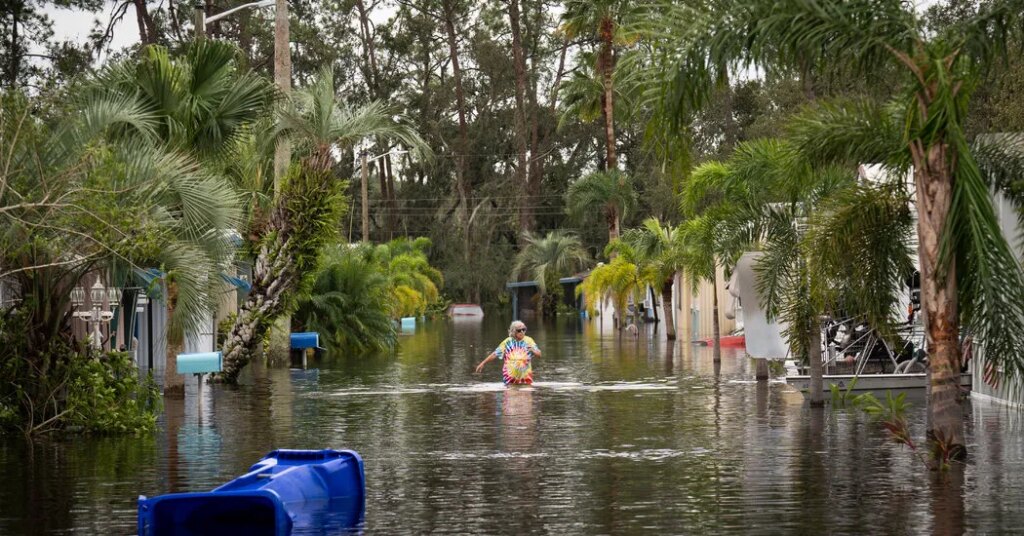
The trajectory of Sally brought extensive rainfall that led to sweeping floodwaters, as well as a storm surge that battered the coasts of Alabama and Florida. Surging water reached higher than five feet in Pensacola, Fla., and drove a barge into a section of the Pensacola Bay Bridge, then under construction, destroying part of the span.
A Category 5 hurricane struck in 2018.
The worst storm along the northern Gulf Coast in the last decade struck slightly east of where Isaias is expected to make landfall. Hurricane Michael moved inland as a catastrophic Category 5 hurricane on Oct. 10, 2018, in Mexico Beach, Fla. It remains one of the most powerful storms ever to hit the continental United States, unleashing a trail of destruction across 200 miles that splintered houses and stirred up a terrifying seawater surge that submerged entire neighborhoods and sent boats careening down city streets.
Here is how Isaias may compare.
While no two storms are alike, Isaias is expected to cause damage similar to that of the Category 2 storms that struck the region over the last decade. Still, like the worst of these systems, the storm has the potential for significant rapid intensification — a scenario that, while unlikely, could result in more extensive devastation.
The post 6 Ways Isaias Is Remaking the Story of This Year’s Hurricane Season appeared first on New York Times.