Is there an outbreak of plague in Russia?
The short answer: We don’t know. The slightly longer answer: A woman who works in a remote Siberian lab that studies plague has died of pneumonia. The lab has been locked down and the Russian authorities aren’t saying much, which has fueled speculation and rumors.
There’s a lot we still don’t know. The Times has gathered all the available information and talked to experts to try to make as much sense of it as possible. (Spoiler alert: Don’t panic.)
Who died, and how?
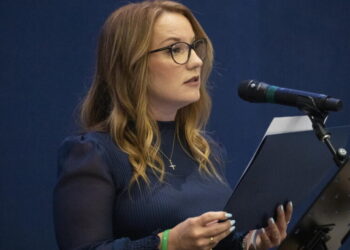
Darya Shipilova, a 28-year-old employee of Irkutsk’s Anti-Plague Research Institute of Siberia and the Far East, seems to have died of a mysterious pneumonia earlier this month. Her death prompted Russian health authorities to quarantine the hospital where she died, along with the institute’s staff and other people who were in contact with her. So far, so unsettling.
The plague still exists?
Yes. The plague has been with us a very long time. There are still a few hundred cases every year, mostly in Madagascar and Democratic Republic of the Congo, but also in the United States, Russia and other countries.
Many people know the plague as the “Black Death,” a pandemic that is thought to have killed at least a third of Europe’s population in the 14th century.
Yersinia pestis, the bacteria that causes plague, has infected humans for thousands of years, also circulating among rodents and other small mammals, which serve as long-term reservoirs, and fleas, which spread it.
Are we talking about the bubonic plague?
There are three main ways that plague can infect humans: Bubonic plague occurs when the plague-causing bacteria multiplies in the lymph nodes, usually after a bite from an infected flea. Septicemic plague occurs when the infection spreads to the bloodstream. The most virulent type is pneumonic plague, which causes a severe rapid-onset lung infection and can be spread through a cough or sneeze.
Left untreated, pneumonic plague can kill a victim within days. But all three types of plague respond well to antibiotics if they are taken quickly. Based on the information we have so far, most experts aren’t too worried.
Then why the sense of alarm?
The fact that Shipilova worked in a lab studying plague, which is supposed to have robust protections against the microbe escaping, is concerning.
The lack of details from the Russian authorities has unnerved many around the world who remain scarred by the Covid-19 pandemic. At that time, it was an authoritarian government in China, where the virus originated, that covered up information.
In the immediate aftermath of Shipilova’s death, Russian authorities were very terse. They failed to clarify her whereabouts before her death or to address questions about whether an accident had taken place at the institute.
When health officials and the United States government began asking questions, the Russian authorities gave additional information. (On Wednesday, U.S. Secretary of State Marco Rubio said it was “incumbent” upon Russia to share more with the world. “We’re watching it very closely, hour by hour,” he said.)
Russia said yesterday that Shipilova had been vaccinated against the disease and no “emergency situations” had been identified at the lab. (One caveat: It’s not clear how effective the available vaccines are.)
Russia’s health regulator also said there are “no epidemiological risks for the population of Irkutsk and the Irkutsk region.”
Has plague ever been used as a bioweapon?
Maybe — but it’s been a while. In the 14th century, according to one account, a Mongol army catapulted plague-infested bodies into the Crimean city of Caffa.
In the modern era, a defector from the Soviet Union’s bioweapons program once claimed his government stockpiled “dozens of tons of smallpox and plague” that could be loaded onto bombs and missiles.
The existence of an active biological weapons program in Russia, which has historically sourced strains from anti-plague institutes, has added to global concerns.
In an annual threat assessment this year, U.S. intelligence agencies said Russian scientists were continuing to develop new chemical and biological weapons capabilities. The State Department, in its arms control compliance report last year, said Russia maintained an offensive biological warfare program in violation of the Biological Weapons Convention.
So should I panic?
Based on what we know so far, no. For all the unknowns, experts say that even if plague were confirmed in Shipilova’s death, the risk of widespread contagion would be limited.
Reporting by Paul Sonne, Edward Wong, Chris Buckley, Oleg Matsnev Milana Mazaeva and Alina Lobzina
The post What to Know About the Fears of a Plague Outbreak in Russia appeared first on New York Times.