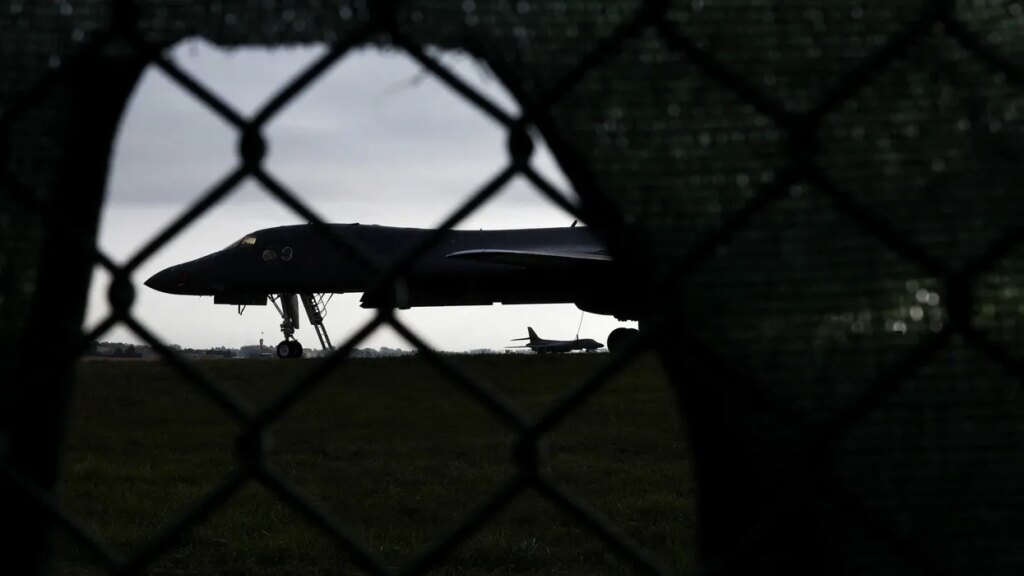
The hasty withdrawal of a dozen U.S. B-1 bombers from a British air base over an Iranian drone threat may have taught Tehran that President Donald Trump “can be pushed around,” warned a former top Pentagon official warned.
American and British officials said the bombers were rushed out of RAF Fairford over the weekend after receiving credible intelligence that Iran-backed operatives were planning to launch drone strikes on the aircraft and U.S. troops from just outside the base’s fence, but the New York Times reported that the pullout is “another glaring example of how, time after time,” Trump has “been forced into retreat” since launching the war in February.
Trump insisted the move was no big deal, and Secretary of State Marco Rubio tried to wave it off, saying the Pentagon is “constantly reallocating resources where they need to be,” but Dana Stroul, the Pentagon’s top Middle East policy official in the Biden administration, said the abrupt decision could do damage at home and abroad.
“Such a hasty decision is intensely disruptive to operational planning and force morale,” said Stroul, now at the Washington Institute for Near East Policy.
“The more concerning issue is at the strategic level, the Iranians are likely to internalize a dangerous lesson — that by demonstrating the ability to get close to U.S. military bases far beyond the Middle East, Trump can be pushed around,” she added.
The bomber retreat follows a string of forced withdrawals across the Middle East. U.S. personnel have been evacuated from bases in Bahrain, Kuwait, the United Arab Emirates and Qatar. Six U.S. service members were killed in a strike on Port Shuaiba in Kuwait, and some bases were so badly damaged that the Pentagon has little interest in rebuilding them.
After Iranian strikes made many bases uninhabitable, troops moved into hotels and office spaces, some of them unprotected, and Iran began targeting those as well.
The Pentagon has refused to give Congress cost estimates for repairing or rebuilding the bases. Lawmakers say the bill could run tens of billions of dollars, a figure the Times noted could become political fodder before the midterms.
“The financial costs have continued to climb by billions each month, even as the administration refuses to acknowledge the munitions crisis we face or admit the costs to rebuild bases heavily damaged by Iran,” said Sen. Jack Reed (D-RI), the top Democrat on the Armed Services Committee.
The war has also eroded a core rationale for the U.S. presence in the region, and the United States has been unable to guarantee freedom of navigation through the Strait of Hormuz or parts of the Red Sea.
Trump has repeatedly shifted his timeline for victory, from a few days to five or six weeks, and now says Iran will fold “right after the election.”
The administration points to real gains – Iran’s navy has been sunk, its air force grounded, and a U.S. blockade has choked its oil exports to a trickle.
The post Trump sending ‘dangerous’ signal to enemy after hasty retreat: ex-Pentagon official appeared first on Raw Story.