I recently went diving off Kawaihae on Hawaii’s Big Island. The water was bathtub warm, about 85 degrees, with an impressive 80 feet of visibility which meant you could see how little of the reef ecosystem was left. The coral was dead, just a few shoaling fish moving through the rocky structures that remained. It wasn’t my first encounter with a dead reef. It won’t be my last. But those of us who care about the ocean and the other 29% of the planet can’t afford to get too discouraged.
When I founded an ocean conservation group in 2003, I believed we could still turn the tide. Industrial overfishing, pollution and the destruction of coastal habitats were serious threats, with climate change adding to their cumulative effects. Still, there were elected ocean champions, growing public engagement and emerging clean energy technologies. We could replace offshore oil rigs with wind farms, establish protective parks in the sea and find less destructive ways to fish, farm seafood and live well by our coasts.
I’m less hopeful today. Fossil-fuel-fired climate disruption is today changing the ocean’s physical nature: its temperature, chemistry, circulation, even its color. I’ve spent much of my reporting life watching the damage accumulate.
After Hurricane Katrina in 2005, I traveled through an emptied-out New Orleans and along a devastated Gulf Coast. I thought a disaster that killed more than 1,800 people and generated more than a million environmental refugees would act as a wake-up call for climate action.
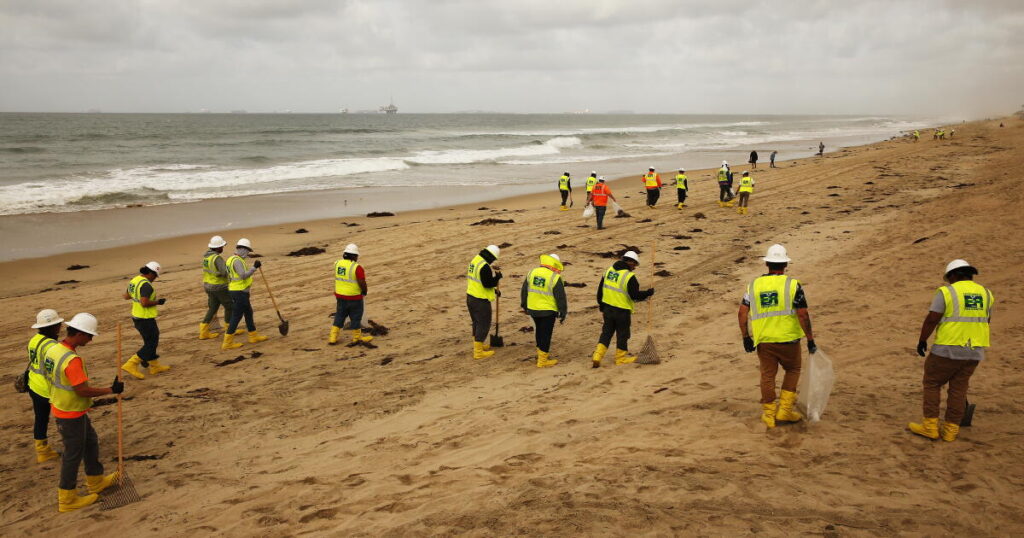
In 2007, after the container ship Cosco Busan hit the San Francisco-Oakland Bay Bridge and spilled fuel, I met a young couple who had driven from Lodi to help. Amber Kirst was walking the shoreline in white pants stained with oil, carrying a bag of dead crabs and oiled litter. “We needed to do something,” she told me.
Two weeks later, aboard a Coast Guard cutter guarding Iraq’s offshore oil terminals during the Iraq war, its young executive officer scanned the dark waters and waiting supertankers. “We’re looking at the pain and war that surrounds oil,” he said.
By 2010, covering BP’s Deepwater Horizon disaster, I was losing confidence in our political system’s ability to change course. I flew over 100 dolphins and a humpback whale trapped and dying in the oil. “BP isn’t paying us to clean up the oil,” one shrimper in Biloxi later told me. “They’re paying us not to riot.”
Two years later, the Chevron refinery in my city of Richmond, Calif., exploded. I watched an oily black column of smoke rise over the bay. Beginning that afternoon, thousands of people coughing and with eye and throat irritations filled local hospitals.
I also spent decades reporting on how the fossil fuel industry spread doubt about climate science while buying political influence. Now the Trump administration has declared an “energy emergency” to promote more fossil fuel extraction while attacking offshore wind and other clean energy systems. It’s like fighting fire with a kerosene hose.
Meanwhile, the ocean absorbs 90% of the excess heat trapped by greenhouse gases and a substantial share of our carbon dioxide. That buffering comes at a cost: warmer, more acidic waters, less oxygen and mounting stress on marine life. Coral reefs and kelp forests suffer, fisheries move to cooler deeper waters, and coastal communities face rising seas and more destructive storms.
We know what the solutions are. What we lack so far in most places is the political will to put them to work at the scale that our public seas and ocean require. We need to move from what policymakers call ocean and coastal management to what emergency-room and battlefield physicians call triage: saving what we can while we can.
That means eliminating fossil fuel emissions, establishing marine protected areas, ending destructive fishing practices. It means we must stop mining, drilling and spilling. We must keep plastic and other pollutants out of our waters. It also means rebuilding wetlands, oyster reefs, kelp forests and the living defenses that help protect coastlines. Protecting what’s left is essential. But it is no longer enough.
I’m not expecting a return to the ocean I grew up with, watching “Sea Hunt” on a black-and-white television in the last century. That was a different world, with 5 billion fewer people and more room for wilderness and wildlife, especially offshore. Nostalgia won’t bring that back. Neither will despair or misanthropic fantasies about a virus or artificial intelligence taking us out.
So although I’m no longer hopeful for today’s living seas, I’m still committed. Like that young woman picking up oiled crabs, we all need to do something. Then keep doing it until ecosystem restoration becomes a major human enterprise and job generator across all sectors of society and for generations to come.
The ocean we protect and restore will not be the ocean we inherited. But it will still be the ocean on which our lives, cultures, economies and communities, both human and wild, depend.
David Helvarg is the executive director of Blue Frontier, an ocean policy group, and co-host of “Rising Tide: The Ocean Podcast.” He is the author of “Forest of the Sea: The Remarkable Life and Imperiled Future of Kelp.”
The post It’s too late to restore the ocean. Now all we can do is triage appeared first on Los Angeles Times.