SÃO PAULO — A right-wing surge in Brazil’s elections this week could give presidential front-runner Flávio Bolsonaro the leverage not only to free his imprisoned father, former president Jair Bolsonaro, but also to pardon supporters convicted in a Jan. 6-style assault on the capital and impeach the Supreme Court justices who have sought to hold them accountable.
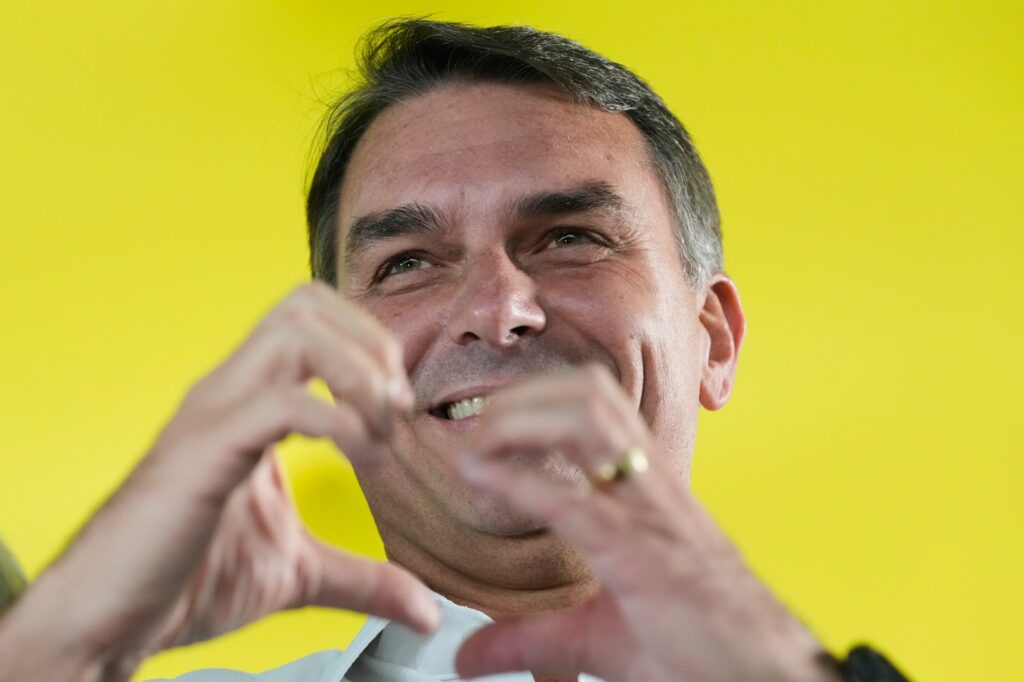
After outperforming polls to finish first in Sunday’s opening round, Flávio Bolsonaro, a senator, is the favorite in the runoff Oct. 25, analysts, pollsters and prediction markets say. He is challenging left-wing President Luiz Inácio Lula da Silva, who came in second, to lead Latin America’s largest democracy.
Bolsonaro has portrayed his father’s 2022 defeat to Lula and conviction for attempting a military coup to stay in power as an injustice — and cast the election as an opportunity for revenge. He has promised amnesty for his father, now serving 27 years in prison, and for his supporters.
If elected, his efforts will be boosted by the unexpected success of right-wing candidates in state and congressional races on Sunday. His party will hold 28 of the 81 Senate seats, its largest caucus in more than three decades, and 121 of the 513 seats in the House of Deputies, the most since the end of Brazil’s military dictatorship in 1985.
With center-right and right-wing allies also winning seats, he could build a coalition large enough to unilaterally amend the constitution and, for the first time in the country’s history, impeach justices.
“Flávio has never misled voters about the agenda he intends to pursue,” said political scientist Felipe Nunes, director of the Quaest polling institute. “If elected, he will have a congressional base that will allow him to take these steps. The far right will be able to implement a much more sweeping platform than before.”
Bolsonaro has said as much.
“Brazil has already given me a Congress that is much further to the right than it is today,” he said Tuesday while campaigning in Goiânia. “So that we can change the constitution, so that we can redemocratize this country, so that institutions once again respect the constitution.”
Jair Bolsonaro never enjoyed anywhere near as much clout. When he took office in 2019, his party had four senators and 52 deputies. Refusing to negotiate with the center-right parties whose support is essential in the legislature, he struggled to advance his agenda.
Rodrigo Maia, who was speaker of the House at the start of Jair Bolsonaro’s presidency, said Flávio Bolsonaro would enjoy more power than his father because his party will hold more seats in Congress and because he is more willing to negotiate with other parties.
“If Flávio wants to run a government of revenge, he has to accommodate those parties,” Maia told The Washington Post. “Nobody is going to vote for revenge if he doesn’t give them positions of significant political value.”
Lula has warned voters against giving back power to the Bolsonaros. At a campaign rally on Saturday, he framed the election as a choice between “democracy and sovereignty” and “barbarism and corruption.”
The Bolsonaros continue to follow the playbook of their ally and friend, President Donald Trump.
Jair Bolsonaro, like Trump, blamed the failure of his reelection bid falsely on fraud, then watched as supporters assaulted, occupied and vandalized the presidential palace, Congress and the Supreme Court.
Flávio Bolsonaro, like Trump, has cast those supporters as patriots and promised to pardon them. He has declared those who prosecuted his father corrupt and pledged to use the powers of the presidency to punish them.
Bolsonaro has called repeatedly for the impeachment of Justice Alexandre de Moraes, who oversaw his father’s prosecution, and others.
Reshaping the Supreme Court has become one of his clearest projects, aimed at settling past scores and preventing future challenges. Bolsonaro is under investigation himself over allegations of corruption after he sought millions of dollars from a jailed banker accused in a multibillion-dollar fraud.
The right-wing candidate denies wrongdoing, and lawyers for banker Daniel Vorcaro have said they will not comment.
Jair Bolsonaro appointed two justices during his presidency. Given vacancies and retirements, his son could appoint four. One seat has been vacant for a year. The Senate rejected Lula’s nominee, the first such rejection in 132 years. Three other justices reach the mandatory retirement age of 75 by 2030.
Over the next three weeks, Bolsonaro and Lula will compete for the roughly 9 million Brazilians who voted for other candidates in the first round, and the roughly 33 million who stayed home.
In a country frustrated by stubbornly high prices and growing household debt, Bolsonaro has cast himself as the candidate of change. Lula, who says he has not received proper credit for Brazil’s economic growth or declining unemployment, is reminding voters of the corruption investigation. Flávio Bolsonaro, he said, has a “dark biography.”
“Flávio is the favorite today,” Nunes said. “But there is still room for Lula to reach out to voters who backed him for the first time in 2022, are now frustrated and chose not to vote.”
The post Right-wing surge could give Flávio Bolsonaro power his father never had appeared first on Washington Post.