The Dodgers were horrible. The Angels were great.
No, that’s not a dispatch from topsy-turvy land. It’s their report cards following the first season Major League Baseball has utilized the Automated Ball-Strike system (ABS), courtesy of Baseball Savant’s calculations of the total run value of overturns on challenges.
ABS is the review process that uses cameras to track the precise location of a pitch in real time. Batters, catchers and pitchers can contest a ball or strike call by immediately tapping their cap or helmet. When a call is overturned, Baseball Savant measures the difference in run expectancy between the situation before the pitch/challenge and the situation after the call is flipped.
Overall, ABS overturned 54% of challenged calls. Catchers succeeded on 59% of their 5,792 challenges — changing an umpire’s “ball” call to “strike,” while batters succeeded on only 49% of their 4,765 challenges — changing a “strike” to a “ball.” Pitchers made 182 challenges — only 1.7% of the 10,557 total attempts — and only 72 were overturned (39.6%).
That shouldn’t be surprising. Catchers have a stationary view of a pitch from directly behind the plate, while batters track pitches standing from the side. Pitchers deliver the ball with their heads and several other body parts in motion.
“It’s like a new muscle for players to learn,” Yankees manager Aaron Boone told reporters. “You have instincts over what to do in certain situations. This is a new instinct of knowing when to challenge and instinctively within a second, oh, that’s a ball. What’s the situation?”
Takeaways from this high-tech, high-stakes MLB add-on that became instantly popular with fans and something of a poker hand for players:
Batters best at winning challenges didn’t necessarily produce at the plate: Jose Altuve topped all batters with 5.6 projected runs gained, followed by Seattle’s Cal Raleigh at 4.6. Yet Altuve, a .300 lifetime hitter, had his lowest batting average in 15 full seasons at .250, and Raleigh inexplicably hit only 23 homers while batting .182 one year after setting a record for catchers with 60 homers while batting .247.
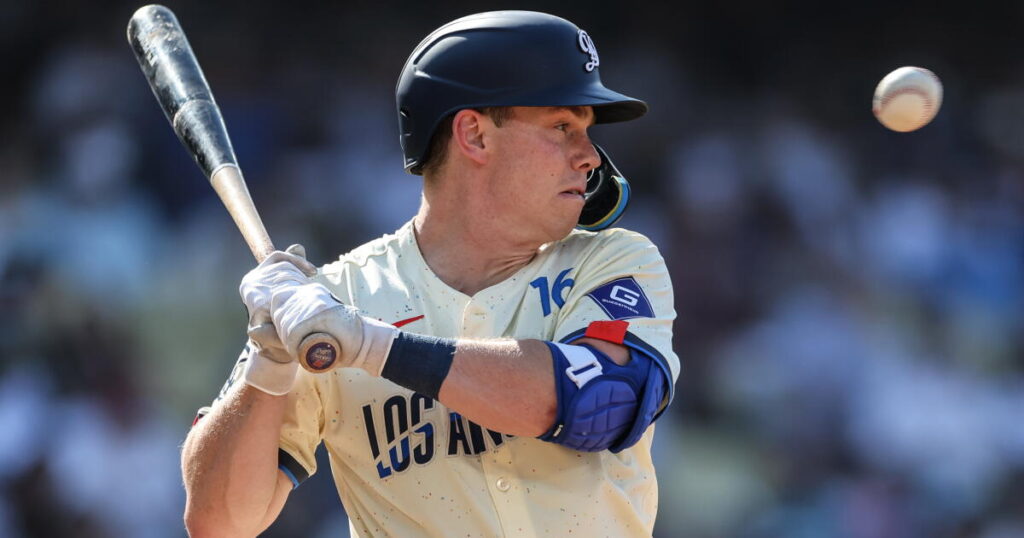
Batters poor at challenges can lose their privileges: Dodgers third-year outfielder Andy Pages showed vast improvement in his patience at the plate this season, drawing 49 walks compared to the 29 he totaled in each of his first two seasons. Yet he is so bad at ABS challenges that manager Dave Roberts forbade Pages from challenging pitches after his unsuccessful challenge in the NL Division Series opener Monday.
“We talked about obviously a lot this year with Andy’s success rate or lack thereof,” Roberts said. “I didn’t revisit it before Game 1, so that’s my fault. I did have a conversation today. So, yeah, we’ve managed that one going forward.”
Pages challenged more pitches (25) than any other Dodger during the regular season, yet was unsuccessful on 14 of them, giving him an underwater success rate of 44%, roughly the same as similarly challenge-challenged teammates Shohei Ohtani, Kyle Tucker, Dalton Rushing and Miguel Rojas.
Players adept at challenges need to tap their helmets more often: Each team starts the game with two challenges. Teams lose the ability to challenge after they do so incorrectly twice. That makes some players challenge-shy, especially early in a game.
Freddie Freeman (71%) had the highest success rate among Dodger regulars, yet he challenged only seven pitches all season. He desperately wanted to challenge a pitch during a game in June, but could only shake his head in frustration after a strike three call he believed was a ball. Pages had wasted the Dodgers’ second challenge on a clear strike moments earlier.
Mookie Betts was successful on 12 of 18 challenges, yet found himself tap-tied as well as tongue-tied in Game 1 of the Division Series when he led off by striking out looking on a full-count pitch clearly outside. He gave plate umpire Roberto Ortiz an astonished look and walked to the dugout shaking his head. What he didn’t do was tap his helmet to trigger a challenge.
Coming down hard on Pages was a change of tune for Roberts, who early in the season encouraged Dodgers hitters to be more aggressive making challenges. They finished the season 25th with 310 challenges and a 54.5% success rate. The Minnesota Twins led MLB with 460 challenges and the Cincinnati Red had the highest success rate at 61.6%.
Losing teams can be adept at challenges: The Reds also led MLB with 16.8 runs added through challenges, yet finished last in the NL Central. The Angels were next at 14 runs added, but that didn’t keep them from racking up 100 losses for the first time in franchise history. The Athletics (12.3) and Twins (10.1) were third and fourth in runs added, respectively, but also had losing records.
Angels aging superstar Mike Trout treated ABS challenges like a new toy, asking for four in the first five games of the season. Three were successful. Trout was expected to benefit big-time from ABS because he has always had an excellent walk rate and boasts a .405 on-base percentage in 16 seasons. Yet after the initial burst, he challenged only 10 more pitches all season, finishing with a 64% success rate.
Angels youthful hitters Nolan Schanuel and Zach Neto were among the top 10 MLB players in challenges, and their success rates were better than league average at 56%. Reds infielder Sal Stewart, the odds-on favorite to win the NL rookie of the year award, led MLB with 51 challenges and was successful 28 times.
Early in the season, Angels manager Kurt Suzuki said he wasn’t going to impose hard-and-fast rules on his players that might prevent them from making a challenge they believe in. The Angels finished 11th in MLB with 369 challenges and had a 53.7% success rate.
“If you feel 100% strongly that it’s a ball,” Suzuki told the Athletic, “go ahead and challenge it.”
Winning teams can be poor at challenges: The three teams with the best records in baseball were challenge challenged. The Dodgers (100 wins) were worse than all but four of the 30 teams at minus-8.5 runs, followed by Tampa Bay (98 wins) at minus-7.8. Milwaukee (103 wins) was 20th at minus-2.4.
The worst team at challenges was Cleveland at minus-13.4, yet the Guardians won the AL Central.
What does it mean? ABS challenges produce an infinitesimal W or L, a momentary shot of euphoria or thin slice of humble pie. Yet there is little correlation between a batter’s ability to crush the ball and his ability to discern a ball from a strike when a pitch is only an inch or so inside or outside the strike zone.
The player who accumulated the most unsuccessful challenges? Future slam-dunk Hall of Famer Bryce Harper with 26. His success rate was only 45%.
The Associated Press contributed to this story.
The post Dodgers, Angels receive surprising report cards from the Automated Ball-Strike system’s first season appeared first on Los Angeles Times.