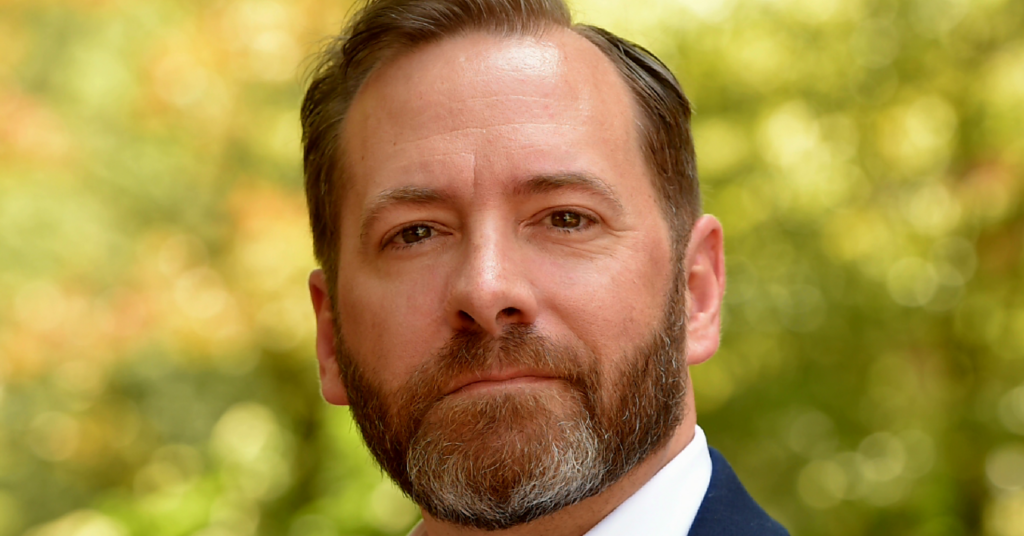
What impact has the Iran war had on the U.S. military? As the conflict drags on, the Times Opinion columnist and Iraq war veteran David French speaks with the former Special Forces officer Mike Nelson about the way Pete Hegseth, the secretary of defense, has tried to remake the military in the midst of the war, and what the Democrats should do if they win control of Congress in January.
Below is a transcript of an episode of “The Opinions.” We recommend listening to it in its original form for the full effect. You can do so using the player above or on the NYTimes app, Apple, Spotify, Amazon Music, YouTube, iHeartRadio or wherever you get your podcasts.
The transcript has been lightly edited for length and clarity.
David French: As some listeners might know, before I went into journalism, I served in the U.S. Army. I was a judge advocate general officer, an Army lawyer. I deployed to Iraq in 2007 and served for almost a year. So I can say from some degree of experience that I’m worried about the way Pete Hegseth, the secretary of defense, is managing the war in Iran.
News clip: There are new, concerning reports of deteriorating morale among troops. News clip: Months of strikes on Iran have severely depleted the U.S. military’s supply of missiles, especially advanced interceptors. News clip: Some family members expressed concerns — prolonged deployment is affecting sailors’ mental health.
My friend Mike Nelson spent more than two decades in the Army, retiring as a Special Forces officer. He is a fellow at the National Security Institute, and he joins me today. Welcome, Mike.
Mike Nelson: Morning, David. Thanks for having me.
French: Mike, before we dive into details, how would you rate how Hegseth is faring so far, sort of top line? How much is he changing the military under his leadership? And just putting aside the rhetoric, substantively, how much is he changing the military? How long-lasting could these changes be?
Nelson: Well, I’m going to surprise a lot of the people who have read anything I’ve written, primarily at The Dispatch, about Secretary Hegseth, and I’m going to say the truth is that not every one of Secretary Hegseth’s ideas are bad or wrong, but many of them are. And more important, many of his correct ideas are not necessarily where a secretary of defense should be focusing. He was correct to say that there had been myriad distractions that had been placed on the Department of Defense that took away from some of the war-fighting focus, or deterrence focus, being ready for future operations. We saw it in his speech last week. He’s primarily a showman, so he has his canned catchphrases that he likes to say.
Archival clips of Pete Hegseth: No fatties. No trannies. No beardos. No weirdos. No wimps. No radicals. Just warriors. […]
We do bad things to bad people. […]
Maximum lethality, not tepid legality. Violent effect, not politically correct.
And for months, we have been hearing “No dudes in dresses,” specifically saying that he has changed the policy so that there cannot be transgender service members anymore. OK. That decision was made months ago, and he just continues to hit the greatest hits. All right, what next? The next part, the “no beardos” thing, right? He was correct that shave waivers were probably overused and oversought in a disciplined military, and too many people were getting them, and it took away from the overall military bearing. OK. That’s what we expect battalion sergeants major to focus on.
French: Yeah, I was going to say that this is not a secretary of defense-level issue, but ——
Nelson: So he is focusing largely on these tactical-level, really — he commands, or leads, the single largest organization in the United States, and he is focused on these very small-ball issues that we actually empower and pay really professional noncommissioned officers — these sergeants and sergeants major — to do on his behalf. All he has to say is: “This is the new policy. Go forth and do great things.” Instead, he’s bringing people to D.C. to make sure they hear it straight from him. I think a lot of his ideas, which might be correct, are distractions, or at least for what he should be focusing on, where he’s supposed to be at the strategic level, merging those tactical effects with the strategic goals of the United States — and that’s not happening, and we see that playing out with the war in Iran.
Additionally, before I move on, like I said, he has some good ideas. Recently, in his speech, he had Fortress America, I believe is what he called it, which was basically hardening U.S. installations to make sure they were on independent power grids and not susceptible to cyberattacks.
That’s a good move. Besides that, he is also making some really bad moves. So we’ve seen his focus on warrior culture and physical training, and things like that coming at the cost of some of the innovations that we should be focusing on as an American military. I think he is damaging not only our progress in getting ready for the next conflict, but he’s also potentially causing negative effects in military leadership by purging those innovators who currently exist and replacing them with sycophants who are primarily motivated by personal loyalty.
French: I’d love for you to tell listeners a little bit more about your service. I think it’s safe to say it was a bit different from mine. I served as a JAG officer in Iraq. You were a Special Forces officer, tip of the spear. And it seems to me that it’s as if Hegseth is kind of trying to reshape the military into that entire archetype: the Special Forces warrior. Do you think he’s trying to remake the military in that image of almost, like, the Spartan Special Forces warrior? What’s happening here?
Nelson: I think you’re right that there is this archetype that filtered out. And it’s kind of a disservice to what the military was doing as a whole.
The war, if you think about the way the war started and culminated, there are two examples that I think a lot of people have in their minds. There’s the beginning of the war with Task Force Dagger, my old unit, 5th Special Forces Group, riding horses with the Northern Alliance, which is one side of S.O.F., working by, with and through local resistance.
French: And just to interrupt you for a second — S.O.F., Special Operations Forces?
Nelson: Right. And then the other side of that, you have kind of — in Kathryn Bigelow’s movie “Zero Dark Thirty,” the raid on Osama bin Laden SEAL Team 6 conducting a direct-action raid — our most elite direct-action Tier 1 forces conducting these kinds of incredibly hard to pull off raids and doing them with great skill. That does not portray at all what the everyday experience of a lot of soldiers were, which was largely conducting patrols, conducting local governance, all sorts of things that went into the war that aren’t as easily translatable onto film or in really cool-looking Instagram pictures.
I do think that the secretary, his whole concept is predicated on the idea that the Joe Biden years particularly focused far too much on creating social experiments within the military, and that distracted from the core function of fighting wars. And there are certain examples where there were distractions. There were things that took away from just the time available to conduct training. But it’s a vast overcorrection that he’s engaged in. And as we look at the transformation of war, we are going to need people who have that warrior ethos, but that’s only one part of the combined arms fight. We are also going to need a lot of innovators, a lot of analysts, a lot of people who can integrate the new technologies. So the secretary’s focus tends to be a little bit myopic just on one part, and one part that was applicable several years ago, but not necessarily looking at all the new layers that are required.
French: We’re going to get into this a little bit more, but I’m struck by the different image that he has of a soldier compared to what the Ukrainian Army looks like, which I think might be very indicative of your point, because the Ukrainian Army is not an army of extraordinarily heavily muscled, high-T special operators. The average age is shockingly high. I’ve seen some measures say the median age of a Ukrainian soldier might be in the late 30s or early 40s, which is more like the age I was when I dragged myself through officer basic at Fort Lee. And also, it’s got a — frankly, Mike — a bunch of nerds doing drone warfare. And so it strikes me that he’s articulating a kind of physical image of a warrior that, as you were saying, doesn’t match the diversity of the needs that we have.
Nelson: Right. We do need infantrymen to be able to move long distances, carrying large amounts of weight on their back, with very little sleep and very little food. But yes, Ukraine is right now what I refer to as the lethal laboratory. They are leading the way in demonstrating what is the future of warfare, and it is a mixture of both new technologies and old truths of war that will endure forever. We are missing the opportunity to learn from our Ukrainian allies, but the generals who were trying to do that are no longer part of the D.O.D. They’ve been purged out.
French: I’m so glad you raised the generals, because I had a conversation with one of the fired generals not long ago, and this person pointed out that, in essence, they were fired for following orders. In other words, the Biden administration handed down some edicts and some orders regarding D.E.I. — diversity, equity, inclusion and other things — and as loyal soldiers, whether they agreed or not, they saluted and they carried out those orders. And Hegseth comes in and essentially says: Well, if you were carrying out the orders that were the priority of the previous administration, you’re woke, you’re weak, whatever, and you’re gone.
And one of the fears that was expressed to me by this former general was that, well, does that then set a precedent that if you are a general officer and you follow the orders of an administration, that the next administration will come in and purge you, replace you with general officers who have to then follow their orders, who will then only be purged by the next administration?
It strikes me that the Trump administration is setting a precedent here that if actually carried out by other presidents would be catastrophic for the integrity of the military. And it’s setting a precedent that, given enough time under the current administration, could be catastrophic for the idea that merit matters as much as political fidelity. But it was very chilling to me to hear the general essentially say, “I was fired for following a lawful order.”
Nelson: Right. So a lot of the criticism that Hegseth has steered toward these generals — who implemented, as you said, the lawful orders of the previous duly elected president and the civilian leadership through the secretary of defense — focus on two things, largely. Well, three things, I guess: D.E.I. in general — kind of a big umbrella — the Covid-19 vaccine mandate and the withdrawal from Afghanistan. Everything that was just listed, we can disagree with or think were bad ideas or conducted poorly, and all of them were lawful orders from the duly elected president through the civilian leadership. Right now, there’s a great deal of discussion about generals rejecting Secretary Hegseth’s guidance. There are two places that I have concern about legality: One being the overall legality of the war with Iran, and the second being the Sept. 2, 2025, boat strike, at the beginning of Operation Southern Spear.
But outside of that, I think it’s fair to say that I disagree and think that most of Secretary Hegseth’s stuff or ideas are bad ideas — counterproductive and potentially damaging in the long term — but they are legal. And would he want these same generals that he’s propping up to be fired immediately in 2029, in January, because they implemented his orders? The secretary needs to remember that his predecessors gave legal orders, whether he agreed with them or not, and he is in a position now to implement new policy, and that’s fine. We may disagree with it, but they are legal orders.
French: Before we move on to the Iran war, there’s another element, and this is kind of the entree into it: the secrecy that we have seen around the Iran war. And I want to be really careful about this question, because there are ways in which secrecy is absolutely imperative. So, for example, there was a famous moment during earlier iterations of the Iraq war where Geraldo Rivera is embedded with American troops. And Mike, I don’t know if you remember this ——
Nelson: I do.
French: He essentially maps out an upcoming attack. In other words, he talks about what’s about to happen, what we’re about to do, and if Iraqi forces were watching these feeds, they would have had foreknowledge of an American attack. It’s an example where secrecy’s really important. You don’t broadcast what you’re about to do. And when we had embedded media, they would get briefings on upcoming attacks, but they were under an agreement that they were not going to discuss that until the appropriate time, when everything unfolded. But I think a lot of listeners would be really surprised at how closely connected the media was, at least to my work, when I was in Iraq. We had embedded media throughout the entire period: L.A. Times, Reuters, Times of London, Stars and Stripes — and they were able to report from the front, what we were doing. And in my experience with the guys, the cav troopers I served with, 99 percent of them wanted to talk to the media. They wanted people to know what we were doing. But you were in a very different part of the world. You were in the Special Operations world, the ultimate level of secrecy applied to you.
Talk me through your own experience with the media, and how you see the connection between the media, the military and the American public.
Nelson: Well, I’ll talk about that specifically, the role that the media plays in understanding what the American military does, but then, also the steps that led us to the secrecy, as you point out, about the war in Iran with this Department of Defense.
I had a general officer that I worked for who I have near cultlike devotion to — one of the finest officers I’ve ever known, one of the finest human beings I’ve ever known. And I saw this person. I’ve worked for him twice: once in a Special Operations task force in Afghanistan and once at a much higher strategic level. And he used to always bring media with him on his in-theater engagements. And I heard a pretty prominent member of the media ask him once why he did so, because so many other members of the military were at least shy around the media, or maybe cautious around the media. And he said, “The American people deserve to know what their military does on their behalf, and you’re how they find out.”
And I thought that was just a distilled-down, virtuous statement about the role of military operations in a healthy republic. Right now, we are engaged in a conflict that started out unpopular and is growing more unpopular as it goes. There’s never been a less popular war since modern polling.
And part of the problem is, because the American people do not trust what the government is telling them about the war, about the causes for it, about the conduct of it, about how it’s going, about how it’s going to be resolved at the end. And part of this, we know that the president has his own unique relationship with the media and unique relationship with how he presents the truth of what he’s doing or what his administration is doing. But the secretary and the Department of Defense as a whole owe a part of this, too, or are complicit in this, too. From the beginning, we saw that Secretary Hegseth had what seemed to be a primary motivation of controlling the narrative of what he was doing — not so much what the Department of Defense was doing, but what he personally was doing. Controlling his own image and those who had the ability to shape it.
He implemented attempts to control what the media would report from the Pentagon, famously purging out or at least having most of the legacy media leave physical spaces in the Pentagon when they wouldn’t agree to preapproval of their stories. They’ve been replaced largely with alternate media that are, in some cases, sycophants; in some cases blend the boundaries between what is media and what is public relations, because we’ve had people who are both wearing the hat of new media, credentialed by the Pentagon, and special government employees working for the Department of Defense without disclosure. We’ve had other people who haven’t been officially brought on as special government employees, but have publicly said that they’re advising the secretary on what to do. So he wants to tell his story through supportive media only. Additionally ——
French: Can I interrupt you on that real fast? I want to drill down on that, because that has not gotten the attention it deserves. Now, listeners, the conflict of interest should be very obvious.
And that’s something that, in my view, is utterly symbolic of the corruption around this administration. But that is a perversion of the role of the military. It’s a perversion of the role of the media, and I just wanted to put an exclamation point behind that. So, anyway, please continue.
Nelson: And we should be clear: In previous administrations, Republican and Democrat, we’ve seen the crossing over between media and government officials back and forth. People who were in the administration then became hosts on cable news. But there’s a clear delineation of which role they’re filling at which time. They’re never wearing both hats at the same time, and if they are, they’re never hiding the ball from the public that they’re attempting to influence. We’ve seen the secretary and Sean Parnell, his primary spokesman, respond to any critical stories by flatly claiming that everything is fake news.
Now we see, whether it’s stories about the damage done to Naval Support Activity Bahrain, the Port of Shuaiba, critical shortages on some of our interceptors — all of this is immediately reported as fake news: It’s not true; the war is going gloriously.
And there’s never a revisiting of the actual facts. Now, this is a problem because I don’t think, and I may be overstating things, whenever we go to war, there are going to be costs. The fact that the administration is trying to paint it as though there are no negative effects makes them seem even more disingenuous.
French: Well, you’re getting to something, and we’re sort of rolling into the war itself right now. And it strikes me — and this is something that I’ve been banging the drum on from the beginning — that, let’s suppose you’re a supporter of the war in Iran and, like I’ve said, I’ve long been an Iran hawk. There are circumstances where you could convince me, if you went to the public and you presented evidence, that striking Iran would be in the national interest, in compliance with the laws of war, that it would be the right thing to do. But it was never tried. They never went to us. And one of the points that I’ve tried to make to people is that this isn’t just a matter of dotting the I’s and crossing the T’s on some sort of archaic constitutional requirement when everybody knows it’s just the president anyway. No. Democracies are supposed to go to war with the support of the people, because a democracy with the support of the people can be one of the most potent war-fighting enterprises in world history. But a democracy that goes to war without the support of the people can underperform, can fail at accomplishable tasks, because it lacks that support.
How have you seen this decision? We can set aside the legality, the constitutionality, just for a moment. Practically, how have you seen that decision to not go to the American people work itself out in the actual conduct of the conflict?
Nelson: Well, as you point out, they teach this in the woke war colleges that Secretary Hegseth has a problem with. There is this thing called Clausewitz’s trinity, right? And one of them is the will of the people, and you need popular support, particularly when we talk about a republic.
One of the, arguably, advantages that Iran has in this conflict is that they don’t have to have popular support. They are already repressing their people. You know, I don’t think they have too much concern for the suffering of the people as they endure the effects of the conflict. But in hindsight, a lot of people look at the war in Iraq and judge it as this horrible decision, and George W. Bush is ultimately responsible, and he needs to answer for what decisions he made, as any president does.
But people forget the Bush administration spent about a year making the case for a war with Iraq. The American people overwhelmingly agreed with it, and the Senate overwhelmingly agreed with it. We’ve either, as you said, sought congressional approval, as is required by the Constitution, or it’s been for limited national security means. But usually those have also come along with the “My fellow Americans” from the Oval Office statement, not a middle-of-the-night video released via Truth Social, where there are myriad reasons revealed.
In that statement on Feb. 28, the president said, “To the great, proud people of Iran, I say tonight that the hour of your freedom is at hand,” which sounds a lot like regime change, and that’s ——
French: That is the natural meaning of those words.
Nelson: Correct. Yeah. Why now was not entirely clear, and what we are trying to accomplish is not entirely clear. And that all leads into the fact that, as I said, starting on Feb. 28, this war was already underwater. The administration never felt like they needed to make the case for it, I think in part because they modeled this after Venezuela. It would be over before we ever had to make a justification, and it would be seen as gloriously victorious. That has not been the case. And I think part of that — I don’t know this for a fact — is if Secretary Hegseth is presenting all rosy information to the American people, he may also be doing that to the president himself, underplaying the risks and saying that the military can accomplish everything that he wants.
French: So let’s talk through the course of the war itself. And so there were a number of goals articulated. At first it seemed to be regime change — “The hour of your liberation is at hand.” And then, mainly through Secretary Marco Rubio, you began to see a bullet-point checklist that this is what we want to accomplish. They changed their tune on regime change pretty quickly. After a few days, it was: Regime change? What regime change? What we really want to do is sink the Navy, cripple the Air Force, degrade — to the point, at least, of potential destruction — their missile and drone arsenal, end any capacity for future nuclear development, and doing so while keeping the Strait of Hormuz open to minimize damage to the American and global economy.
And it seems like they’ve accomplished essentially one of those bullet points, which was destroying a big chunk of Iran’s conventional military. But, as you and I both know, the Iranian Navy and the Iranian Air Force were not keeping us up at night. That was not the source of the danger from the Iranian regime. And so it looks like none of the other objectives have been truly accomplished. And it seems like the definition of victory now, Mike, is changing to: But if we can pry the Strait of Hormuz back open, then we’ve won the conflict.
How are you seeing the actual course of the conflict, and if any of these other goals are going to be accomplished?
Nelson: So going back through, I’m going to go through the negatives and then maybe the causes for hope. So, as you said, regime change, we shouldn’t forget that really what started this whole interest in striking Iran again were the popular protests in January. We talked about the — a lot of talk right now — if there is a justification. As a matter of fact, the administration will counter those who express concerns about the war by basically accusing them of wanting to help Iran get a nuclear weapon, and we will never let Iran have a nuke. I agree with that premise. We did a ——
French: I don’t want that, either.
Nelson: Right. And we did a great deal to set back the Iranian nuclear program in the summer of 2025 with Operation Midnight Hammer. We haven’t done anything, really, since then to affect the nuclear program. We have probably incentivized the Iranians to have even more of a desire for a nuclear weapon as a deterrent, as a trump card to prevent any kind of future attacks. The way they see the president talk about North Korea — you pointed out that we have basically put the Iranian, or specifically the Islamic Revolutionary Guards Corps Navy, at the bottom of the sea — and that’s a good thing.
But that’s an operational effect. The fact that they are still able to threaten traffic in the Strait of Hormuz means they have found alternate means to affect the maritime domain. We have destroyed a fair amount of their missile capability, and they’ve used a lot of it. But as we’ve seen in reporting, Iran may have retained more of their missile capability than we originally thought, and also, as has been reported, we have used a fair amount of our interceptors defending the region against these.
So even though we have diminished the overall supply of their missiles, we may have actually created more of a delta, or at least set the conditions for a delta, between the amount that they have proportional to our interceptors. Opening the strait, as you point out, it’s not a goal of the war because it was the condition that existed before. It’s just a condition that we need to correct because of the war. We have now, I believe, settled into the best of all bad options.
French: I was going to ask that. Have we learned here? Just from a military perspective, are we doing better? And if so, how?
Nelson: So there was a lot of focus last week, when Time released the transcript of their interview with President Trump, and they asked him why he had rejected an Iranian cease-fire negotiation, and he said: Because I wouldn’t agree to something now that I wouldn’t have agreed to a year ago, and it has to be more than the strait.
That was an excellent answer from the president. The resolution of the war has to be more about relieving those conditions I just listed, where we are, in almost every aspect, worse off than we were a year ago.
And the smart play is now the long-term blockade and economic pressure against Iran. The downside of that is that it’s going to exacerbate, or at least keep in the fore, some of the economic pressures that have affected American consumers. But again, the war’s unpopular. Gas prices are not going to go down before the midterms, which is, I’m sure, front of mind for the president, and it’s going to require — kind of like George W. Bush did after the 2006 midterm “thumping,” as he referred to it — he still, despite the unpopularity of the Iraq war, made the correct decision to pursue what was known in the United States as “the surge,” but which enabled the Sahwa, the Sunni Awakening in Iraq, and helped stabilize the region.
The president is going to need to resist the urge for dramatic means, and to keep the course of economic pressure, I think. That’s the best option he has.
French: I’m glad you brought up the surge because one of the things — as I wrote this some time ago — the only thing worse than starting an unconstitutional war is losing an unconstitutional war. And that seemed to be what we were on the verge of. Are you seeing this administration essentially reaching a point where, if it achieves reopening the strait, they’ll then just declare victory and then say, “It’s essentially over. We won”? How do you think this thing actually ends here in the real world?
Nelson: I think, and I don’t mean to overuse an expression, but the devil’s in the details. I do think that, No. 1, there’s going to be some agreement about reopening the strait, but there will probably, for the president to accept it, be some kind of language about an agreement on the nuclear program. I think the most likely place that we will fail to achieve our objectives is we are going to sell out the Iranian people. The Iranian people are going to continue to be oppressed, and probably even more so. In the memorandum of understanding, there was language about us not interfering with the domestic affairs of the Iranian regime, which meant, I think, de facto turning a blind eye to future repression, executions, human rights abuses, etc. So I do think there’s going to be a range of options.
We have the strait and nuclear program at the top, with the strait being the most easily discernible — whether it’s legitimate or not — and then support to the Iranian people at the bottom. Somewhere in there, we’re going to find a range of what we’re going to agree to.
French: I could talk to you forever, but let’s kind of wind down here. Let’s put on a different hat for you. We’re recording this less than a month before the midterms. All indications seem to be that the Democrats will improve their position — at the very least, maybe take one, maybe two chambers. If they do take control of Congress, what should they do to constrain Trump and Hegseth? What should they not do? Put on your “I’m advising Democrats for the good of the service and for the good of national security” hat.
Nelson: Well, I think one of the immediate questions is that the Massie-Hegseth impeachment motion will have to be voted on. So that’s going to, at a minimum, cause embarrassment for the administration and for Secretary Hegseth himself, because I don’t think it’s likely he’s going to be removed from office, but I do think it’s likely he’s going to get more votes against him than he probably realizes. And that will probably cause embarrassment for all involved.
I do think there’s a chance, if the president is unaware of how unpopular the Iran war is, that after the midterms he may seek to find someone, just as Secretary Donald Rumsfeld resigned after the 2006 midterms, that Secretary Hegseth may be not long for this world in the administration if the president looks for someone to point the finger to.
The other thing we’ve seen right now with the lame-duck Republicans who the president did not support in their primaries and now have basically nothing to lose — many of them went along with some of the War Powers votes to restrain the war in Iran. And I do think there’s a danger in those kinds of votes becoming more popular as, No. 1, after the elections, when there are more Republicans potentially who have nothing to lose during the lame-duck session; or in the new Congress, when there’s even less of a red representation in the legislature. I think that highlights the importance of the president making the case that he has not made yet, neither to the American people nor to Congress, why it is important. He defaults to these very short bumper-sticker answers: We should pay more for high gas prices than Iran getting a nuclear weapon.
There needs to be more of an explanation for what the long-term strategy is. Again, I think he has settled on the best option available, which is long-term imposition of economic pain and blockade of Iran. That is the one most likely to achieve any kind of success, but that’s going to require more support that he currently does not have.
French: All right. That’s a great way to end it, Mike. Thank you so much for joining me. I really appreciate it.
Nelson: Thanks for having me.
Thoughts? Email us at [email protected].
This episode of “The Opinions” was produced by Jillian Weinberger. It was edited by Kaari Pitkin. Mixing by Carole Sabouraud. Original music by Pat McCusker. Fact-checking by Kelsey Lannin, Kate Sinclair and Mary Marge Locker. Audience strategy by Shannon Busta and Kristina Samulewski. The director of audio engineering is Isaac Jones. The deputy director of Opinion Shows is Alison Bruzek. The director of Opinion Shows is Annie-Rose Strasser.
The Times is committed to publishing a diversity of letters to the editor. We’d like to hear what you think about this or any of our articles. Here are some tips. And here’s our email: [email protected].
Follow the New York Times Opinion section on Facebook, Instagram, TikTok, Bluesky, WhatsApp and Threads.
The post The Problem With Hegseth’s Pentagon appeared first on New York Times.