Good morning. It’s Wednesday. Today we’ll find out how artificial intelligence makes images of food less than appealing. We’ll also get details on the person Cornell University chose to lead an independent review of the Jane Doe case and how the institution handled it.
There are photographs that make food look delicious. Whenever something from NYT Cooking lands in my inbox, the image alone makes me hungry.
And then there are photographs that have the opposite effect, especially if you look too closely. If you do, my colleagues Claire Moses and Ishani Desai have a warning: “You cannot (ever!) unsee it.” The food often looks off — overly detailed or just wrong.
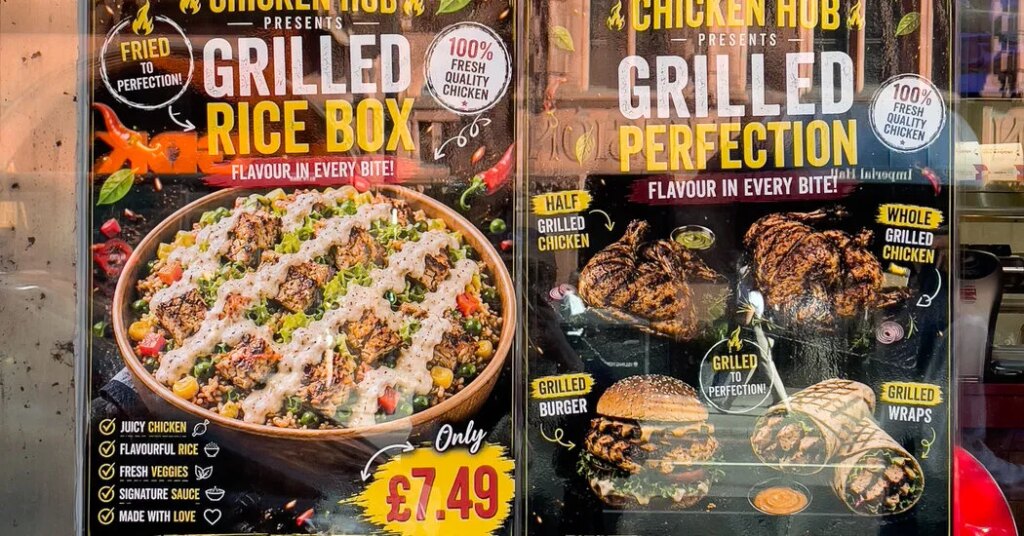
That can happen when food businesses use generative A.I. to promote what’s on their menus. Pastas acquire black dots. So do the grilled, marinated shrimp in camarones zarandeados. The sugary tops of dessert pastries are purple, not white.
It’s known as A.I. food slop, the product of a troubling trend: using artificial intelligence to generate images for restaurant signs and menus. As with A.I. slop more broadly, too often the result is low-quality content. As The New Yorker noted last month, this kind of food imagery is “far less appealing than whatever food porn was.”
Social media has been flooded with examples. Inboxes have been bombarded with them, too. But A.I. food slop is not just online. Our colleague Becky Hughes described her love-hate relationship with the annual Feast of San Gennaro in Little Italy — her apartment is a little too close for comfort — and added A.I. slop to the “hate” category. She noted that there was A.I. slop signage on half of the stands. Marianna Paláez, a food photographer in New York, said she recently walked by a small billboard that showed someone’s hand lifting a slice from a pizza. But no slices were missing from the pie. “It didn’t make sense,” she said.
A lot of A.I. slop was probably created using older, free A.I. models, according to Jon Krohn, an A.I. expert and data scientist. Making food pictures look like fine art is mostly about mastering texture, repetition and the interaction between different ingredients. “Those are three things that, historically, A.I. models were weak at,” he said.
Older A.I. systems also picked up on patterns like sesame seeds on a bun, and replicated the pattern across the entire image. More black dots. Or, in other cases, strange-looking holes. The strangest are the ones that go viral.
Michael Whiteman, a New York restaurant and food industry consultant, said that he used generative A.I. “every so often” in meetings “to show a client what a dish might look like, especially if I’m proposing something nonstandard.”
“Sometimes the images are grotesque,” he said. In a meeting, “you keep talking to A.I. to see if you can modify it” in real time. “Sometimes that only makes things worse,” he said.
Using A.I. is often more convenient and less expensive than hiring a food photographer.
But restaurant owners aren’t the only ones who face choices about whether to go with A.I. Some designers feel pressure to join the wave or risk getting left behind. Danil Khutorianskii, who owns and operates the Manhattan Sign Shop, said that he was horrified by the designs that A.I. could generate. But customers have been requesting an A.I. aesthetic in the signs they commission or sending him A.I. mock-ups of signage they would like.
Some customers can spot A.I. images and avoid looking. Devan Currao, a customer at Vinny’s Gluten Free Kitchen, a pizza shop in Hell’s Kitchen, said that she realized that the images on the restaurant’s menu had been generated by A.I. To make her choice — a plate of fried calamari, sprinkled with parsley and cheese — she stuck to looking at the actual food at the restaurant.
“I would rather see a bad poster that has real photos than try and figure out if the A.I. is going to be close to the actual product,” she said.
Weather
Another sunny day is ahead with temperatures in the high 60s. Expect clear skies tonight with a low around 57.
ALTERNATE-SIDE PARKING
In effect until Monday (Columbus Day/Indigenous Peoples’ Day).
QUOTE OF THE DAY
“Our administration will not sit back while New Yorkers are taken advantage of.” — Mayor Zohran Mamdani, on legislation he is expected to introduce that would let individuals file lawsuits against companies for unfair business practices.
The latest New York news
-
Hochul declares a measles emergency: Gov. Kathy Hochul declared a statewide health emergency as measles cases increased dangerously across rural counties in the Finger Lakes region, where vaccination rates have lagged. The state reported 108 cases this year, the most since 2019, when New York was at the center of a national outbreak. The declaration comes amid a national resurgence of the highly contagious viral illness.
-
ICE accused of lying and fabricating records: A federal judge condemned the federal immigration agency’s tactics when it mistakenly arrested two Hispanic men, including a U.S. citizen, in the Bronx in May, finding that ICE had “falsified official records trying to conceal” its “illegal actions.”
-
Smear campaigns: Five women have said they were the targets of malicious public relations campaigns that were carried out through anonymous websites, fabricated social media posts or promotion of unflattering articles and posts on the internet, intended to destroy their reputation. The campaigns were spearheaded by three influential Hollywood players.
-
Former parks commissioner dies: Gordon Davis, a lawyer who helped revive Central Park, was the city’s first Black parks commissioner, serving from 1978 to 1983. Later he worked to give jazz a prominent and permanent place at Lincoln Center. He was 85.
-
Broadway-bound: A stage musical adaptation of “Dirty Dancing” is coming to Broadway to celebrate the film’s 40th anniversary. “Dirty Dancing: The Musical” is expected to begin Broadway performances on Feb. 12 at the Lena Horne Theater.
Former acting attorney general to lead Cornell investigation
Cornell University named a high-profile choice to a role that will inevitably draw scrutiny: Sally Yates, a former acting U.S. attorney general in the Obama administration, will lead an independent review of a former student’s rape claim and how the university handled it.
Sally Yates, now a partner at the law firm of King & Spalding, will also look at Cornell’s policies on sexual assault allegations, including the types of support given to students, the university said in a statement. Cornell said that Yates’s team would have access to relevant records, case files and personnel and would be given “independence in conducting the review.”
“It is imperative that Cornell be willing to examine itself with the same rigor we expect of others,” Anne Meinig Smalling, a trustee of the university and the head of the committee that brought in Yates, said in a statement.
Smalling told The New York Times that the university had an obligation to the woman who had filed the rape complaint. “We owe it to her and to our community to take a hard look at what happened so that we can determine what we can do better around both prevention and response,” she said.
The announcement about Yates came after days of anger and a protest over Cornell’s response to the complaint from the woman, who was identified in court papers as Jane Doe. She filed a lawsuit last month that said she had been sexually assaulted during a drug- and alcohol-driven night at a fraternity house at Cornell two years ago. All the men have denied wrongdoing. The fraternity, Chi Phi, has been banned from the campus.
Yates’s appointment also came after the university’s faculty senate moved to vote on a no-confidence resolution directed at Cornell’s administrators. The largely symbolic measure would increase pressure on the president, Michael Kotlikoff, and other officials.
Yates’s appointment also came after Gov. Kathy Hochul rebuked the local district attorney — who had decided not to file charges — and appointed the state attorney general, Letitia James, to act as a special prosecutor in the case.
Yates was a longtime federal prosecutor in Georgia who became deputy U.S. attorney general in 2015. She then wrote a policy memo redefining how the Justice Department would prosecute white-collar criminals. She was fired in 2017, days after being named acting attorney general in the Trump administration, for refusing to enforce the president’s immigration ban.
METROPOLITAN diary
Page turners
Dear Diary:
I was headed to work on the 6 train and dead tired after staying up late finishing a book.
A man got on at Grand Central and stood across from me reading a paperback copy of “Empire of the Summer Moon,” a history of the Comanches.
“That book is incredible,” said a second man in the car, adding a recommendation for Cormac McCarthy’s Border Trilogy.
I had to jump in.
“Guys, this is strange,” I said, “but I just finished ‘Comanche Moon’ last night. Have you read ‘Lonesome Dove’?”
“I love Larry McMurtry,” the first man said.
“Wow,” the second said. “We should start a subway book club.”
— Connor Mellas
Illustrated by Agnes Lee. Tell us your New York story here and read more Metropolitan Diary here.
Glad we could get together here. See you Monday. — J.B.
Claire Fahy, Davaughnia Wilson and Ed Shanahan contributed to New York Today. You can reach the team at [email protected].
Sign up here to get this newsletter in your inbox.
The post Photos of Food With Black Dots? That’s A.I. appeared first on New York Times.