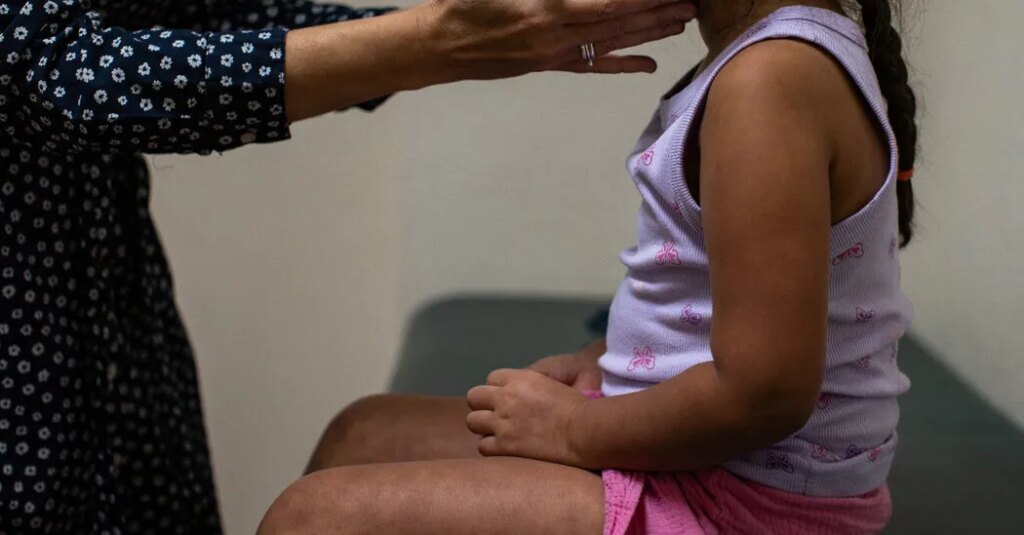
It was a bustling Monday morning at a little pediatrician’s office in central Texas. Children with rashes, fevers and runny noses cycled through exam rooms decorated with butterflies, planets and colorful maps. The doctor, who had been treating kids in the community for 20 years, was delighted when a woman she had cared for as a child came in with her newborn.
Until recently, she had planned to continue her practice for years to come. But this year, she has begun to reconsider amid the stress and legal costs of defending herself in a statewide investigation by Ken Paxton, the attorney general of Texas and Republican candidate for the U.S. Senate, who has accused doctors, drug companies and insurers of conspiring to push parents into vaccinating children.
She agreed to be interviewed and allowed a reporter to visit her practice but asked to be identified by her middle name, Rachel, to protect her from retaliation.
In December, Dr. Rachel received a letter from the attorney general’s Consumer Protection Division demanding her vaccine purchase records over the past 10 years. “The division believes that you are in possession, custody or control” of material, “involving potential misleading or deceptive acts regarding incentives associated with the administration of childhood vaccines,” it said, adding that such acts could be in violation of the state’s deceptive trade practices law.
The letter also requested her practice’s vaccine policy, and said that it would not be sufficient to cite the childhood vaccine schedule recommended by the Centers for Disease Control and Prevention.
Mr. Paxton has also implicated the nation’s largest organization of pediatricians, the American Academy of Pediatrics, in the alleged conspiracy over the workaday task of protecting children from polio, measles, meningitis and more than a dozen other dangerous and sometimes life-threatening diseases.
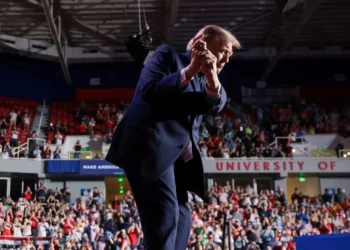
“I will ensure that Big Pharma and Big Insurance don’t bribe medical providers to pressure parents to jab their kids with vaccines they feel aren’t safe or necessary,” he said when announcing the investigation in January, describing his efforts as working “alongside President Trump” and Health Secretary Robert F. Kennedy Jr.
“Together, we will Make America Healthy Again,” he said, using the rallying cry of a movement that helped elect Mr. Trump and propel Mr. Kennedy into the top health position in the federal government.
In many ways, pediatricians, among the lowest-paid specialists in medicine, make for an unlikely target. But they have become a focus in what has become a wide-ranging campaign to raise doubts about vaccination, part of a 20-year quest for Mr. Kennedy that some of his political allies have joined.
The efforts have gained steam despite decades of evidence of the effectiveness of vaccines. More than 1.1 million deaths, from diseases like diphtheria, hepatitis B and measles, were prevented by childhood vaccines in the United States from 1994 through 2023, according to an estimate from the C.D.C.
Unlike many organizations that have drawn fire from the Trump administration and its surrogates, the 67,000-member American Academy of Pediatricians has not retreated. It has sued the Trump administration over policy changes and grant cancellations, with some success so far.
“Everybody thinks of pediatricians as these mild-mannered people who have animals on their stethoscope and would not fight their way out of a bag,” said Dr. Kathryn Edwards, a professor of pediatrics at Vanderbilt University who helped develop a vaccine against a deadly bacteria, Haemophilus influenzae, or HIB.
In August, Mr. Paxton said he was starting an investigation specifically into the American Academy of Pediatrics, accusing the organization of “deceptively promoting childhood vaccines for financial gain.” His office has served the academy with an extensive document demand.
“This is another attempt at intimidation,” Dr. Edwards said, “but they’re not being intimidated because their moral core is about the well-being of children.”
In a statement, the academy said that its vaccine advice is “rooted in decades of peer-reviewed science” and that the “‘investigation’ serves only to undermine public health, sow confusion and put more children at risk of preventable disease.”
Mr. Paxton’s office did not respond to a request for comment. In the past, his office has sued federal officials over vaccine mandates and Pfizer claiming that the company overstated the efficacy of its Covid vaccine.
It is unclear why he opened this investigation, though some people in Texas have speculated that he began it to court Mr. Trump’s endorsement in a competitive primary race (which he eventually received) or to appeal to vaccine-skeptical Texas voters.
“I think aligning himself with Kennedy helped him get an endorsement from President Trump, which then allowed him to win the Senate primary here in Texas,” said Dr. Heidi Russell, a pediatrician and director of the Center for Health Policy at Rice University in Houston.
So far, Mr. Paxton is the only attorney general to investigate pediatricians for vaccinating children. But a wave of vaccine-limiting bills were introduced into state legislatures this year, including some to eliminate vaccine requirements for school entry. None of those passed, but other measures were signed into law that require death reports of infants and children to list vaccines the child had recently received.
In Florida, state officials are holding a hearing this week on a proposal to remove the requirement for schoolchildren to be vaccinated against hepatitis B, chickenpox, pneumococcal disease and Haemophilus influenzae.
It is also unclear how many pediatric practices the investigation has contacted. Dr. Rachel said she did not know why the attorney general’s office targeted her tiny practice in an inquiry that he announced as directed toward the state’s “largest medical providers,” vaccine makers and health insurers. She said that responding to the demand for her records had so far cost her nearly $15,000 in legal fees, and sent her digging for receipts for $18 vaccines given a decade ago.
The document demand letter asked her to keep the inquiry private: “You are requested NOT to inform other entities of this request, as this request relates to an ongoing confidential investigation that would be jeopardized and impeded by disclosure.”
Rekha Lakshmanan, the executive director of the Texas-based Immunization Partnership, an advocacy group, said that the investigation could have a chilling effect on pediatricians, making them think twice about urging vaccinations or opening a practice in Texas.
Ms. Lakshmanan said she also worried that the publicity could accelerate the erosion of uptake of vaccines. The rates of measles and polio vaccine coverage among Texas kindergartners fell to about 93 percent last school year, from nearly 97 percent in 2019.
Adding to her concerns, a new state law made it easier for parents to get exemptions from vaccinations required for school entry, enabling them to download a form rather than order it by mail.
Mr. Paxton’s claims echoed those long made by Mr. Kennedy suggesting that pediatricians were motivated by profit to vaccinate children. “They’re pressured to follow the money, not the science,” Mr. Kennedy said in a speech posted to X last year.
Most pediatricians reject the claim that they profit heavily from vaccines as ludicrous. They note that they must pay upfront for the vaccines, refrigerate them according to federal guidelines and then haggle with insurers to cover the cost.
Prices for vaccines are far lower than the cost of many new therapies and range from about $30 per dose for a vaccine that protects against diphtheria, tetanus, and pertussis to as much as $595 for a newer antibody treatment that protects infants against RSV.
Nearly half of children’s vaccines are covered by the $8 billion federal Vaccines for Children program, which Mr. Kennedy, as health secretary, oversees. The program was created after measles outbreaks 32 years ago to ensure protection for lower-income families. Though some insurance companies offer incentives for quality care, which can include vaccinating children and doing annual checkups, pediatricians have said the sums are nominal.
In Dr. Rachel’s office, a large refrigerator contains what she estimates to be about $125,000 worth of vaccines to protect children from diseases like polio, measles and hepatitis. She supplied information in response to Mr. Paxton’s office’s request for every “reward, financial benefit, bonus, discount, return, rebate or other consideration” from a vaccine maker, giving details that included a $40 batch of cookies a vaccine maker’s representative brought to her office. She said her most significant discounts were small reductions vaccine makers gave her for paying a bill promptly.
Mr. Paxton’s office fired back with a follow-up to its 28-item document demand, dismissing some of the initial responses as frivolous or improper.
While Dr. Rachel has responded to the demands, the American Academy of Pediatricians has been actively pushing back on the Trump administration.
The academy and other public health groups successfully challenged Mr. Kennedy’s purge of an influential vaccine committee, whose members were replaced with vaccine skeptics.
In March, a federal judge ruled that the new members were unlawfully appointed and blocked the new vaccine guidelines that recommended dropping protection from six diseases. Mr. Kennedy’s office has challenged the ruling and the case is ongoing.
In another case, a federal judge ruled in January that Mr. Kennedy’s department had retaliated against the academy when it cut $12 million in grants that were used to address sudden infant death, fetal alcohol disorders and newborn hearing screenings.
Ten days later, Mr. Paxton announced his investigation in Texas.
On the same day, Children’s Health Defense, the anti-vaccine nonprofit that Mr. Kennedy founded, sued the American Academy of Pediatricians making similar claims, including of a “racketeering” scheme to “defraud” parents by asserting that vaccines were safe when questions remained unanswered. The case is ongoing.
After two rounds of document requests from Mr. Paxton’s office, Dr. Rachel is now waiting, uncertain what to expect next.
She recalled the anxiety she felt opening her own practice, leaving behind a reliable salary to cobble together the funds to stock and furnish an office, hammering together exam tables in her garage.
She built a busy practice and accounts for her successes with trinkets in her office: hand-scrawled cards, a drawing from a child that she framed and hung on the wall, and the gift of a little girl’s favorite marble. The suggestion that she was motivated by greed, she said, was maddening.
“I took it very personally,” she said, “because I take pride in what I do. It felt like it was such a slap in the face and an insult.”
The post Texas Pediatricians Face Paxton Investigations for Vaccinating Children appeared first on New York Times.