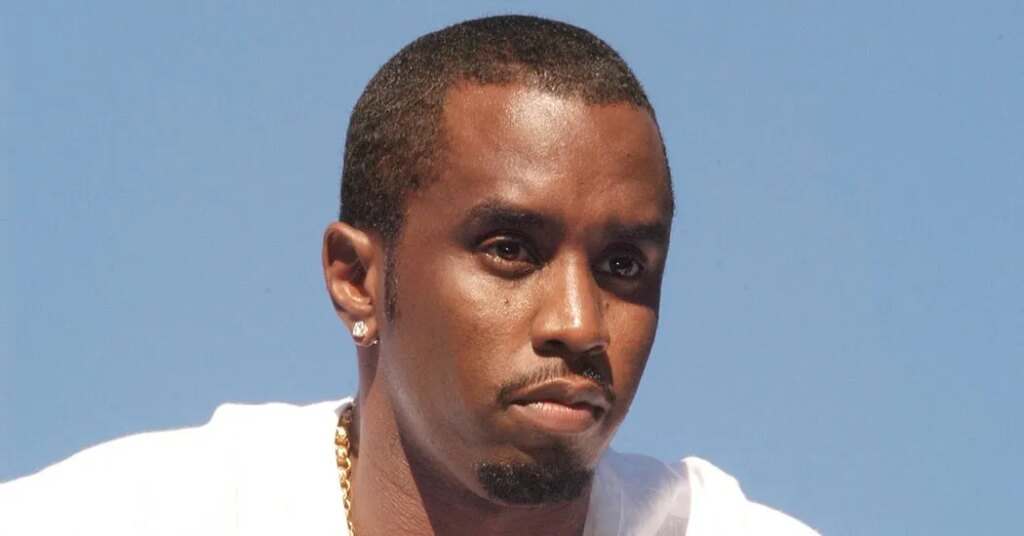
BAD BOY FOR LIFE: The Rise and Fall of Sean Combs, by Cheyenne Roundtree
In the introduction to “Bad Boy for Life,” the Rolling Stone reporter Cheyenne Roundtree poses an “impossible” question: “Who is the real Sean Combs?”
For decades the music mogul sold the public a narrative of himself as a hip-hop vanguard, family man and “fierce advocate of Black excellence.” But in recent years a wave of allegations has unearthed a chilling reality beneath that self-mythology. They include sexual assault, domestic violence, kidnapping, drug abuse and addiction, bribery and the transportation of prostitutes for so-called sex marathons.
Roundtree’s impressive debut, the most comprehensive biography of Combs to date, chronicles this extensive history of crime and hubris across 30 years, alongside an in-depth character study that looks back to his childhood and careers as a record producer, artist and eventually lifestyle brand.
As she writes, “Everything Combs has told the world about himself is now open to further inspection.”
By many accounts, it was a 35-page civil suit filed by the singer Cassie Ventura against Combs in November 2023 that precipitated the collapse of his personal empire. According to Roundtree, Ventura — who signed with Combs’s Bad Boy Records in 2006, when she was 19, and began dating Combs at 21 (he was in his late 30s) — endured a decade-long relationship “stained by rampant domestic violence, with beatings so severe that she once needed a plastic surgeon to stitch her face back together.” She said he introduced her to those drug-fueled sex marathons, which he called “freak-offs” and she later called sex trafficking. The suit prompted more than 80 others to come forward with allegations of their own, spanning decades.
After years of evading accountability, Combs was convicted in federal court in July 2025 of prostitution-related offenses, but acquitted of the more serious charges of sex trafficking and racketeering. He is currently serving a 50-month prison sentence, with the possibility of early release.
Neither hip-hop enthusiasts nor readers who closely followed the trial (or Roundtree’s own investigative reporting) will find anything particularly revelatory in these pages. And the book’s timing, on the heels of several documentary series that surfaced new information (many of which she uses as sources), compromises the publisher’s claim that it’s “groundbreaking.”
Yet Roundtree’s meticulous research — including hundreds of interviews with former staffers, witnesses and industry insiders; and thousands of pages of police and court records — adds greater detail and context to the existing chronology. She also fills in gaps in otherwise well-documented history, from the murders of Tupac Shakur and the Notorious B.I.G., to Combs’s 1999 assault of the Interscope Records executive Steve Stoute, to his tumultuous, jealousy-ridden romances with Jennifer Lopez, Misa Hylton and Kim Porter, among others.
“Bad Boy for Life” is an admirable example of how to write about a complicated, contemptible public figure without either diluting or overstating their cultural contributions. “Reducing Combs to a caricature of villainy alone would ignore the complexity that has long defined his influence,” Roundtree writes.
She begins her vivid portrait of the controlling, hyper-ambitious artist at a point when the young Combs had little control over his life. Raised first in Harlem and then in Mount Vernon, N.Y., by a single mother, Janice Combs, he spoke in interviews about having idolized his father, a drug dealer who was found shot in the head in his car in 1972, when Combs was a toddler.
Roundtree credits the “image-conscious” Janice for Combs’s hustler mentality and his penchant for “perfection and glamour.” Believing “appearance was paramount,” she kept her son in fashionable clothes and a Cadillac and a house with a swimming pool larger than his friends’.
As a student at Howard University in Washington, D.C., Combs commuted to New York City for an unpaid internship with Andre Harrell at Uptown Records, where he became known for his “ingenious … techniques like remixing tracks to extend a song’s life cycle and sampling already popular songs”; and had a knack for developing rare talents like Mary J. Blige and Jodeci. In the early ’90s he founded Bad Boy Entertainment, where he orchestrated a slew of mainstream hits.
But as Roundtree shows, Combs’s successes were inseparable from his egotism. He molded his artists in his image, promoted himself in their songs and videos, and claimed disproportionate shares of their earnings. Each business venture — his Sean John clothing line, liquor partnerships, a television network, reality shows — reflected not only a pursuit of wealth but also a crass, insatiable appetite for admiration.
Roundtree mostly avoids editorializing, letting her stories and sources speak for themselves, and the result makes for a gripping, uninterrupted read. But given that this is a rare case of a high-profile hip-hop record executive being held accountable for sexual abuse, I wish she had more rigorously interrogated the celebrity culture that shielded Combs for so long.
His volatility was no secret to those around him, yet after every scandal he was able to issue a public apology and move on. “Each time,” Roundtree writes, “he emerged not only seemingly unscathed but also somehow wealthier, more powerful and even more broadly celebrated.”
She is skeptical that Combs’s downfall will precipitate a wider reckoning within the music world. “Beyond being woefully unequipped — perhaps even reluctant — to tackle claims of sexual abuse against powerful figures,” she rightly notes, “American society also has yet to confront its fawning relationship to celebrity and power.”
Instead we are left to sit with another question: Was his art worth the suffering he caused? The answer is a definitive no.
BAD BOY FOR LIFE: The Rise and Fall of Sean Combs | By Cheyenne Roundtree | Holt | 391 pp. | $32.99
The post The Chilling Reality Beneath Sean Combs’s Self-Mythology appeared first on New York Times.