“The Trump economy is strong,” wrote White House science-and-tech adviser David Sacks this week. He got the numbers right. New data showed that growth accelerated faster than expected in the second quarter. Inflation came in below expectations. Job creation, Sachs said, was solid. Since he wrote, the government reported that the unemployment rate is 4.2 percent, lower than the average in any of the last eight decades. Yet the public still hates this economy.
In a poll of likely U.S. voters, those who rate the economy as “poor” or “only fair” outnumber those who call it “good” or “excellent” by roughly 3 to 1. Liz Peek, writing for FoxNews.com, blames the low spirits on Republican communications failures and “the incessant negativity of the Trump-hating media.”
There’s a simpler explanation: Prices are too high and still rising too fast. Real wages have thus been falling. Add in that President Donald Trump has instituted some policies that raise prices, has signaled in many other ways that lowering prices is not a top priority for him and has repeatedly dismissed cost-of-living concerns, and it’s not at all surprising that voters are unhappy.
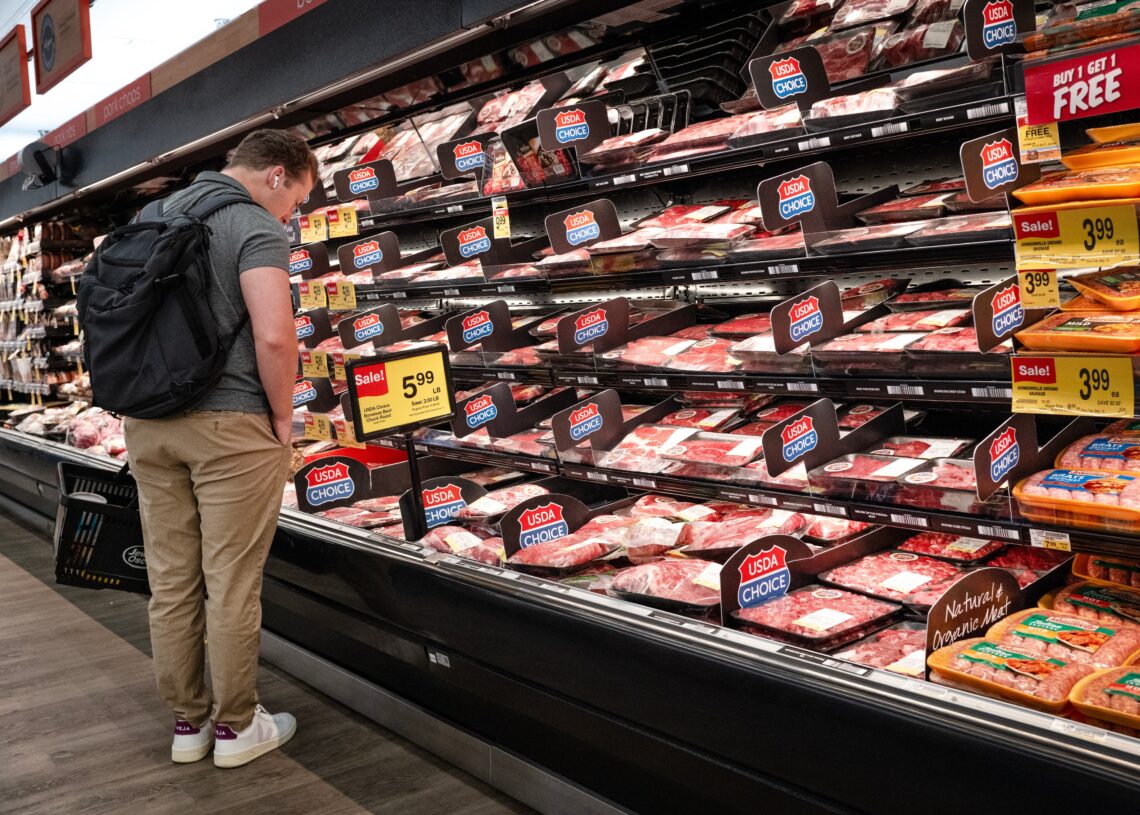
Nor is it surprising that the Republican attempts to sell this economic record, or deflect blame for it, are falling flat. The rising stock market is good news, but wages matter more than stocks for most households. Unemployment is low, but outside of severe recessions, there are more voters who buy meat than have trouble finding or keeping a job. The record-low poverty rate is great news, but the vast majority of voters aren’t poor, either.
Inflation, per the most recent reading, is at 3.4 percent. From the 1970s through the 1990s, Americans would have welcomed that as low. The context today is different. The public got used to low inflation from 2009 to 2020, when the average rate was roughly 1.6 percent. Prices then rocketed higher, especially during the first half of President Joe Biden’s term. Inflation moderated in the second half but still stayed higher than what had become normal.
That level of inflation has persisted and so has public dissatisfaction with high and rising prices. While it’s true, then, that inflation is well below its 2022 peak, that isn’t the yardstick most relevant to voters. They seem instead to be judging the president against the promises he made in his 2024 campaign, when he said that inflation was still too high and that he would bring prices down.
Wages haven’t been keeping up. Republicans brag about last month’s Census report, which shows that real median incomes have hit a record high. But that report covers 2025. Using data from the Bureau of Labor Statistics, my American Enterprise Institute colleague Michael Strain estimates that the average real wage hit a peak in November last year and has fallen since.
Yet even that estimate understates the economic pain that matters politically. The official inflation rate measures only the price of goods and services rather than the price of borrowing to finance them. The interest-rate effect nevertheless registers as inflation to most people.
The frustration Republicans feel over the politics of the economy resembles what Democrats felt during the Biden administration. They, too, cited a lot of positive statistics and concocted theories about why voters weren’t appreciating how well the economy was performing. The latter overlooked the two statistics that mattered most: the inflation rate and inflation-adjusted wages.
An even closer parallel is how Republicans thought about the economy in 2006. Then, as now, they were going into a Republican president’s second midterm with majorities in both chambers of Congress. Then, as now, voters were reacting against corruption, an unpopular war and high gas prices. Republicans pointed to several positive indicators, including a low unemployment rate and a respectable level of economic growth. My friend Larry Kudlow, an economic commentator, called the boom “the greatest story never told,” a label he is using again this year.
Yet for most people, it didn’t feel like a boom: Their paychecks didn’t go as far as they had five years earlier. The president lost popularity, and Republicans lost the House and the Senate.
It may be that the voters are being unfair to Trump and his party. The excessive inflation we’re experiencing isn’t, for the most part, their fault. But that’s also true of the excessive inflation we went through when Biden was president, which did a lot to get Trump elected. (In both cases, the Federal Reserve deserves more of the blame.) Voters’ unhappiness with the economy has a rational basis, and nobody said politics is fair.
The post Why voters are rejecting the ‘strong’ Trump economy appeared first on Washington Post.