Hispanic voters helped to power President Trump’s victory in 2024. Republicans thought they were watching a major, and permanent, realignment, one that would lock in their power in places like Texas and Florida for a generation.
Polling suggests, though, that these voters have quickly soured on Republicans. That could be one of the biggest stories of the midterm elections.
Today, I asked two terrific reporters who work on opposite sides of the country to help us understand the change. Jennifer Medina, a politics reporter based on the West Coast, has dug into it at the grass-roots level, traveling the U.S.-Mexico border to hear how voters’ thinking is shifting. Erica Green covers the White House, and she was there this week as Trump attempted — arguably unsuccessfully — to appeal to these voters.
They joined me on Slack for the inaugural On Politics round table, which is something I plan to do again as we draw closer to Election Day (32 days to go!). Drop me a line at [email protected] and tell me what theme you’d like me to ask our reporters about next time.
Jess: Jenny, you just got back from a trip to South Texas, a place where voters strongly supported Trump in 2024 — but where several congressional districts are now in play. What did you hear from voters there?
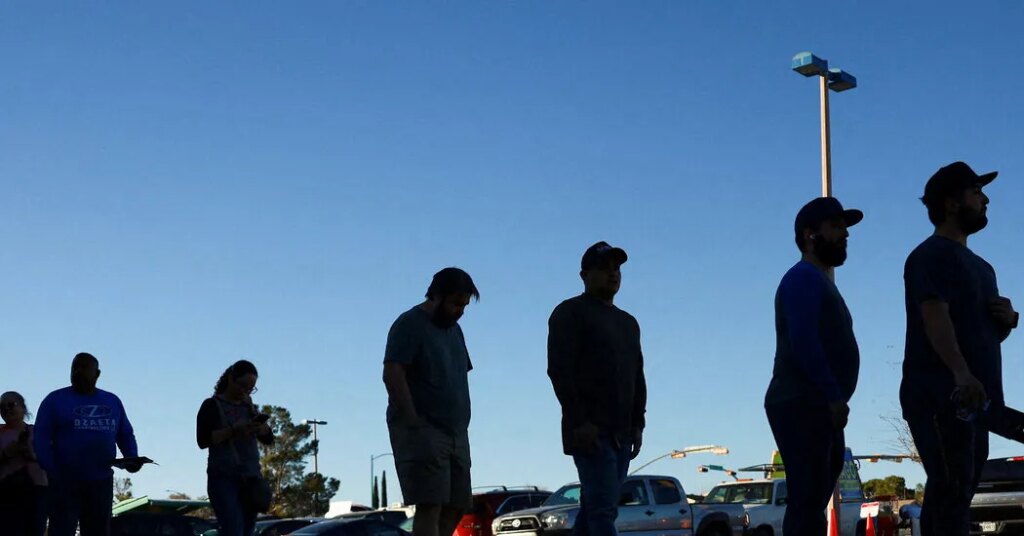
Jenny: The Rio Grande Valley was kind of an epicenter of the shift you’re talking about. I’d been several times to better understand how voters were feeling, and it was truly remarkable to see just how much the support for Trump has evaporated. Trump flags used to dot front lawns and the backs of trucks all over the region — but now those have almost entirely disappeared. I spoke to dozens of voters who backed Trump during the last election and are now furious.
Jess: You wrote that, among voters you spoke to, “optimism about the second Trump administration has curdled into a deep sense of abandonment.” You’re describing a sense of betrayal. What’s behind it?
Jenny: These voters said they backed a second Trump presidency primarily for two reasons: They wanted a crackdown on the border and a better economy. Now, the border is quieter than it has been in years. But the immigration enforcement has also gone after many people who have lived and worked in the U.S. for decades. That has had a real impact on the local economy: Many contractors talk about entire crews that have been deported and workers who are afraid to drive every morning. And meanwhile, the cost of gas and groceries remain high. So these voters feel like they’ve gotten a raw deal.
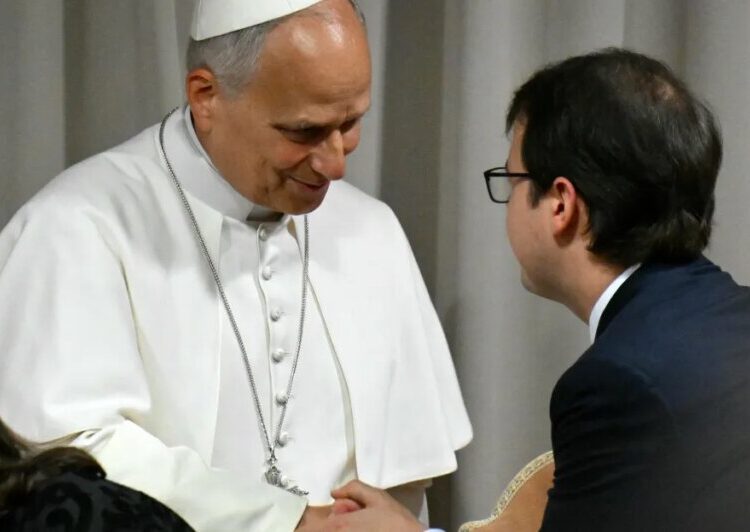
Jess: Republicans are clearly worried about this. Vice President JD Vance went to the border himself to try to rally the party faithful. And Trump hosted a Hispanic Heritage Month celebration this week at the White House. Erica, you were there — what happened?
Erica: The president, as he often does, addressed this problem indirectly with deflection, doling out compliments and dangling a shiny object. It was striking to me that he started his remarks by announcing that the group of Hispanic supporters would be “the first” to tour the floor of his new ballroom, and then went on to praise them as “smart as hell,” “hard-working” and “energetic — sometimes too energetic.”
He made only veiled references to the issues causing the population to break from him, and complained that he was in a bind between being too soft and too harsh on immigration. The only other notable moment was when he made a joke about the danger of walking near the edge of the construction site, saying, “Only a Hispanic could survive that fall.”
Jess: Jenny, how do you think comments like those might be received by the voters you spoke to? What, if anything, did they tell you they wanted to see or hear from Trump?
Jenny: The voters I spoke with were actually not all that interested in what Trump says, exactly. They know he can make eyebrow-raising comments that offend some people, and that’s even part of what they admire about him. What they’re far more focused on is what his administration does. They are all in WhatsApp groups, for example, where there are regularly videos of masked immigration agents stopping people on their way to work. They want to see that kind of thing end. And they really, really want to see the cost of living go down.
Jess: So these voters are looking for a policy change. Erica, does the Trump administration see immigration enforcement as a liability?
Erica: The White House has continued to publicly defend its immigration crackdown, and we’ve seen reporting that, in private, the president has bristled at the idea that ICE would soften its approach. He very much seems to believe that what we’re seeing play out is what he was elected to do, and appears unfazed by the fallout.
When a reporter asked him yesterday about Latino voters’ unhappiness with his immigration actions, he said, “We have to do what we have to do.”
Jess: What other parts of the country are you watching, Jenny?
Jenny: There are versions of this in every state and congressional district with a large chunk of Latino voters. I’m especially curious what happens in South Florida, central California, Arizona and Pennsylvania. But this shift doesn’t necessarily mean these voters will back Democrats. Many say they simply will stay home.
GET CAUGHT UP
On the Campaign Trail
-
Vice President Vance is heading to Fairbanks, Alaska, on Monday. Senator Dan Sullivan, the Republican incumbent, is in a close race there against Mary Peltola.
-
House Democrats’ campaign arm added eight districts to its list of seats that it hopes to flip, venturing deeper into Republican areas. The new targets include districts in Kansas, Texas and Michigan. See them all here.
-
Mike Hayden, a former Republican governor of Kansas, endorsed the state’s Democratic Senate nominee, Adam Hamilton. He is the second Republican former governor to endorse Hamilton in less than a month.
In Washington
-
Trump is set to name Jay Clayton, the director of national intelligence, to a new position: A.I. czar. The president announced the role last month as concerns grew over his administration’s handling of artificial intelligence.
-
While the future of the Kennedy Center remains uncertain, the center’s annual honors ceremony will be held this year at Capital One Arena in Washington.
Around the U.S.
-
Job growth cooled in September and the unemployment rate rose to 4.2 percent, federal data shows. “The labor market is stable, but it’s not picking up. It’s soft,” one economist told The Times.
-
California and almost two dozen other states sued to block the Trump administration from weakening fuel efficiency rules for new cars and trucks. By its count, California has now sued the administration 97 times.
-
David Rivera, a former Republican congressman from Florida, was sentenced to 10 years in prison for secretly lobbying officials in Washington on behalf of the Venezuelan government.
Inside Trump’s taxpayer-funded ads
A series of ads heaping praise on the president have been all over television lately, airing during football broadcasts, cable news programs and “Jimmy Kimmel Live!” They end with an unusual disclaimer: “Paid for by the U.S. Government.”
This afternoon, The Times reported that Trump himself was heavily involved in the ad campaign, and in the idea to use taxpayer money. Here’s what we learned.
How did this start? In August, Trump met in the Oval Office with Republican strategists. His advisers were waiting on him to sign off on super PAC spending for midterm candidates. But Trump was more interested in videos of himself. He asked his assistant, Natalie Harp, to show the group some of his favorite clips. And he made clear that his presidency needed to be front and center in the commercials his advisers were making.
Where did the money come from? Trump instructed Russell Vought, his budget director, to find the money to get the promotional spots on the air. In September, Vought’s office shifted $20 million in the Customs and Border Protection budget, and a day later that agency signed a $20 million contract with a marketing firm.
Is this legal? The administration calls the ads “public service announcements,” and Mark Paoletta, the budget office’s counsel, and Will Scharf, the White House counsel, both said the plan was legal. But Democrats, and even some Republicans, have criticized the spots as a possible violation of federal laws against using taxpayer dollars for “publicity or propaganda purposes.”
THE MONEY RACE
The midterm campaigns are awash in cash. Here are a few stories that stood out to me this week.
North Carolina. That’s where Senate Republicans’ top super PAC is canceling its ad campaign. At the same time, it is making its first investment in Kansas, where the Republican incumbent, Roger Marshall, is in a closer-than-expected race.
$68 million. That’s how much Greg Abbott, the Republican governor of Texas, has spent on advertising — while his Democratic challenger, Gina Hinojosa, has spent $8.7 million. Hinojosa’s allies are calling on the party to send her more money.
Wednesday. That was Democrats’ biggest online fund-raising day since the 2024 presidential election. ActBlue, the party’s fund-raising platform, took in $36 million.
92 percent. Of the $26 million that Tom Tiffany, a Republican, brought in last quarter in his run for Wisconsin governor, that’s the portion that came from three wealthy donors.
FROM OUR CAMERA ROLL
While my colleague Michael Kruse was out reporting on a politician locked in a close race, he snapped this photo of her distinctive footwear. Whose boots are those?
Click an answer and we’ll take you to Michael’s profile of the candidate, so you can see if you’re right. We’ve made the link free to read.
The post The Voters Who Could Decide the Midterms appeared first on New York Times.