Polls are everywhere right now: Democrats are leading in at least six of the nine battleground states key to Senate control and by anywhere from two to 15 percentage points in generic ballots on control of the House.
But polls are only useful for understanding politics when used with caution. This year, even some strategists I talk to are wary of reading too much into the polls. Here’s what to know about polls for the 2026 midterm elections, with some insights from The Washington Post’s polling director, Scott Clement, who has a weekly newsletter called The Pollwatcher.
Get The 5-Minute Fix in your inbox
Polls can’t predict the future
When pollsters ask people for whom they’ll vote in the midterm elections, the results only capture the sentiment that day. Polls aren’t meant to predict who will win on Election Day.
That’s why polling trends are so useful. They capture trends over time. For example, polls throughout this entire year have consistently found a lot of Democratic enthusiasm to vote. A Washington Post-ABC News-Ipsos poll in February found that, at that time, voters were evenly split on which party they prefer in the midterm elections but that more Democrats than Republicans said they were certain to vote this fall — more than any other time since a 2006 election that was a wave year for Democrats.
That trend held into September, as more voters started paying attention and even casting ballots. A record share of voters are motivated to oppose President Donald Trump in the midterms, a recent NBC News poll found. Forty-three percent of registered voters say they want to vote to “send a signal of opposition” to Trump, the highest the poll has found.
A New York Times-Siena College national poll found 49 percent of likely voters saying they would rather vote for a candidate who “wants to provide a check on Donald Trump” than one who supports him.
“The simplest way to think of it is that some people start edging closer. … ‘Yeah, I’m probably going to vote Democrat,’” Christopher Wlezien, a co-author of several studies on midterm polling, told my colleague Clement recently. There’s probably people moving in the Republican direction [in 2026], just fewer.”
So to better understand whether Democrats will win big in November, watch for a growth in Democratic enthusiasm — or for it to close as Republicans say they’re more excited to vote — closer to Election Day.
Polls are educated guesses, at best
One of the most important components of a poll is its margin of error. That’s exactly what it sounds like: a calculation of how likely the poll is to be wrong. Pollsters talk to a limited number of people — usually about 1,000, sometimes less — and try their best to sample the right mix based on who they think will vote: not too many independents or young voters or conservatives, etc.
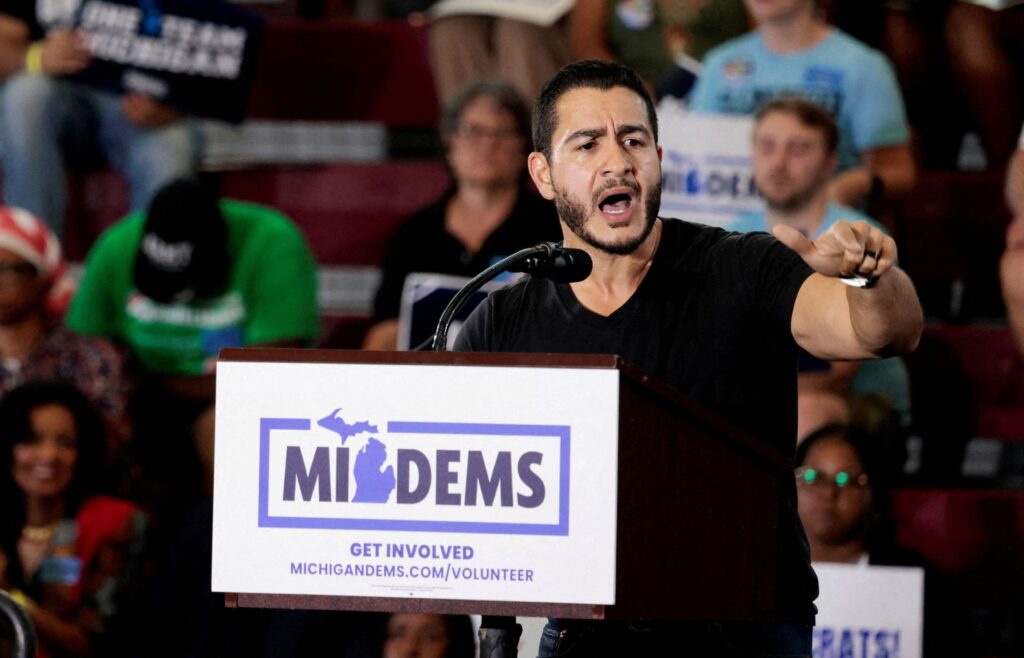
Then they calculate their margin of error. It’s higher than you might think: Typical election polls have a margin of error between three and five percentage points, and that applies to both sides, Clement points out. So a poll like this one showing Democrat Abdul El-Sayed polling at 51 percentage points to Republican Mike Rogers at 44 percentage points in the Senate race in Michigan could mean El-Sayed is polling roughly between 55 percent and 47 percent and Rogers is polling roughly between 40 percent and 48 percent.
Primary polls have an even higher margin of error. That could help explain why El-Sayed only narrowly won his Senate Democratic primary in Michigan in August despite polls showing him leading by an average 13 points.
Who conducts the poll is also a huge factor: Many campaigns or parties conduct their own polls, but those can be skewed toward their side. The best bet is to follow the polls conducted by national news organizations (like The Washington Post!) and polling aggregators, which show the trends over time that are so important.
This midterm, it may be especially difficult to capture voters
Since 2016, when polls reflected the popular vote but did not capture that Trump could win the electoral college, the polling industry has worked hard to make sure to include the right number of Trump-leaning voters.
But even when Trump is not on the ballot, it’s getting harder to talk to the right people. First, the highest-standard polls call people and interview them, but spam call filters and short attention spans make that tricky.
Midterm polls have tended to be more accurate than polls in presidential races, says Democratic strategist Dan Pfeiffer. That’s because congressional and state elections feature more-engaged voters, and they are easier to pin down and talk to.
But this year, parties are finding it hard to pin down what their own voters look like: Is the typical Republican voter all in on Trump or more moderate? Is the typical Democratic voter in 2026 a democratic socialist or more moderate? There are candidates on the ballot covering all of those positions on the spectrum.
Amber Phillips writes The 5-Minute Fix newsletter, a quick analysis of the day’s biggest political news. Send her an email here, or ask a question that could be featured in an upcoming newsletter.
The post Can you trust the polls? appeared first on Washington Post.