While skeptics may wave off AI-created content as slop, creators want you to know AI filmmaking is still “f–king hard.”
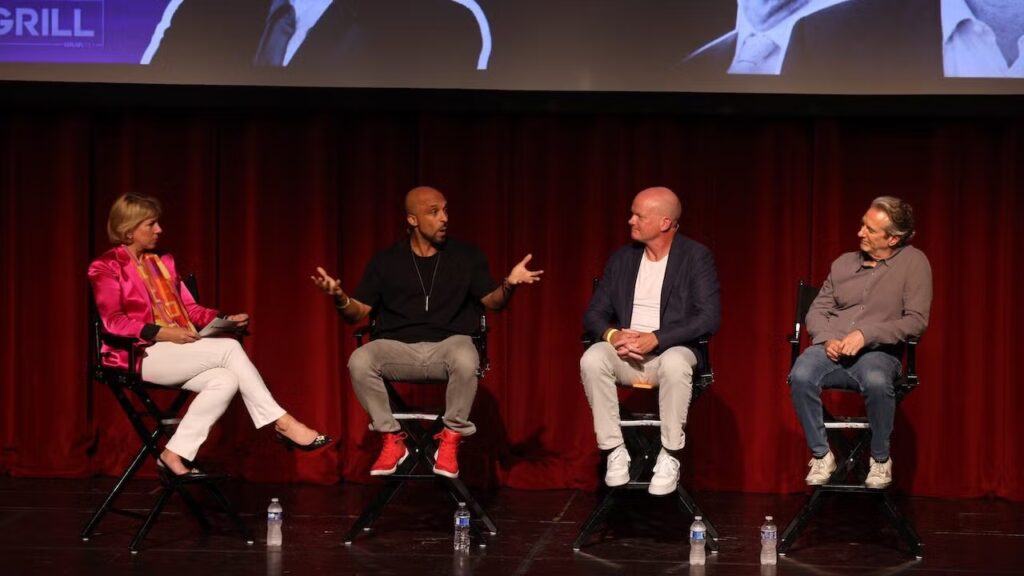
“I … want to dispel the notion that producing AI cinema is easy. It’s f–king hard, and it’s an egregious amount of work,” actor, producer and director David Bianchi said at TheWrap’s AI Creator Day, part of our annual Grill business conference during a panel moderated by TheWrap founder and editor-in-chief Sharon Waxman.
Bianchi pointed to an AI-created clip from his production company, Exertion Films, whose total runtime is just three minutes and 38 seconds, but includes 1,200 renders that total to 25,000 credits, which roughly equates to $2,500 and 200+ hours of labor from a team of four. He conceded that those costs are still dramatically lower than the $1.5-2 million it would have cost if done with a practical production.
But what money can’t put a price on, per Bianchi, is taste. “You can’t replace taste. As a filmmaker, I see things through a filming lens, and I compose things through a filming lens that speaks to the aesthetic that I want to predict beyond,” Bianchi said. “So if you have taste and you’re willing to work with an emerging technology, now is really the time to bring the ideas to life in a way that you never really could.”
Likewise, Fairground founder and CEO Colin Petrie-Norris sees stellar storytelling as the key to whether videos on from AI studio and distribution platform succeed. “I think that’s the lost art … just telling good stories,” Petrie-Norris said, noting that his short movies — which range from four to five minutes to 30-40 minutes — hope to keep people engaged and entertained.
For Petrie-Norris, who notes the cost of shorter videos can range from $500-$2,000 while more cinematic ones range from $5,000-7,000, it’s the low cost of the videos that lowers the barrier of entry for creators hoping to get into the filmmaking scene.
“Filmmakers now can have a little story that they’re passionate about, create it, and it can be distributed into this big local TV ecosystem,” Petrie-Norris said, noting his company helps filmmakers navigate relationships with TV companies “that are nervous about how we do this.”
But even for entertainment giants wary of working with creators and AI filmmakers, the change is already here. And instead of competing with hours of viewership spent on YouTube, streamers and platforms can get in on the game too.
“If it works on YouTube, it will work everywhere,” pocket.watch founder and CEO Chris M. Williams said, noting that on YouTube, content competes with 20 million videos a day. “If it comes to the other end, and millions of people love it and are engaged with it, that’s not luck. It’s not timing … it’s magic.”
That magic will translate anywhere and everywhere, Williams notes. “Maybe it’s a retail shelf at Walmart who’s competing against 10 things, maybe it’s a shelf on Disney+ where it’s competing with a couple 100 things or whatever,” he said. “It always wins … They won on YouTube. They will win everywhere.”
“Engagement and eyeballs are undeniable,” Bianchi said. “If you have engagement and you have eyeballs and you have attention, the studios can’t look away.”
The post AI Creators Want You to Know AI Filmmaking Is Still ‘F–king Hard’ appeared first on TheWrap.