It took chartering a boat captained by an Iditarod-winning dog musher to even begin to try to understand Mary Peltola.
Ms. Peltola, the Alaska Democrat running for Senate, was born in Anchorage, and she was raised in the small port city of Bethel and the even smaller villages of Kwethluk (with a population of roughly 500 at the time), Tuntutuliak (300) and Platinum (50).
Really, though, she grew up on the Kuskokwim River.
“The center of my universe,” she once said.
In reporting on politicians, or anybody, for that matter, it is important to know where they are from and how that has shaped them. In the case of Ms. Peltola, an Alaska Native, it’s perhaps especially so.
At root, as I wrote in a recent profile, Ms. Peltola is a person whose people’s way of life is dying — the result of decades of declines in the cyclical runs of their sacred salmon, the consequence of climate change and corporate excess, a raw, unresolved whittling of a millenniums-long communion of the Indigenous Yup’ik people of Alaska and the river and its fish. It’s a matter of not just material survival but spiritual well-being.
“So that’s what we’ve lost,” Ana Hoffman, one of Ms. Peltola’s best friends, told me this month in Bethel, “is that, that — that experience of real completeness.”
“Completeness?” I asked.
“Harmony. Balance. The reason we’re here,” she said.
For Ms. Peltola, whose campaign slogan is “Fish, family, freedom,” this wound is an engine of her political ambition and a source of her political appeal.
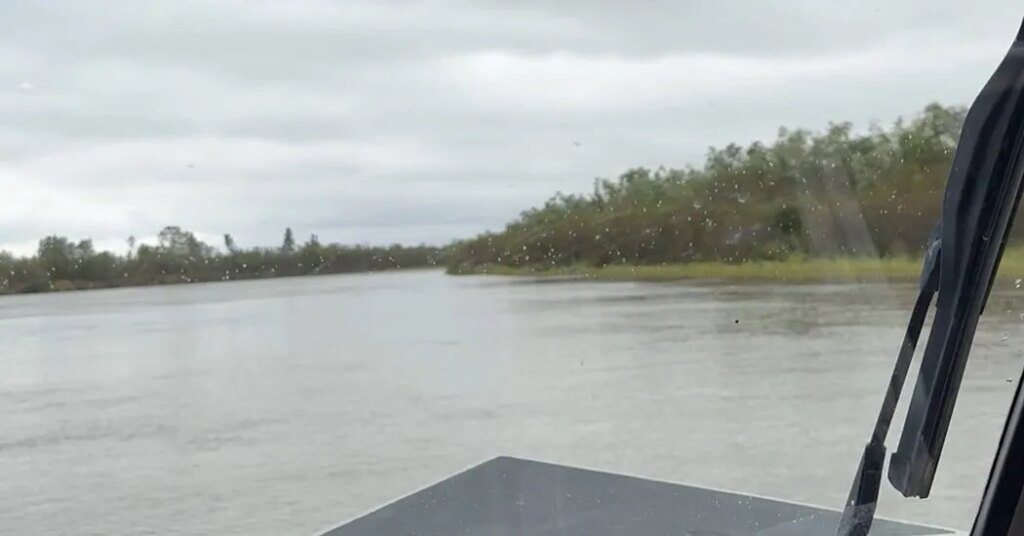
And so earlier this month, Pete Kaiser, the musher who won the famous sled-dog race in 2019 and runs a charter boat company on the Kuskokwim, steered his skiff through the cold and the chop — by shuttered summer fish camps and scrubby alders and spruce, through the vast, isolated tundra of the Yukon-Kuskokwim Delta of southwestern Alaska.
The tip of the boat dug into the mud on the edge of the village of Kwethluk. I walked along uneven dirt roads and past yards with broken-down trucks and thrown-away gas cans and arrived at a weatherworn house with the antlers of a moose near the base of some dilapidated steps. Pasted in a plastic-insulated window was a sign supporting Ms. Peltola.
Three days later, after Alaska’s Senate Fisheries Debate in Kodiak, Ms. Peltola and I talked about the places I’d gone and the people I’d seen.
“Did any of it make you cry?” she said.
The post Chartering a Boat on the Kuskokwim River to Reach Peltola’s Alaska appeared first on New York Times.