Conor Fitzpatrick is the chief supervising attorney for the Foundation for Individual Rights and Expression.
The U.S. Supreme Court explained in 2021 that public schools are meant to be “nurseries of democracy.” Those institutions train the next generation of Americans to live alongside people who may not think or talk the same way as they do and to enter a political system that invites sometimes raucous debate. While 18th-century Britain protected the royal family from ridicule, early American political cartoons compared George Washington to a donkey’s posterior. Such discourse is this country’s legacy and tradition. Every opinion and political figure is fair game.
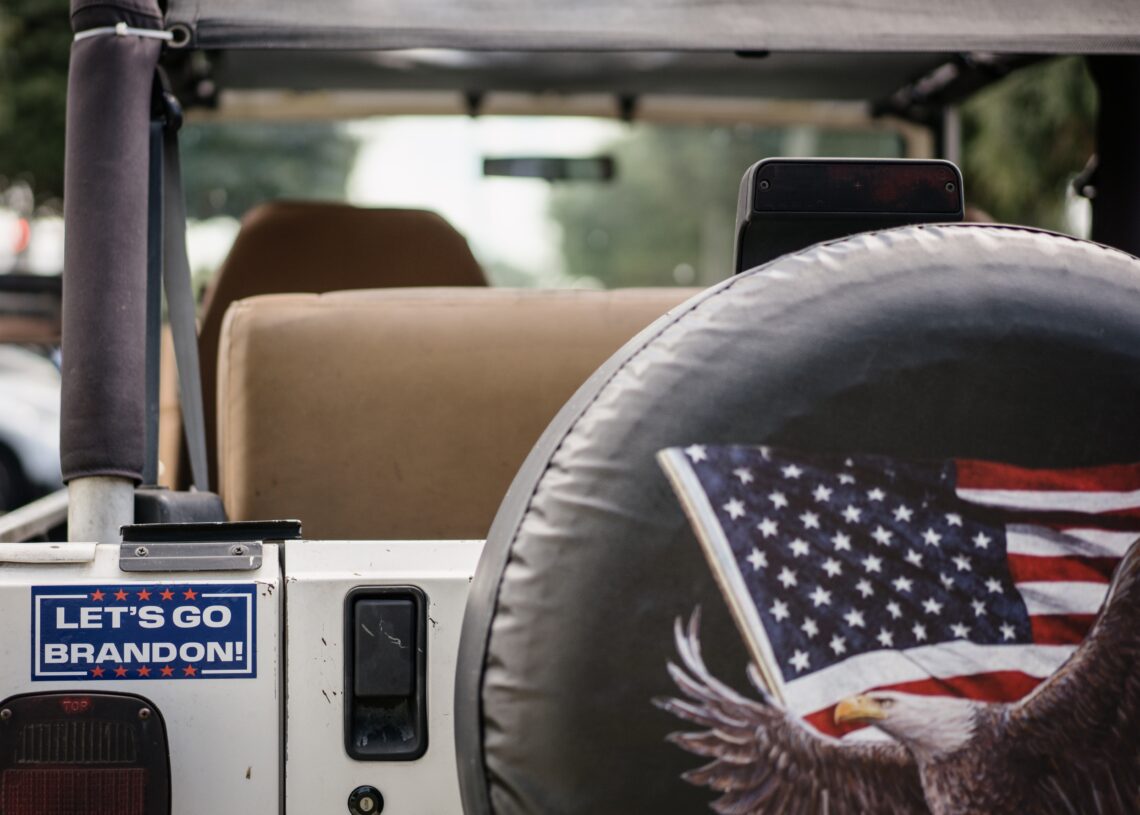
That principle applies to disagreements between a school district and its students over a political slogan. In October 2021, an NBC sports reporter misheard a vulgar chant, “F— Joe Biden,” as “Let’s go, Brandon” while interviewing Brandon Brown after a NASCAR race in Alabama. The misunderstanding caught on, and conservatives, including members of Congress in official floor speeches, began to use the line. That Christmas, a mother in Newaygo County, Michigan, bought sweatshirts bearing the phrase for her two sons. When they wore the gifts to class, however, their assistant principal demanded that they change. Refusal to do so — a supposed violation of the dress code’s provision on profanity — risked punishment, including suspension.
Good grief. “Let’s go, Brandon” is a tongue-in-cheek alternative to a curse word, much like “heck,” “shoot” or “fudge.” In 2023, my organization, the Foundation for Individual Rights and Expression, filed a lawsuit against the school district on behalf of the two brothers. We argued that replacing profanity with sanitized substitutes is a time-tested way to make songs, movies and television shows appropriate for a younger audience. It’s why Kidz Bop exists. Any veteran of double Dutch jump rope songs will confirm that creating clever ways to avoid cursing at school is an American childhood staple.
In 2024, a U.S. District Court in Western Michigan held that the phrase was close enough to profanity that the school could ban it. A 2-1 panel of the U.S. Court of Appeals for the 6th Circuit agreed.
In our view, the Constitution says otherwise. The Supreme Court has made clear that students have a First Amendment right to engage in nondisruptive political expression at school. Forty years ago, citing a lower court judge, Justice William J. Brennan Jr. warned that “courts have a First Amendment responsibility to insure that robust rhetoric is not suppressed by prudish failures to distinguish the vigorous from the vulgar.”
He wasn’t the first to underline that principle. Nearly 60 years ago, in Tinker v. Des Moines, the high court affirmed students’ First Amendment right to wear black armbands protesting the Vietnam War. Justice Abe Fortas wrote the 7-2 majority opinion finding that schools can’t ban student expression merely because an idea might start an argument. The ruling emphasized that students don’t “shed their constitutional rights to freedom of speech or expression at the schoolhouse gate.”
Those rights aren’t unlimited. Administrators may stop students from substantially disrupting the school day, encouraging drug use or engaging in “vulgar and lewd” speech. But a school’s authority to censor students’ political speech starts and ends there. “Let’s go, Brandon” falls short of that standard.
Now that the lower courts have sided with the Michigan school district, the Supreme Court is the students’ only recourse. We’ve filed a petition for certiorari asking the justices to hear the case and to hold that the First Amendment permits schools to censor nondisruptive political speech for “lewdness” or “vulgarity” only if it is “plainly” so, not if any teacher could “reasonably” view it that way. This is the view the 3rd and 9th Circuits have taken in similar cases. Without the high court’s intervention, teachers and administrators would be able to decide what is vulgar, and students’ rights could change from class to class.
America’s legacy of free speech teaches us that we possess the ability to grapple with ideas. Censorship teaches the next generation that the way to fight disagreeable speech is to silence the speaker. School officials can stop a seventh-grader from swearing in class, but they can’t ban him from expressing political ideas that might cause someone to think about a “bad” word. America’s students aren’t so fragile, and the First Amendment isn’t so brittle.
The post Why ‘Let’s go, Brandon’ is worth a legal fight appeared first on Washington Post.