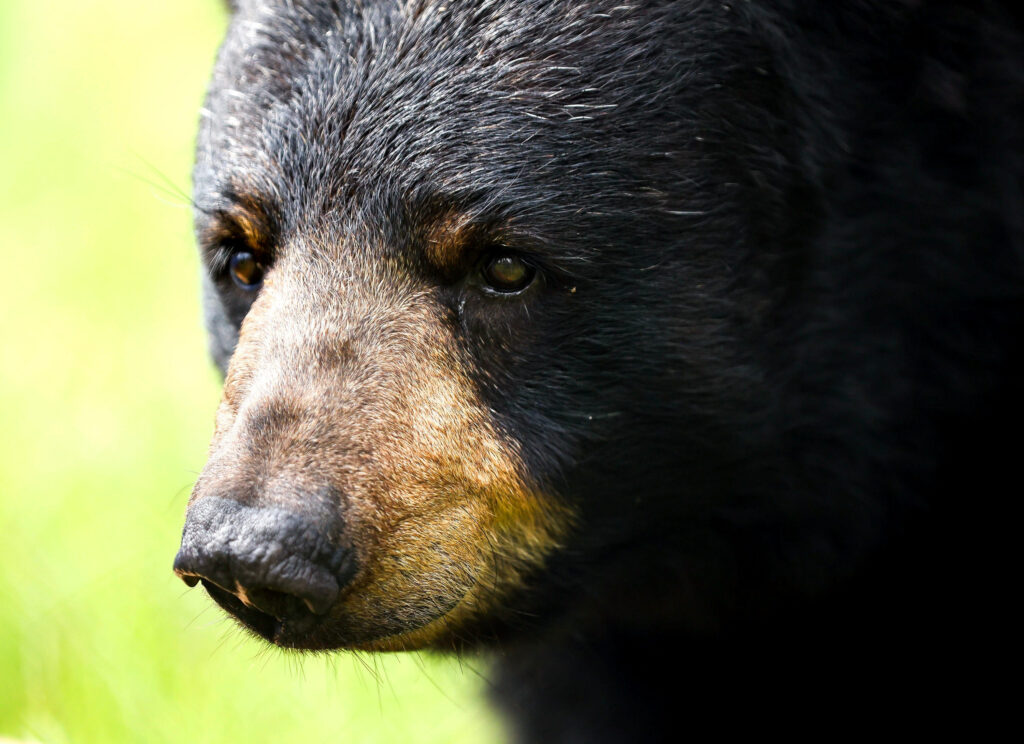
I read the Sept. 23 news article “Human-bear encounters are on the rise this year in 15 states across the U.S.” with interest because I recently launched the “Pardon Dolly the Bear” campaign, which successfully saved a black bear from being euthanized.
After the bear entered a home through an unlocked door and injured a resident while its cubs were playing on the front porch, it was designated a threat to public safety and was set to be euthanized. This event wasn’t the bear’s fault, but rather a result of humans either deliberately or inadvertently encouraging the bear to seek out food in human spaces.
It’s about two years after Hurricane Helene devastated western North Carolina. An estimated 187,000 acres of forested area were destroyed. This habitat destruction, combined with a lack of support by local government to implement strategies to prevent conflicts with black bears, such as the BearWise program, has led to an uptick in interactions between bears and humans.
My campaign began by naming our bear Dolly, and my online petition to ask the governor to save her received more than 21,000 signatures. I have seen Dolly in my yard this season. I have never had an issue with her. She is not aggressive, but her food habituation and lack of fear of humans are problematic, mostly for her. After talking with wildlife experts, local government, state government and the North Carolina Wildlife Resources Commission officials, I’m convinced we all agree that something needs to be done to minimize human-bear encounters.
Hannah Furgiuele, Asheville, North Carolina
Respect California voters’ will
As the Sept. 21 news article “Farmers want relief from Congress. Here’s the holdup” noted, the farm bill includes a section called “Save Our Bacon.” The provision would limit a California law that requires pork, veal and egg producers to meet specific “state production standards.”
Proposition 12, a voter-approved measure, sets minimum standards in animal husbandry, such as ensuring that breeding pigs are housed in areas that allow them to stand, lie down and extend their limbs. This should be the minimum in humane farming practices. It also has the added benefit of reducing the risks of diseases from cramped factory farming conditions.
The will of California voters should be respected.
R.E. Brevetti, Washington
Rising seas mean hard choices
Regarding the Sept. 19 front-page article “Fight intensifies over homes threatened by seas”:
The battle over the recent destruction of beachfront homes in Southern California is little different than struggles experienced in coastal communities across the country. The experts are clear: Sea levels are rising. Residents most at risk must retreat from the ocean or jeopardize being washed away.
Of course, oceanfront property is valuable real estate and homeowners want to protect their investment. As the article noted, one homeowner estimated that she and a neighbor collectively spent more than $400,000 trying to avert disaster. Cities, too, are adding sand to beaches to combat erosion. But that is also an expensive and temporary fix.
The only long-term solution is for states or the federal government to issue clear guidelines for implementing coastal retreat, along with assistance where necessary.
Action must be a priority. Nature won’t wait.
Tim Goncharoff, Fairfield, California
This helps me explain my invisible illness
The Sept. 21 Health article “Life with an invisible illness” resonated with me because I am navigating life with mal de débarquement syndrome. MdDS is a rare invisible illness that causes me to feel as if I am on a boat 24/7.
I printed up 4-by-6 cards to hand out to my friends. The cards explain that I have a rare neurological disorder that requires me to stay in motion, and that I use a lot of my mental bandwidth just to keep my balance, so I frequently cannot manage much talking. I explain my MdDS experience in greater detail on my public Facebook, and my card has instructions on how to find my page.
I have found that handing out these cards has been a very efficient and effective way to let my friends know what’s going on because, truly, sometimes I feel okay, and sometimes I just don’t have the ability to speak much at all. I have found my friends to be nothing but kind and supportive when I hand them this card. So I offer my idea to others living with invisible illnesses, who perhaps may benefit from it as well.
Meg Spencer Dixon, Kensington
Letter submissions
Send letters to [email protected].
Submissions must be exclusive to The Post and should include the writer’s address and day and evening telephone numbers. Letters are subject to editing and abridgment. Please do not send letters as attachments. Because of the volume of material we receive, we are unable to acknowledge submissions; writers whose letters are under consideration for publication will be contacted.
The post I fought to save Dolly, my neighborhood bear. Here’s how to save others. appeared first on Washington Post.