A professional security system can be pricey, but installing a few of the best security cameras around your home is affordable and easy. Cover entrances, driveways, garages, sheds, and your main hallways, and you’ll be alerted to any unwelcome guests. Security cameras can even help deter would-be intruders and thieves.
Beyond the purchase price, expect ongoing running costs, and be prepared to sacrifice some privacy. It’s vital you trust the camera brand you invite into your home. It makes sense to pick one brand for easy app access and management. I’ve tested more than 100 different security cameras over the last decade, and five brands consistently dominate my recommendations. Whether you want cloud or local storage, serious AI smarts, or the cheapest cameras you can get without sacrificing quality, I’ve got you covered. And I’ve included more brands worth considering below, with a few that are best avoided.
Want more options? Check out the Best Outdoor Security Cameras, Best Subscription-Free Security Cameras, Best Floodlight Security Cameras, and Best Video Doorbells.
Jump to SectionLargeChevron
- Best Subscription-Free Security Cameras: Eufy
- Best Subscription Security Cameras: Arlo
- Best Value Security Cameras: TP-Link Tapo
- Smartest Security Cameras: Google Nest
- Best Security Cameras for Smart Homes and Apple HomeKit: Aqara
- More Security Cameras Worth Considering
- Don’t Buy These Security Cameras
- Security Camera F.A.Q.
Best Subscription-Free Security Cameras: Eufy
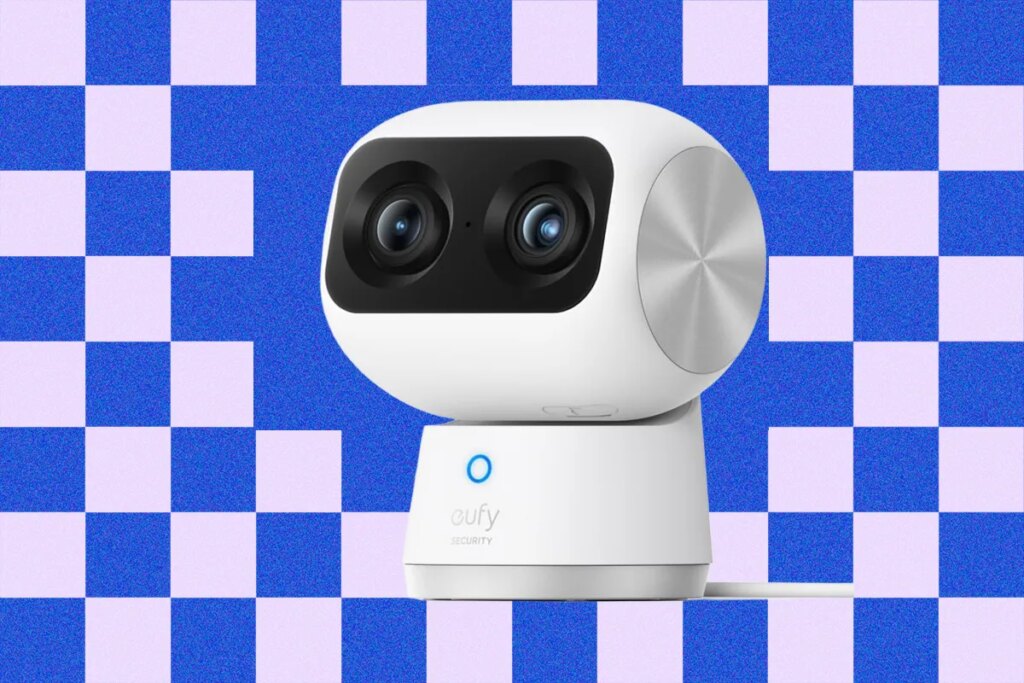
For sheer feature-packed variety, Eufy security cameras are tough to beat. They’re easy to set up and use. They’re also reliable, and they don’t hide their best features behind a subscription. That means you can record locally on a hub, NVR, NAS device, or sometimes directly on the camera. My favorite Eufy cameras is the Indoor Cam S350, which is a good middle-ground in terms of price and features.
In fact, even this model will likely feel like overkill for most folks. It combines a regular camera with a 130-degree field of view that can go up to 4K with a 2K telephoto lens that provides 3X optical zoom. It also has 360-degree pan and 75-degree tilt controls, as well as AI tracking that works well. The camera also supports up to four preset positions it can patrol through, including the default position that it returns to after tracking a subject out of frame. There’s also privacy mode, two-way talk, and onboard AI to detect people, pets, and sounds. You can record locally with a microSD card up to 128 GB (not included), hook it up to a HomeBase S380 ($200), or subscribe for cloud storage from $4 per month. The Home Base S380 (previously called HomeBase 3) is a hub that connects to your router, ideally via Ethernet cable, and offers 16 GB of internal storage that can be expanded up to 16 TB with a hard drive.
The footage is crisp and detailed enough to zoom in on, though bright areas like sun streaming in a window can appear blown out. Because the frame rate is 15 fps, sometimes fast-moving subjects appear blurry. The motion detection is reliable, and you can set up privacy zones in the app. Notifications are swift and come with a thumbnail if you don’t mind uploading to the cloud (which is optional). I sometimes noticed a slight lag on the live feed, and the sound quality could be better. There is no HomeKit support, but you get Alexa and Google Assistant, though the camera was very slow and sometimes failed to load for me via Google.
This is my favorite pan-and-tilt camera right now, and it’s a self-contained powerhouse with a fixed main lens that has a 130-degree field of view and records crisp, clear video at up to 4K, paired with dual 2K pan-and-tilt lenses that pan through 360 degrees and tilt through 70 degrees. The 8X hybrid zoom can blow up subjects up to 164 feet away. Tracking is very good, and you retain the fixed view, so there’s no risk of missing anything. The quick swap 10,000-mAh battery is rechargeable, but the included solar panel, which can go on top of the camera or nearby, was enough to keep mine topped off. The 32 GB of built-in storage is plenty for local recordings (expandable to 256 GB via microSD). But you can also get this in two or four cam kits with Eufy’s HomeBase S380.
If you like the S4 cameras, but you’re able to go the wired route and run Ethernet cables, Eufy’s S4 Max ($1,500) system employs Power over Ethernet (PoE) and comes with four S4 cameras and a network video recorder (NVR) with 2 TB of storage.
More Good Eufy Cameras I’ve Tested
Here are a few more of the best Eufy cameras I’ve tested and recommend.
- A cheaper indoor pan-and-tilt camera: Eufy Wired Cam C31 for $60
- An excellent 4K package: EufyCam S3 Pro (2-Cam Kit) for $550
- A cheaper outdoor pan-and-tilt camera: Eufycam C37 for $90
- An affordable HD camera kit: Eufy C35 2-Cam Kit for $200
- A solar wall light camera: Eufy Wall Light Cam S4 for $250
Best Subscription Security Cameras: Arlo
Arlo is an excellent brand for security cameras that I’ve thoroughly enjoyed testing over the years, though unlike with Eufy, it’ll require stomaching an expensive monthly subscription. Its hardware is relatively affordable for the quality it delivers. The cameras alert reliably, boast the best rich notifications, and the subscription provides generous cloud storage. Arlo also offers monitoring and emergency response as an optional extra. This is my favorite Arlo camera, the 2nd-gen Essential Indoor model.
With its compact design, clear video, and two-way audio, this Arlo camera matches performs reliably well. It can be placed on a shelf or wall-mounted, features a privacy shutter that lowers when the camera is not in use, and stores video in the cloud. The footage is detailed, and there’s no blurring on motion (the frame rate is 24 fps). Arlo’s second-generation Essential Indoor cameras are available in two varieties: a 1080p model and a pricier 2K model. I’m a fan of the app for its ease of use, loading speeds, and two-factor authentication, enabling you to log in to the live feed with your fingerprint or face scan (phone permitting). There’s also a built-in siren and smart home integration for Amazon Alexa, Google Assistant, and IFTTT, but not Apple HomeKit.
Unfortunately, cloud storage, accurate subject detection, and smart animated alerts require an expensive Arlo Secure subscription at $10 per month ($96/year) for a single camera. It’s a bit more palatable if you have multiple Arlo devices, as you opt for a $20 per month package ($216/year) for support for unlimited cameras. For folks with video doorbells or other cameras from Arlo, this camera is an obvious pick to keep things in a single app. But the lack of local storage might be a turnoff, and there are occasionally a few seconds of lag on the live feed.
The best security camera for outdoors is Arlo’s Pro 6 as it records lovely crisp 2K resolution footage with HDR to prevent bright areas from becoming blown out or detail being lost in the shadows. This camera also boasts color night vision or a spotlight, clear two-way audio, and a built-in siren. Detection is rock solid and motion alerts are categorized by people, animals, vehicles, and packages. The notification system is swift and accurate, offering animated previews and screenshots with highlighted subjects that are easy to read even on a smartwatch screen. Arlo’s cameras are among the best at reducing false positives, and it’s easy to filter videos and tweak detection zones. 2K is sharp enough for most folks, but is you crave the best picture quality possible, the Arlo Ultra 3 (2-Cam Kit) ($350) steps up to 4K and offers everything you get from the Pro 6.
More Good Arlo Cameras I’ve Tested
There are plenty of alternatives if you decide to go with an Arlo system. Here are the rest of the best Arlo cameras I’ve tested.
- An indoor pan-and-tilt camera: Arlo Essential Indoor Pan Tilt Zoom for $50
- A 4G LTE camera: Arlo Go 2 (Battery) for $200
- An outdoor pan-and-tilt camera: Arlo Essential Outdoor Pan Tilt Zoom for $60
Best Budget Security Cameras: TP-Link Tapo
Folks on a limited budget will struggle to find better quality security cameras at prices this low anywhere else. TP-Link’s Tapo line works well and is very affordable. The trade-off is that Tapo cameras lack proper end-to-end encryption, and the company’s router business has come under fire in the US. Here are my top Tapo picks:
Crisp video at a relatively low price makes the Tapo C120 very attractive. This camera is quick and easy to set up, with a handy magnetic base that can stick to the fridge, be wall-mounted, or sit on a shelf. It supports two-way audio (with a slight lag) and has a slot for up to 512 GB microSD cards to keep recordings local. Importantly, it offers smart detection (people, pets, and vehicles) without a subscription. I found the motion detection very reliable, and you can tweak the sensitivity and customize the notifications you receive, so you don’t get bothered by false positives. The color night vision is also above average.
You can set activity and privacy zones in the Tapo app, and there’s AI detection to recognize people, pets, vehicles, and the sound of a baby crying. This camera also supports the open Real-Time Streaming Protocol (RTSP), making it easy to use with a network video recorder (NVR) or third-party software. This camera even has an IP66 rating, which means you can also use it outdoors (provided you can run the power cable). It works OK with Google Gemini or Amazon Alexa, though it was a little slow to load the stream on my Nest Hub.
On the downside, the frame rate maxes at 20 fps, so fast-moving subjects sometimes appear blurry, especially with low light. Rich notifications, including a snapshot of the subject, are bundled with the optional Tapo Care subscription, along with 30 days of cloud storage for clips, and it’s expensive at $3.50 per month for a single camera or $12 per month for up to 10 cameras. It also lacks Apple HomeKit or IFTTT support. Some folks may also have concerns about TP-Link, as its router business has been under investigation by the US government for alleged links to China.
If your budget is tight, the Tapo C110 ($28) is cheaper with only a few compromises (lower frame rate, no pet or vehicle detection, microSD limited to 256 GB).
This is a solid outdoor camera with a magnetic mount that makes it easy to angle and remove when it’s time to recharge. It offers a 150-degree field of view, and sharp video at up to 2K and 30 frames per second, but you must change the default settings in the app to get the best from it. The lack of HDR might be a problem if it’s in a spot with a lot of direct sunlight. The built-in spotlight enables color night vision, though it doesn’t penetrate far into the gloom, and I got better results with the black-and-white night vision. You will likely need to charge it every three months or so, unless you pair it with a solar panel. If you want sharper footage and don’t mind spending a bit more, try the Tapo MagCam 4K Solar ($150). It comes with a solar panel and offers up to 4K footage, but the frame rate is limited to 15 fps.
More Good TP-Link Tapo Cameras I’ve Tested
TP-Link churns out many, many Tapo cameras. Here are the other best Tapo cameras I’ve tried.
- An indoor pan-and-tilt camera: TP-Link Tapo C210 for $30
- A hardwired outdoor camera: TP-Link Tapo C325WB for $70
- A 4K solar pan-and-tilt camera: TP-Link Tapo C660 for $170
- A 2K dual lens pan-and-tilt camera: TP-Link Tapo HybridCam Duo C246D for $70
- An affordable pan-and-tilt camera: TP-Link Tapo HybridCam 360 C216 for $40
- A 4K dual lens pan-and-tilt camera: TP-Link Tapo C675D for $230
Smartest Security Cameras: Google Nest
For the smartest AI detection, descriptions, and video filtering, Google’s Nest cameras are unbeatable right now. You need the relatively expensive subscription to unlock the top features, but if you’re already a Gemini fan and invested in Google’s ecosystem, it’s an easier sell. Camera choice is more limited, but here are my picks:
With an understated style, Google’s indoor Nest Cam comes in two subtle finishes to blend in with your decor, or a bright red “berry” paint job if you want it to stand out. It has HDR, footage is clear at 30 fps, with night vision that kicks on automatically when the lights are out, and the third generation ups the video quality from 1080p to 2K. There’s also two-way audio, enforced two-factor authentication, and accurate detection to alert you about people, animals, or vehicles. This latest model also features a wider field of view and animated previews that zoom in on the subject. You can install and use the Nest Cam through the Google Home app by scanning the QR code (it’s the fastest and easiest setup I’ve encountered), and it’s quick to load on Nest displays or a Chromecast with Google TV. (It’s even accessible via a web interface.)
You only get six hours of history unless you sign up for a Google Home Premium (previously Nest Aware) subscription, which costs $10 per month ($100/year) for 30 days of event video history and familiar face alerts, but that covers all your Nest devices. (You can also use the camera in a Nest Hub Max as an indoor security camera.) Once you have tagged familiar faces, your notifications include their names, which is handy (and can be reassuring). It’s good to know when your kids get home versus when an unfamiliar face pops up. It’s not 100 percent accurate (it confuses my kids), but it’s closer than any other camera I have tested.
The overhauled Google Home app is much improved, quicker to load, and easier to navigate, and Gemini for Home provides more descriptive alerts, such as “cat walks around room” or “person walks out of gate.” However, you have to subscribe to the costly Home Premium Advanced at $20 per month to get them. Advanced also enables you to pose questions like “Who opened the back door last night?” or “Did a package arrive today?” and provides a Home Brief summarizing the day’s events. Sadly, there’s no local storage option, it lacks a privacy shutter, and the smart features that set it apart require expensive monthly fees.
Google’s latest outdoor camera brings most of the same improvements as the indoor version, but it has an IP65 rating, making it suitable for all kinds of weather. It has a handy magnetic mount, but you must run the 18-foot cable to a power outlet. It also has a wider 152-degree field of view than its predecessor and 6X digital zoom capability, so it can zoom and crop on subjects for your animated notifications.
More Good Google Nest Cameras I’ve Tested
There are only a couple of other Google Nest cameras I’ve tested that I think are still worth considering for specific circumstances.
- A battery-powered outdoor camera: Google Nest Cam (Battery, Outdoor) for $200
- A hardwired floodlight camera: Google Nest Cam with Floodlight for $280
Best Security Cameras for Smart Homes and Apple HomeKit: Aqara
Some Aqara cameras can double up as smart home hubs, with Matter, Thread, and Zigbee support, which can be very handy if you have loads of smart home devices. There’s also wide smart home standard support, including Apple HomeKit Secure Video. If you go the Apple route, you can avoid using Aqara’s slightly confusing app.
Don’t be fooled by the cutesy look of the Camera Hub G350. The new model of Aqara’s indoor pan and tilt security camera is an impressively feature-packed device that’s perfect for smart home enthusiasts. This is a dual-lens camera with a 133-degree 4K lens and a 2.5K telephoto lens for zooming in on subjects (up to 9x hybrid zoom). The video is crisp, detailed, and vibrant, and the ability to zoom in is very handy. It also has onboard AI that works locally for automatic tracking of people, pets, and sound recognition. As a pan-and-tilt camera, you can spin through 360 degrees, tilt is limited (maybe 45 degrees), and you can fix preset positions to patrol and have it return to a fixed position after tracking a subject out of frame. You get a free trial of the cloud service Home Guardian, but you can also insert a microSD card for local recording. There’s also NAS support. The sleep mode, which you can schedule, has the camera lens roll up and shows a pair of closed eyes.
The G350 doubles as a smart home hub, with Matter, Thread, and Zigbee support, and compatibility with Apple HomeKit, Google Home, Amazon Alexa, Samsung SmartThings, and IFTTT. But there are caveats here. I had no issue adding it via the Matter code to my Google Gemini setup, but Google doesn’t yet support Matter security camera feeds for non-Nest devices, so it’s better to add it via the Aqara app for now. If you opt for HomeKit, Apple limits the camera features and resolution to 1080p. While it can also act as a Zigbee 3.0 hub to bring all kinds of sensors and accessories into your smart home fold, they must be Aqara Zigbee devices (third-party devices are not supported).
Sadly, recording at 20 fps means fast movement can cause blurring, particularly when it’s dark. I don’t like the way you are auto-enrolled into the cloud service (90-day event storage) free trial. While the app has a great range of options, it doesn’t have the best layout. Expect to spend some time rummaging around to configure the camera the way you want. Aqara has also paywalled a bunch of AI features, like filters and video summaries, and enhanced notifications.
This versatile outdoor camera doubles as a Matter controller and a Thread border router, which could be very handy if you have smart lighting in your garden. It’s a 2K wired camera (Wi-Fi or PoE) with a 133-degree field of view, and the large sensor has an f/1.0 aperture that enables excellent color night vision. There’s also a 100-decibel siren, two-way audio, and there’s a spotlight. The onboard AI can identify people, vehicles, animals, and packages. Local recording is supported via internal storage, or you can subscribe for 90-day video history. An Aqara HomeGuardian subscription costs $5 a month or $50 a year for one camera and $10 a month or $100 a year for unlimited cameras. Sadly, some features like event filtering, SMS or email notifications, and video sharing require the subscription. If you have a HomeKit hub, such as a HomePod Mini or Apple TV, and an iCloud storage plan, you can opt for Apple’s HomeKit Secure Video. It limits you to 1080p, but rich notifications let you play video clips right from your iPhone’s lock screen.
More Good Aqara Cameras I’ve Tested
If you opt for Aqara, there’s only one other Aqara camera worth buying.
- A cheap 2K camera for indoors or outdoors: Aqara Camera G100 for $40
More Security Cameras Worth Considering
Reolink is a close competitor to Eufy and TP-Link Tapo cameras. It offers innovative security cameras that deliver decent quality footage at relatively low prices. They also support various local storage options. The Reolink Argus 4 Pro ($215) stitches two feeds together for a full 180-degree view, capable of covering the entire side of a building or multiple entry points. The Reolink Elite Wi-Fi ($160) is a hardwired version of the same camera. If you want a pan-and-tilt camera, the Reolink Altas PT Ultra ($220) is very good. You can link any of these with the Reolink Home Hub ($150) for 64 GB of secure storage indoors (expandable by up to 1 TB).
Wyze is another budget brand to consider. The Wyze Cam Pan V4 ($60) is one of the best panning cameras, and offers several improvements over its predecessor, including an upgrade to 4K footage and a built-in spotlight. The smart design allows it to spin 360 degrees and tilt 180 degrees to take in a whole room. I like the option to set waypoints in the app to have it cycle through, the privacy mode, the automatic motion tracking, and the ability to record locally on a microSD card (up to 512 GB). On the downside, you must subscribe for features like AI detection and rich notifications, starting from $3 a month ($20 a year) for a single camera, though that only gets you 14 days of video storage. The frame rate also drops to 15 (from 20) at night, and I found moving subjects, combined with the camera panning, resulted in blurry footage. I am testing Wyze cameras again after the firm beefed up its security policies, but the past security breaches may still give you pause if you’re considering its cameras for inside your home. I also tried the fixed Wyze Cam V4 ($36), which offers clear 2.5K video with WDR and better color night vision than previous versions with a spotlight. That one also has local recording via microSD card (sold separately).I’ve also tried out the Wyze Window Cam ($35), a 1080p camera that sticks directly to the inside of your window, the Wyze Cam Outdoor V2 ($100), and the Wyze Cam OG ($30).
Amazon’s Blink budget brand is also very affordable. The latest Blink Mini 2K+ ($40) is a teeny camera that supports 2K video with 4x hybrid zoom and color night vision, though the field of view has shrunk slightly to 138 degrees. Motion detection is very reliable, but the catch is that you really need the subscription at $3 per month or $30 per year for a single camera, or $10 a month or $100 a year for unlimited cameras. You can technically record locally if you purchase a Sync Module 2 ($50) and insert a USB flash drive. But without a subscription, your live feed is limited to five minutes with no record option, videos are much slower to load, you don’t get people detection, and you can’t share clips. The original Blink Mini ($30) is even cheaper, but footage is only 1080p, bright areas can appear blown out, and the two-way audio often lags and distorts. You can also get the Blink Mini Pan-Tilt Camera for $40, which is a regular Blink Mini camera with a pan-and-tilt mount, so you can pan through 360 degrees and tilt through 135 degrees.
Philips Hue fans with Philips Hue smart lights may find the company’s security cameras intriguing. The Philips Hue Secure Wired Camera ($99) is a wired security camera with an optional weighted base. It feels solid and durable, and it has an IP65 rating. Video on the camera maxes out at 1080p but is crisp and deals with mixed lighting and moving subjects well. It offers a wide 140-degree field of view. Night vision is decent, there’s two-way audio, and it’s quick to send alerts or load the live feed in the Hue app. You get 24 hours of video history in the cloud for free, but if you want more than that, you need to subscribe for $4 per month ($40/year) for a single camera, which gives you 30 days of cloud storage and unlocks smart detection features. The person and animal detection works well, helping to filter out false positives. You can also set multiple activity and privacy zones. There’s vehicle and package detection, too, for outdoor use. There’s no local storage, but footage is end-to-end encrypted, so only you can access it. If you have a Hue bridge and lights, you can have the Philips Hue Secure trigger them.
Synology is better known for network attached storage. But if you have a Synology NAS, you might consider Synology cameras. They are National Defense Authorization Act (NDAA) compliant, so they don’t use any components from certain banned (mostly Chinese) manufacturers and can be used by US federal agencies, and they’re Trade Agreement Act (TAA) compliant, too. But they are kinda expensive for the feature-set and quality. You can read more about them in my Best Subscription-Free Cameras guide.
There are various other brands that I’ve tested that offer some decent cameras, such as Baseus, Swann, Annke, Lorex, Eve, Safemo, and Imilab, but I’d recommend going with something above over these.
Don’t Buy These Security Cameras
There are also several brands that I think you should avoid. I was disappointed after testing security cameras from Ulticam, Chamberlain, Nooie, Switchbot, Canary, Encalife, Winees, Noorio, Vosker, and Night Owl.
Security Camera F.A.Q.
Why Would You Want a Security Camera?
LargeChevron
A security camera potentially provides peace of mind. You may want to ensure that no one enters your home when you’re not there, and collect video evidence of wrongdoing. They can be a deterrent for intruders if they are visible.
Many folks use indoor security cameras to check on children, pets, or elderly relatives from anywhere on their smartphone, and they can serve as baby monitors. Most security cameras enable two-way communication with people in and around the home. Some folks use cameras as smart home triggers to automate lighting.
How to Secure Your Security Camera
LargeChevron
Security cameras are great tools, but you also need to protect your security from these cameras. You don’t want to find out that a stranger has been watching you sit in your bathrobe bingeing trash TV for the third day in a row—or worse. If you follow these tips, you can be a vigilant and conscious consumer and still feel like your home is protected while you’re away.
Avoid no-name cameras: If you type “security camera” into Amazon’s search bar, you’ll come up with hundreds of cheap options from brands you’ve never heard of. I don’t feel comfortable recommending them. You should always go with brands that clearly outline their privacy policies and make it easy to set up security protocols. That doesn’t mean they can’t be hacked—Wyze, Nest, Eufy, and Ring have all had breaches—but you probably won’t be hung out to dry by a brand intent on protecting its reputation. Somewhat counterintuitively, it may be better to pick a brand that has had issues, because the increased scrutiny typically encourages them to improve their security practices. (This also depends on how they have responded to previous security breaches.)
Use a strong password and set up two-factor authentication: Setting a strong password you don’t use for anything else is extremely important. Always change your password from the default, and also change the password for your Wi-Fi network, if you haven’t already. Set up two-factor authentication (2FA) as soon as you create an account with the camera brand you’ve bought. It will make it harder for a hacker to gain access to your device, even if they do figure out your password.
Keep it updated: Make sure you’re frequently checking for software updates (for your camera and router) that can patch any security issues that may have come up. Set your camera to auto-update if possible.
Turn it off: When you’re home, or at least when you’re doing something personal you wouldn’t want someone to see, turn the camera off. Some cameras have a physical shutter that you can close or a sleep mode that obscures the lens. You could also turn the camera around for good measure.
What Features Should I Look for in a Security Camera?
LargeChevron
Here are some of the main things to think about when you shop for a security camera.
Video quality: Going for the highest-resolution video isn’t always the best idea. While 4K video definitely picks up more detail, it also requires more bandwidth to stream and more storage space to record than 1080p or 2K resolution. Folks with limited Wi-Fi bandwidth must be cautious. A wide field of view is good, so the camera takes in more, but can cause a curved fish-eye effect at the corners, which some cameras are better than others at correcting. If your camera is facing a mixed lighting location with some shadow and direct sunlight (or a streetlight), look for HDR (high dynamic range) or WDR (wide dynamic range) support, as it can prevent bright areas from blowing out or loss of detail in the shadows. Frame rate is also worth thinking about, as a low frame rate can cause artifacts and blurring with moving subjects, especially in low light. Drop below 20 frames per second (fps) and you can expect blurring and jerkiness.
Connectivity: Most security camera systems connect to your Wi-Fi router on the 2.4-GHz band. Depending on where you install, you may appreciate support for the faster 5-GHz band, but it is shorter range. Some systems come with a hub that can act as a Wi-Fi range extender. Bear in mind that you should never install a security camera in a location without a strong Wi-Fi signal.
Subscription model: Most security camera manufacturers offer a subscription service that provides cloud storage for video recording. It isn’t always as optional as it seems. Some manufacturers bundle in smart features such as person detection or activity zones, making a subscription essential to get the best from its cameras. Always factor in the subscription cost, and make sure you are clear on what is included before you buy.
Local or cloud storage: If you don’t want a cloud subscription service, make sure your chosen camera offers local storage. Some security cameras have microSD card slots, while others record video to a hub device inside your home. You can also configure some cameras to work with network-attached storage (NAS) or a network video recorder (NVR). A few manufacturers offer limited cloud storage for free, but you can usually expect to pay somewhere around $3 to $10 per month for 30 days of storage for a single camera. For multiple cameras, a longer recording period, or continuous recording, you are looking at paying between $10 and $20 per month. There are usually discounts if you pay annually.
Placement is important: A visible security camera can be a powerful deterrent. You don’t want to hide your cameras away. Also, make sure the view isn’t peering into a neighbor’s window or pointing into your bathroom. Most cameras offer customizable zones to filter out recording or motion detection for areas of the camera’s frame.
False positives: Unless you want your phone to ping every time your cat wanders into the frame, consider a security camera that can detect people and filter alerts. Good cameras also enable you to set privacy or activity zones.
Night vision and spotlights: Security cameras generally have infrared night vision, but low-light performance varies wildly. You always lose some detail when light levels are low. Most night vision modes produce monochrome footage. Some manufacturers offer color night vision, though it is often colorized by software and can look odd. I prefer spotlights, as they allow the camera to capture better-quality footage, and the light acts as a further deterrent to any intruder. But they aren’t suitable for every situation.
Camera theft: Concerned about camera theft? Choose a camera that doesn’t have onboard storage. Some manufacturers have replacement policies for camera theft, especially if you have a subscription, but they usually require you to file a police report and have exclusions. Check the policy thoroughly before you buy.
Power: Plug-in security cameras need a power outlet nearby. Some can be hardwired or use Ethernet cables for power (PoE). If you want a device that you can place anywhere, choose a battery-powered camera.
Alternatives to Indoor Security Cameras
LargeChevron
Do you really need a security camera inside your home? Most folks can guard against intruders and keep tabs on people coming and going with outdoor security cameras and a video doorbell, and presence sensors can be used to unobtrusively check no one is in your home when you’re not there. There are some good alternatives that don’t involve the risk of a live video and audio feed of you and your family in your private haven.
Can You Use a Phone as a Security Camera?
LargeChevron
You don’t need to spend money on a new security camera—an old smartphone will do as long as it can still connect to Wi-Fi. Just download a camera app (I like Alfred) to both your old phone and your new phone, then sign in with the same email address. Find a spot to mount your device and keep it charged, and you’ll be able to view the camera feed through your current phone.
The field of view won’t be as wide, the battery won’t last as long, and the mount will probably be a lot less secure. Still, if you’re going on a weekend vacation, it’s a quick and easy way to set up something essentially for free. Alfred is available for iOS and Android. It offers motion detection and can set off an alarm when it sees someone.
How I Test Security Cameras
LargeChevron
I test every security camera for at least two weeks, but often far longer. I run through the installation process and note any issues. I check that alerts come through correctly to my phone when I am home, connected to Wi-Fi, or away connected to a cellular network. I usually place two or more cameras in the same spot to compare picture quality, motion detection, and other features. I consider the image resolution, frame rate, and audio quality of videos and the live feed. I also check for lag with the live feed. I test the performance during the day, see how it copes with the sun facing the lens, and how it performs in the dark at night (testing both spotlight and night vision). I check how long the live feed and recorded videos take to load at different times of the day.
I play around with the settings in the app to try every mode and feature. I test any smart detection features to see if they can correctly identify people. I test the two-way audio for a short conversation and try the siren where applicable. I also test local storage and cloud storage options for recording videos. If there are any smart home integrations, I set them up and check how quickly the feed loads on a smart display. I always ensure the cameras I recommend support 2FA and test any additional security or privacy features.
Power up with unlimited access to WIRED. Get best-in-class reporting and exclusive subscriber content that’s too important to ignore. Subscribe Today.
The post I’ve Tested Over 100 Home Security Cameras. Here’s Which to Buy appeared first on Wired.