Ryan Chan-Wei is a research fellow at the Cato Institute’s Center for Monetary and Financial Alternatives.
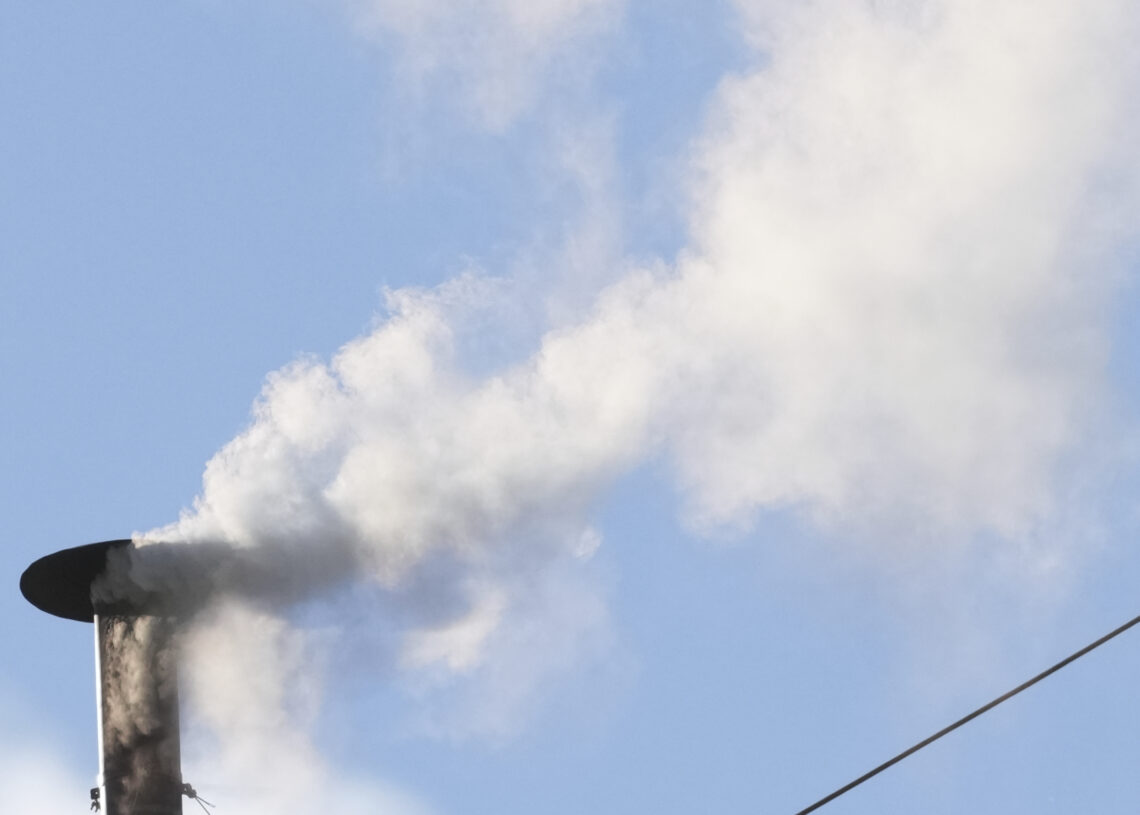
One of the earliest recorded crackdowns on a prediction market was a papal decree. In 16th-century Rome, bets on who would become the next pope were commonplace. So much so that in 1591, Pope Gregory XIV threatened excommunication for anyone caught betting on a conclave. Nevertheless, the wagering was not extinguished. The odds once quoted openly across Rome continued circulating behind closed doors and eventually resurfaced in the centuries that followed. When white smoke rose over the Sistine Chapel in 2025, tens of millions of dollars were riding on the outcome in prediction markets.
Prediction markets, as well as attempts to banish them, have made their way from Renaissance Italy to modern-day America. These markets let people trade contracts that typically pay a dollar apiece if an event occurs. A contract’s price reflects the odds: One trading at 70 cents implies a roughly 70 percent chance that the event happens. And Americans are piling in. When the 2026 National Football League season kicked off, hundreds of millions of dollars flowed through these markets in a single weekend.
New York recently sued Kalshi, a major prediction-market platform, for allegedly running an unlicensed gambling business. Similar lawsuits are pending across the country.
But a prediction market is not simply a casino. It produces a public good: a real-time projection, accessible to anyone, of the likelihood of a particular event occurring.
These exchanges are not perfect, but the challenges they present are not insurmountable. For instance, a small circle of winners takes most of the profits. But that’s how the system works. Researchers at Yale University and London Business School, sifting through three years of Polymarket transactions, found that only around 3 percent of accounts consistently steered prices closer to what actually ended up happening. If a handful of sharp traders are doing most of the work of keeping those prices accurate, it is hardly surprising that they collect the majority of the rewards.
Perhaps the most serious criticism is that trading on prediction markets can tip off adversaries to state secrets. In the hours preceding the U.S.-Israeli offensive against Iran in February, a wave of money flooded into Polymarket contracts predicting the strike would happen. Much of it came from newly created accounts taking unusually large positions on an outcome the market still considered unlikely. Because those trades were visible on a public ledger, the surge was a signal, legible to anyone watching, that something might be imminent.
Yet clues often surface regardless. For decades, observers have watched late-night activity at pizza shops near the Pentagon for hints that something consequential may be happening inside. Prediction markets, much like the “Pentagon Pizza Index,” are public and therefore visible to the decision-makers responsible for protecting America’s national security. Defense Secretary Pete Hegseth has even joked that he might order random pizzas “just to throw everybody off.” When such indicators are open-source, those charged with operational security can monitor them too — and act if they begin to reveal something they should not.
None of these objections justify a heavy-handed approach, and history provides reminders about the futility of attempting to suppress the market. Nearly two centuries after Gregory XIV’s decree, Londoners were doing much as the Romans had done. Wagers were recorded on all manner of political events, including the controversies over the Stamp and Tea Acts that helped set the stage for the American Revolution. Westminster spent decades trying to curb the practice through measures such as closing public betting houses and restricting its promotion. Yet the law had limited influence over the private clubs beyond its reach, where the wagering carried on.
One lesson from across the Atlantic is that a blunt prohibition pushing markets out of sight is no substitute for targeted enforcement. Attempting to suppress the market is a policy failure not only because it deprives the public of a valuable forecast but because it does not solve the root of the problem. The through line connecting many of the reservations about this growing industry is that specific individuals are abusing the markets, be it through manipulation or insider trading. The answer, therefore, is to police those individuals rather than restrict everyone else.
That is the logic of a bipartisan bill from Sens. Kirsten Gillibrand (D-New York) and Dave McCormick (R-Pennsylvania) that would bar the president, lawmakers and senior officials — those with unusually broad access to classified information — from trading in prediction markets. It would create a bespoke framework that, among other things, empowers the Commodity Futures Trading Commission to design and enforce insider-trading rules customized to prediction markets. The bill is not flawless, but it recognizes that prediction markets are better embraced than driven underground.
Centuries later, Europe is still making the same mistake. Britain and Italy have largely treated prediction markets as little more than unlicensed gambling, while many European jurisdictions significantly restrict access for the general public. Europe has chosen its path, and the United States stands at a crossroads: It can repeat the past or chart a new course. My money is on Washington making the right call.
The post Ban prediction markets? That didn’t go well in 1591. appeared first on Washington Post.