The White House has backed away from a plan to issue an executive order that would subject billions of dollars in federal health and biomedical research spending to heightened political scrutiny, according to four people familiar with the situation.
The proposed directive would have established a commission with the power to block government research grants if the money supported work in areas that did not align with President Trump’s political agenda. The plan was discussed in a White House meeting on Friday, and some on Capitol Hill had expected Mr. Trump to issue the order as soon as this week.
But fierce opposition from both Democrats and Republicans in Congress forced the White House to recalibrate this week, according to some of the people familiar with the discussions, who described private conversations on the condition of anonymity. Nevertheless, they said, officials do not appear to have totally abandoned their desire to tighten their grip over federal research spending,
The White House, its Office of Management and Budget and the National Institutes of Health either did not respond to requests for comment, or declined to comment. The status of the order was reported earlier by Semafor.
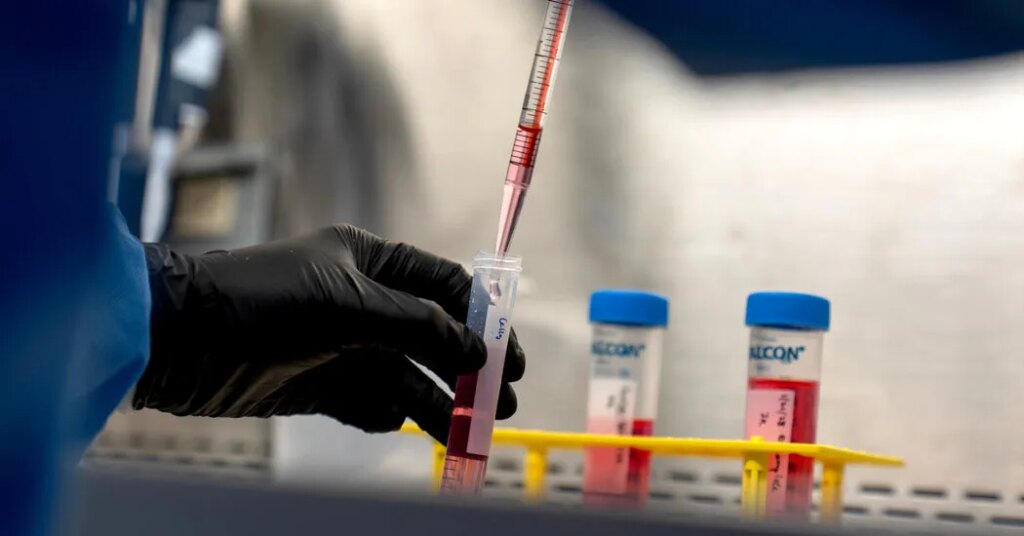
At the heart of the matter is the N.I.H., the nation’s largest research agency, which disburses much of its $48 billion annual budget to researchers who study cancer, infectious diseases and other health priorities.
Historically, the N.I.H. has awarded these grants based on scientific merit after a rigorous review by experts in the relevant fields. But under Mr. Trump, political appointees have exerted extraordinary control over the grant-making process in a bid to eliminate spending seen as “woke,” and to exert pressure on Harvard University and other elite universities that the president accuses of antisemitism and liberal indoctrination.
The administration froze or cut more than 5,700 N.I.H. grants worth a total of $15 billion since Mr. Trump returned to the White House, although roughly 4,500 have been restored, some as a result of lawsuits, according to Grant Witness, a website run by research scientists. Researchers say the disruptions have created havoc in their labs.
Dr. Jay Bhattacharya, the N.I.H. director, has issued new guidelines for grant-making in an effort to carry out the president’s wishes, including his opposition to “diversity, equity and inclusion” programs. Last year, Dr. Bhattacharya co-wrote an opinion essay in The Spectator, titled “How We Cured DEI at the National Institutes of Health.”
But Mr. Trump and his budget director, Russell T. Vought, did not think the N.I.H. had gone far enough.
Tensions between them erupted during a highly fractious meeting on Friday, where Mr. Vought accused Mr. Bhattacharya of funding projects in conflict with the president’s past directives, including one issued on his first day in office prohibiting federal funding for D.E.I.-related programs.
News of the fiery session, which leaked over the weekend and was reported by various outlets, including The New York Times, created a bipartisan uproar on Capitol Hill. Congress, generally supportive of medical research, has previously refused Mr. Trump’s requests to cut N.I.H. spending.
Senator Susan Collins, Republican of Maine, who oversees the chamber’s appropriations committee, sent a letter to Mr. Vought and Dr. Bhattacharya warning that a new commission would “undermine” congressional intent and the pursuit of good science.
Her Democratic counterpart on the committee, Senator Patty Murray of Washington, separately accused Mr. Trump of trying to appoint a “panel of lackeys” whose primary task would be to help the president “settle a score.”
By Tuesday, several people familiar with the situation said, the O.M.B. and N.I.H. directors — who clashed so bitterly earlier in the year that at one point Mr. Vought refused to meet with Dr. Bhattacharya — were trying to forge a compromise. The goal, one of those people said, was to ensure that federal funding for biomedical research aligned with Mr. Trump’s priorities, while at the same time reducing political meddling in grant decisions.
Given those efforts, and the pressure from Congress, the White House retreated from its plan to sign the executive order as soon as this week, according to three people familiar with the matter.
It is unclear if the administration plans to revive the matter later through another directive. Since returning to office, the president has tried to block or revoke billions of dollars in congressionally approved research spending, often provoking ire on Capitol Hill and in federal courts.
Mr. Trump’s D.E.I. order had a far-reaching effect on longstanding N.I.H. work on health disparities, including populations and communities that are predisposed to certain diseases. Dr. Bhattacharya himself has conducted federally funded health disparities research.
Earlier this year, the president also tried to broaden his political litmus test to apply to a fuller roster of federal grant programs, including money that aids state and local governments. But that idea was met with vigorous opposition, particularly in Congress, which voted to block the White House from finalizing those rules.
Carolyn Y. Johnson and Michael C. Bender contributed reporting.
The post White House Backtracks on Plan to Exert New Control Over N.I.H. Grants appeared first on New York Times.