India’s election commission rushed through measures that could exclude tens of millions of people from voting, even as two of the three commissioners raised concerns over the legality of the moves, according to an explosive investigation published in a major Indian newspaper on Wednesday.
The investigation, by The Indian Express, is intensifying concerns about election integrity that have rattled India over the past year.
The report, which drew from internal documents and interviews, found that the two commissioners questioned the legality of several aspects of an effort to revise India’s voter rolls and officially recorded their opposition. But the decisions were nonetheless made unilaterally by Gyanesh Kumar, the lead commissioner. The election commission, which oversees all elections in India, is required by law to make its decisions by a majority.
Opposition parties have often accused Prime Minister Narendra Modi of using his influence over the voting process to entrench the power of his Bharatiya Janata Party, but this report is the first indication of serious objections raised from within India’s election system.
In a statement, the election commission said that The Indian Express drew on “differing views and deliberations” between the three commissioners rather than official statements of protest. The statement was signed by a junior official, not the commissioners, and did not explicitly deny that two of the commissioners had recorded their opposition to certain moves.
Sambit Patra, a spokesman for Mr. Modi’s party, told reporters that the commission’s decisions were made “with unanimity” and that any earlier deliberation was “a sign of a healthy democracy.”
The election commission did not immediately respond to a request for comment on the details in the Indian Express report.
The newspaper’s investigation focused on an exercise called the Special Intensive Revision, which began last year and was billed as an effort to clean up the electoral rolls across the world’s largest democracy, but it faced serious challenges from the outset.
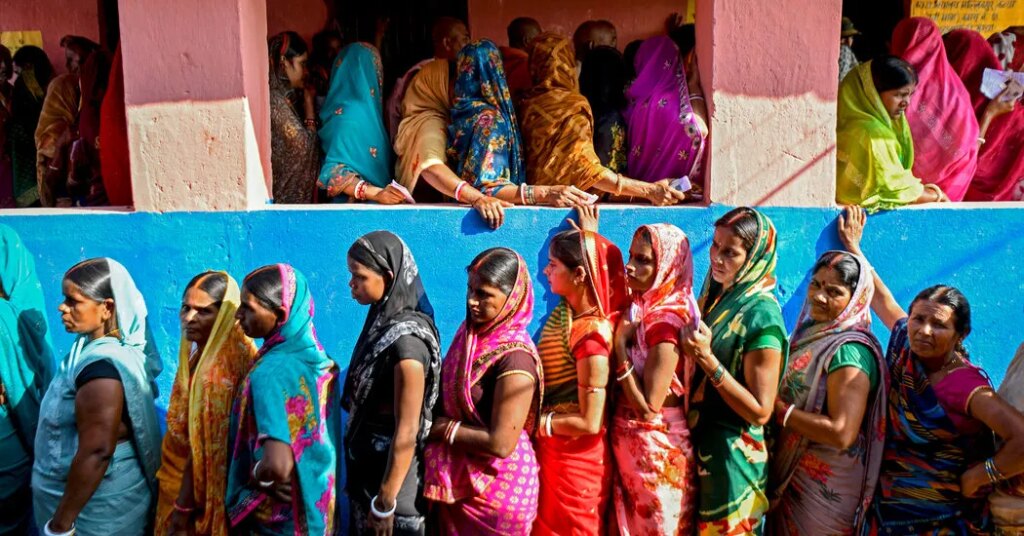
The process, which is not yet complete, has been chaotic, burdening some of the country’s poorest citizens with document requirements that are often contradictory. In Bihar, the first state subject to the exercise, local officials managing it often admitted — including to reporters from The New York Times — that they were so overwhelmed with the enormity of the task against a tight deadline that they struggled to ensure the fairness of the rolls.
The revision process has resulted in the deletion of tens of millions of names from voter rolls, including in several states that have gone to the polls to elect their local governments amid confusion and chaos. Some regions could face a reduction of as much as 30 percent of their electoral rolls, according to election commission data.
While there is so far no clear data drawing a link between voter deletions and the performance of Mr. Modi’s party in recent elections, election analysts have said that the scale of confusion and chaos has only added to the opposition parties’ disadvantage.
The revision process involved several decisions by the commission, including the addition of a stringent step to the registration of new voters, despite two of the commissioners’ deeming it “unauthorized and illegal,” according to The Indian Express. The newspaper also noted that access to electoral rolls has become increasingly centralized, and that many local officials complained about not having proper access to those databases, making it difficult to add legitimate names.
Ahead of a bitterly fought election in the state of West Bengal earlier this year, in which Mr. Modi’s party unseated the incumbent, the revisions resulted in millions of people being deleted from voter rolls. Judicial officers stepped in at the last minute and ruled to restore 1.5 million voters who appealed their deletion, but the election commission blocked the restoration of those voters.
However, the investigation quoted from documents showing that two of the three commissioners were unaware who was lodging the legal appeals by the commission to block those voters from the rolls.
After the investigation was published, opposition parties were quick to call for action.
Leaders of the Indian National Congress, the main opposition, described Mr. Kumar as “bulldozing his own organization, and hijacking his own colleagues” and called on him to resign “out of shame.” The Aam Admi Party, another opposition party, called for his arrest and prosecution.
O.P. Rawat, a former election commissioner of India, said the allegations are “very serious,” but needed to be verified through an official inquiry.
“If it is proved after inquiry, then it is a very serious setback. It is unprecedented. It has never happened in the history of the Election Commission of India,” he said.
Mr. Rawat said that the revision exercise faced credible questions. In West Bengal, he noted, the tribunals used to appeal voter roll deletions have found that an overwhelming majority of the voters removed were actually eligible voters.
“They could not cast their votes,” Mr. Rawat said. “That is the most serious issue so far at the doors of the election commission.”
The post India’s Election Panel Faces New Scrutiny Over Voter Roll Revisions appeared first on New York Times.