The head of the company hoping to become the first to mine the ocean floor commercially said on Wednesday that the environmental side effects of scouring the seabed for critical metals were a “fraction” of those from mining on land.
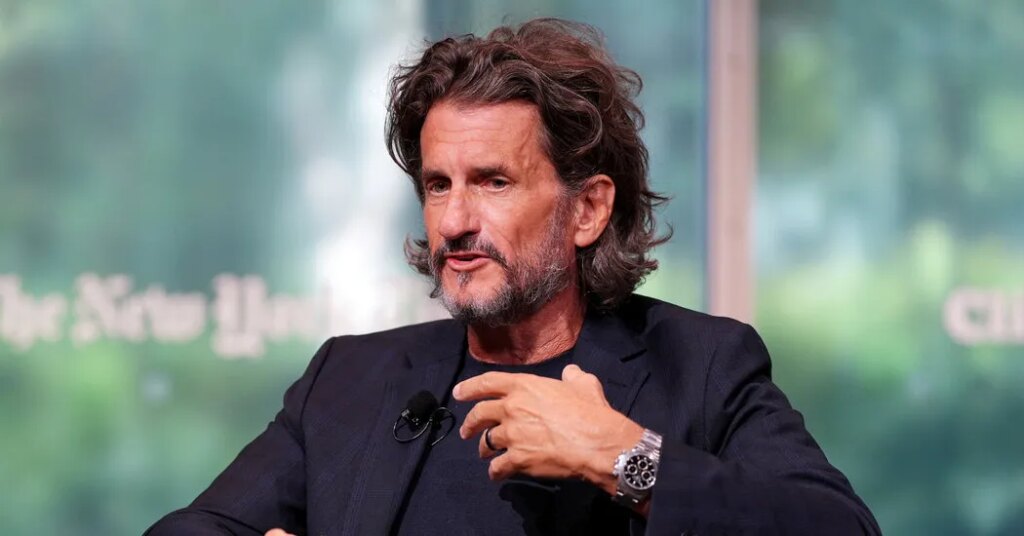
“You have to take into perspective where we’re getting these metals today,” the Metals Company chief executive, Gerard Barron, said in an interview at The New York Times’s Climate Forward live event. Mr. Barron cited exploitative and poorly regulated conditions at cobalt mines in the Democratic Republic of Congo and at nickel mines in Indonesia.
Such comparisons haven’t quieted concerns over the potential ecological consequences of industrial-scale mining in the deep ocean.
Sections of the seabed are studded with rocks the size of fists, coated with nickel, cobalt and other metals that are used in the making of electronics, weapons, batteries and more. But much is unknown about how mining might affect ecosystems in these dark ocean reaches. The Metals Company has funded dozens of efforts to study the environmental effects, and allowed researchers to independently analyze and publish their results.
President Trump has made seabed mining a priority of his second administration. Last year, Mr. Trump called for the U.S. government to issue mining permits in international waters, and the Metals Company quickly applied for approvals to operate in an expanse of the Pacific Ocean called the Clarion-Clipperton Zone.
Environmental groups and other countries have criticized the Trump administration’s moves to fast-track deep-sea mining. Most nations are cooperating on this subject through an accord called the United Nations Convention on the Law of the Sea. But the United States hasn’t ratified the treaty and says it has the right, under U.S. law, to issue mining permits outside of its territorial waters.
Mr. Barron applauded the Trump administration’s support for the industry, saying that the U.S. government had done something multinational institutions had “failed” to do: enact regulations for deep-sea mining.
“No one has sovereignty over the oceans,” Mr. Barron said in the interview with Katrin Bennhold, host of The World newsletter.
The International Seabed Authority, which includes 171 countries and the European Union, has been deliberating over mining regulations for more than a decade. The authority’s head, Leticia Carvalho, recently told The Times that a rulebook should be ready by year’s end.
Mr. Trump’s commerce secretary, Howard Lutnick, has also expressed support for deep-sea mining. Before Mr. Lutnick was commerce secretary, he was the chief executive of Cantor Fitzgerald, a financial firm that was the Metals Company’s lead banker.
Mr. Barron said on Wednesday that he had never met Mr. Lutnick nor any members of the Trump or Lutnick families. Nor, to his knowledge, were any members of those families investors in the Metals Company, which is publicly traded.
The post Gerard Barron Makes the Case for Mining the Ocean Floor appeared first on New York Times.