The settlement with 12 state attorneys general that cleared the way for Paramount to move forward with its $111-billion acquisition of Warner Bros. Discovery contained a surprise for CNN and CBS News.
The merged company will have an oversight board that will monitor adherence to editorial independence from its owners and shareholders. The editorial board is part of an agreement to end the states’ antitrust fight that threatened to delay the completion of the deal for months.
But the initial reaction among media observers and opponents of the merger was to question how much teeth editorial overseers will have as they will be appointees of Paramount’s board. The board is controlled by Paramount Chief Executive David Ellison’s family and RedBird Capital Partners.
“The so-called independence board appears to be sorely lacking in independence. It’s appointed by and answerable to the board of the combined Ellison-controlled entity, which can also remove the independence board members,” said Norm Eisen, founder of Democracy Defenders Action and one of the leaders of the Block the Merger group.
Agreements on editorial boards or ombudsmen are typically made to assuage regulatory concerns over a change in media ownership.
CBS News installed Kenneth R. Weinstein as an ombudsman ahead of Ellison’s acquisition of Paramount last year. But he has had a scant presence at the network, according to CBS News insiders.
When Rupert Murdoch’s News Corp. took over the Wall Street Journal in 2007, a five-member committee was created to ensure the editorial independence of the newspaper and Dow Jones’ other news services. The Journal has largely been successful in keeping its news-gathering operation separate from its right-leaning opinion pages reflecting the values of its owners.
The oversight board at Paramount adds a new layer of uncertainty as to how the two news divisions will operate in the merged company. CBS News has already seen significant upheaval since Ellison installed Bari Weiss as editor in chief.
Weiss, the founder of the heterodox digital news site the Free Press, has disrupted CBS News with major changes to its signature program “60 Minutes.” Her push to consider more conservative talking points and voices in stories led to accusationsthat she is tilting the program’s political bent to please President Trump, who has a friendly relationship with the Ellisons.
CNN insiders have been watching the discord at CBS News with concern. Trump and Larry Ellison, the tech mogul and father of David, have reportedly discussed personnel changes at CNN once the takeover of its parent, Warner Bros. Discovery, is complete.
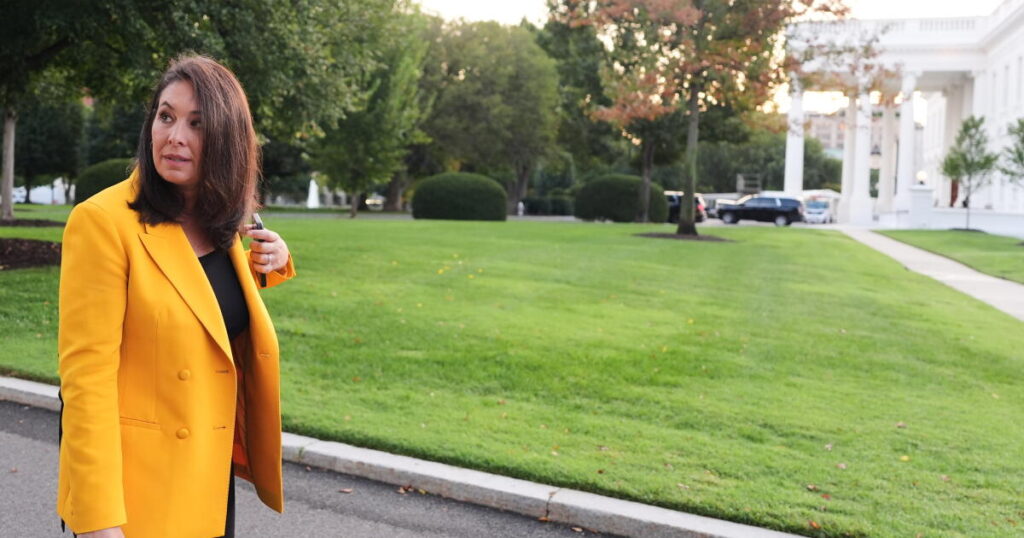
Trump has never been happy with CNN’s coverage, but the hostility intensified last Friday when he banned the organization along with MS NOW and Politico from the White House grounds. The three news organizations are challenging Trump’s ban in federal courts on the grounds that it violates their 1st Amendment rights.
But amid all the turmoil, veteran news executives inside and outside the companies involved were scratching their heads over exactly how an editorial board would operate.
“This was formed up in haste, and the fact that it looks like it’s kind of half-baked is not surprising,” said Tom Bettag, a former network news producer and lecturer at the Philip Merrill College of Journalism at the University of Maryland. “But they were in a hurry to get this merger approved by hook or by crook.”
The agreement says the board will be in charge of “resolving any disputes between CBS News employees, CNN employees, and management of the combined entity regarding alleged reporting bias or failure to meet” agreed upon reporting standards.
Back in June, “60 Minutes” correspondent Scott Pelley angrily questioned Weiss’ decision to fire several of his colleagues. As a result, he was dismissed as well.
It’s unclear whether similar confrontations would be resolved by the new Paramount board and, if so, what that would mean for the authority of the top executives at CBS News and CNN.
Paramount did not respond to requests for comment.
The creation of the editorial board was a compromise brokered among the coalition of state attorneys general. The proposal came about in the final two days of negotiations, according to two people familiar with the matter who were not authorized to comment publicly.
William Tong, the Connecticut attorney general, said in an interview that he agreed to the editorial board after pushing for the divestiture of CNN and CBS News as a condition for approving the merger.
“I’m not going to sugarcoat it. This is ultimately not what I wanted,” Tong told The Times. “However, a week ago, they weren’t willing to do anything.”
He added: “Their view was, ‘We’re buying it. We get to control it.’ … And so, you know, by Friday we had broken them down, and they were willing to do this editorial independence board for both CBS News and CNN. That’s what we were able to secure and it has to be all journalists on this five-person board.”
No Paramount executives, including Weiss, can serve on the board.
The post An editorial board will oversee CNN and CBS News. What does that mean? appeared first on Los Angeles Times.