Elaine Dezenski is the senior director of the Center on Economic and Financial Power at the Foundation for Defense of Democracies.
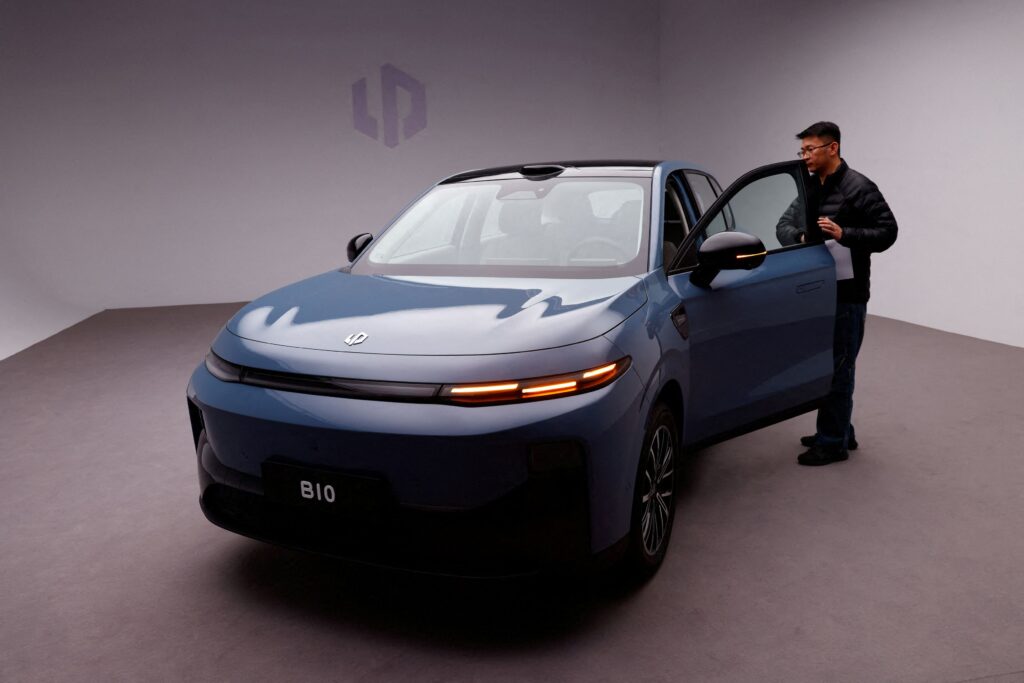
The automobile sector once represented American industrial might, but it’s now emblematic of something else: Beijing’s campaign to deindustrialize the rest of the world. Chinese companies are dumping cheap vehicles abroad to capture market share from North American and European rivals. And Washington is making the problem worse.
The United States-Mexico-Canada Agreement was supposed to defend the North American market against China. But when the agreement’s mandatory six-year review began this summer, the Trump administration declined to extend the current deal and instead continued separate bilateral talks with Canada and Mexico. The U.S. hasn’t reached a trade deal with Mexico, and U.S.-Canada talks have devolved into tit-for-tat tariffs. That division helps Beijing.
Washington squabbling with Ottawa and Mexico City won’t protect anyone’s automobile industries. If the three nations want to stop China, they have a narrow window to agree on a common position: The only Chinese vehicles and auto parts allowed into their borders should be those built in North America.
Beijing is trying to capture every part of the global automobile supply chain, including batteries, semiconductors, sensors and software. But Chinese firms undercut competitors through heavy state subsidies and anti-market practices, including forced labor and currency manipulation. As a result, China exported more than 8.3 million vehicles in 2025, up 30 percent from the year prior, and Chinese brands now account for roughly 60 percent of global electric vehicle sales.
Existing regulations haven’t stopped Chinese cars from entering North America. Firms that face tariffs and other import restrictions are shipping to Mexico instead. Chinese-made vehicles account for 1 in 5 cars sold there — making Mexico the largest vehicle export market for Chinese automakers.
Canada is going a step further by encouraging China to enter the domestic auto market. Ottawa struck a deal with Beijing this year and now will allow up to 49,000 Chinese electric vehicle imports annually. That will rise to about 70,000 after five years.
The auto-parts market has a similar problem. Mexican imports of Chinese-made auto bodies and cabs rose roughly ninefold by dollar amount from 2021 to 2025. Beijing’s direct share of U.S. auto-parts imports is modest — less than 10 percent — but that understates China’s reach. Components assembled as part of finished vehicles in Mexico enter the U.S. and are stamped “Made in Mexico,” even when much of the value does not come from North America. Between 30 and 40 percent of Chinese auto parts imported into Mexico eventually enter the U.S.
Having Chinese cars on the road in the U.S. creates a national security threat. Modern vehicles carry sensors that could be used for surveillance, and under China’s National Intelligence Law, Beijing can compel Chinese firms abroad to hand over driver data. That’s why the U.S. requires makers of high-tech vehicles to prove compliance with the Commerce Department’s Connected Vehicle Rule prohibiting Chinese- and Russian-linked technology before sale: Volvo won approval this year after reportedly agreeing not to share data with Beijing. But neither Canada nor Mexico have an equivalent measure, leaving them exposed.
The better model for all three countries is a unified set of rules for Chinese companies to operate in North American markets. For decades, Beijing required foreign automakers to enter the Chinese market through joint ventures and transfer their technology to Chinese firms. North American countries should impose even higher barriers, allowing joint ventures with Chinese firms only if they allow for real control by North American companies. That would require the U.S., Canada and Mexico to establish rules that keep intellectual property in North America, shield companies from China’s National Intelligence Law and ban sales to government entities — all enforced by strict blacklisting for violators.
And these restrictions must be airtight. A North American-made car that consists completely of Chinese-made parts achieves nothing. Closing the loophole that lets “assembly” substitute for “manufacturing” should top the agenda.
The USMCA is the right vehicle to establish these rules. But any regulatory attempts will fail if the three countries keep negotiating separately. Slow, reactive responses can’t keep pace with a strategy Beijing has already scaled worldwide. Whether the auto industry can once again anchor North American manufacturing depends on whether Washington, Ottawa and Mexico City finally treat economic security as a shared enterprise rather than an opportunity for infighting.
The post China is quietly taking over the North American car market appeared first on Washington Post.