As college costs and student debt have Americans doubting the value of higher education, there’s growing interest in high-paying jobs that don’t require a degree — and in public policy supporting training for them. But six-figure jobs that skip a bachelor’s degree do require more than a high school diploma and remain rare, according to an analysis released Monday by Niche, a higher education platform.
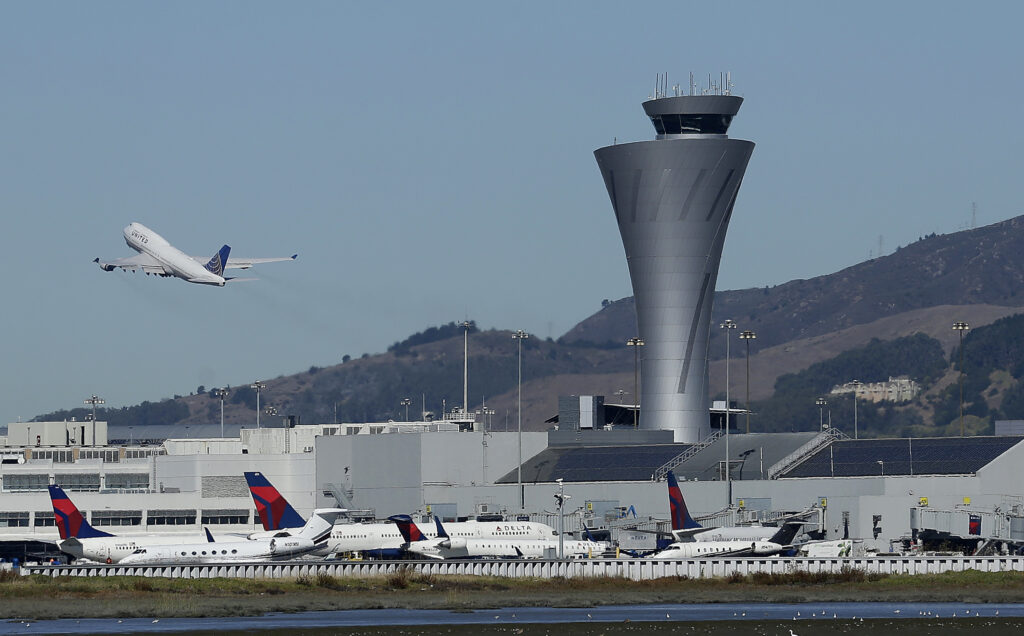
The highest salaries for workers without a bachelor’s degree are typically in jobs gated by federal certification or specialized training, including commercial pilots, air traffic controllers, elevator installers and nuclear reactor operators, the study shows.
The findings counter an emerging narrative about the prevalence of six-figure jobs in the skilled trades that don’t require higher education. Politicians and business leaders have touted careers in electrical work, HVAC and plumbing earning more than $100,000, arguing that a four-year degree is unnecessary for financial security.
While those jobs offer healthy salaries, research shows their median earnings are more modest than salaries for less common occupations that don’t require a bachelor’s degree.
Using data from the Bureau of Labor Statistics, Niche economist Allison Shrivastava found that only 9.4 percent of occupations with a median wage of $100,000 or more don’t require a bachelor’s degree. Those occupations account for just 0.3 percent of 13.8 million annual openings projected across every occupation in which a bachelor’s is not a prerequisite.
There are four times as many openings that do not require a bachelor’s degree, but the jobs generally pay less. On average, the median earnings for those occupations are around $45,000 a year, compared with $96,000 for job openings seeking people with a bachelor’s degree, according to the analysis.
“There’s a little bit of romanticizing the trades,” Shrivastava said. “There are some trade jobs that you can make six figures right out the gate, but they are more the exception than the rule.”
She said that doesn’t discount the power vocational training has to lift people out of poverty and provide economic success. But those workers have less earning potential than people with a bachelor’s degree, and can have a harder time finding work in other fields without additional training, Shrivastava said.
A study published by the National Bureau of Economic Research found the college wage premium — the extra pay degree holders make compared to workers with only a high school diploma — doubles over a worker’s lifetime, from 27 percent at age 25 to 60 percent at age 55. Workers with college degrees obtain jobs in professions with greater scope for on-the-job training and wage growth, according to the study.
Zack Mabel, interim director of Georgetown University’s Center on Education and the Workforce, said degree holders earning six figures are typically much younger than those without a college credential earning the same salaries. He said no-degree occupations that yield the highest salaries require considerable work experience and technical skills that come with years of training.
A college degree is still valued in the labor market, Mabel said, and that is reflected in wage disparities. Forty percent of mid-career adults ages 35-44 with bachelor’s degrees earned more than $100,000 annually in 2024, compared with 13 percent of high school graduates, according to research from the College Board.
Higher-paying jobs are often accessible to workers without college credentials because of apprenticeships and union trade programs, but many of these workers achieve sustained wage growth by becoming entrepreneurs, said Mary Alice McCarthy, senior director of the Center on Education & Labor at New America, a Washington think tank.
“Where we see tradespeople do really well … is when they’re able to start their own businesses, start their own contracting firms,” she said. “The real path to long-term prosperity does require that kind of evolution.”
McCarthy said the decline of labor unions in the trades since the 1970s has broadly eroded earning power. Many lucrative manufacturing jobs were also lost during the Great Recession and replaced with lower-paying service jobs.
Even though workers without a bachelor’s degree have far more job openings than degree holders, McCarthy said the quality of available jobs outside of the skilled trades has gotten worse with fewer benefits, stagnant wages and more precarity.
To offer more pathways to higher-paying jobs, private sector and government employers have been ditching degree requirements.
Governors in more than 30 states, including Maryland, Colorado and Pennsylvania, have committed to skills-based hiring by removing bachelor’s degree requirements for public sector roles. Both the Trump and Biden administrations revised degree requirements on federal jobs. But those efforts are undermined by how hiring managers evaluate candidates, said Mabel at Georgetown.
“There’s still a very big disconnect between the momentum around removing degree requirements and what plays out when it comes to who gets hired,” Mabel said. “Folks who are more credentialed are much more likely to ultimately be hired into those roles.”
In a 2025 study, Harvard Business School and the Burning Glass Institute found that fewer than 1 in 700 new hires benefited from no-degree policies. They examined more than 11,000 job postings at U.S. firms from 2014 to 2023 and found that hiring of candidates without a college credential only increased by 3.5 percentage points.
Mabel said skills-first hiring must be widely adopted to produce meaningful changes in the labor market. Workers are taking on the risk that while their first employer embraces what they have to offer without a college credential, the next one may not, he said.
While a bachelor’s degree improves the chances of reaching higher rungs on the income ladder, Mabel said the return on investment in higher education varies based on the field of study.
Students at a crossroads in deciding whether to pursue a degree or a trade should know there is no one path to a lucrative job, said McCarthy at New America. And those positions require some form of education after high school, whether that means a certificate, associate’s degree or bachelor’s.
Todd Wallack contributed to this report.
The post Jobs that earn six figures without going to college (and why they are rare) appeared first on Washington Post.