Johnny Odom’s 22-year-old son arrived at his base in Jordan in March expecting a routine Air Force deployment.
On his first day, Iranian missiles struck the base, forcing him and his unit to scramble into a ditch for cover. Six months later, he remains there, and the danger has only escalated, reported MS NOW.
“These attacks come whenever they come. Most of them come in the middle of the night,” Odom said, adding that his son had sent him videos of the bombardments. “Right before they explode [they] jump in the bunker and they shut the doors for protection.”
Odom, a retired disabled Army combat veteran, said the strikes are powerful enough to shake the bunkers his son shelters in, sometimes moving the structures by as much as 10 inches. “My son already has nightmares,” he said. “He’s already suffering from all these things, these traumas from this war. He’s not even home yet.”
Odom’s son is one of roughly 40,000 U.S. troops stationed at bases across the Middle East as part of the military’s standing regional presence — separate from the 50,000 explicitly deployed to fight Iran.
Since the U.S. launched strikes on Iran’s nuclear and military facilities on Feb. 28, those bases have come under sustained retaliatory fire, with Iran launching hundreds of attacks.
According to Department of Defense data, 18 Americans have been killed and 750 wounded in the war so far.
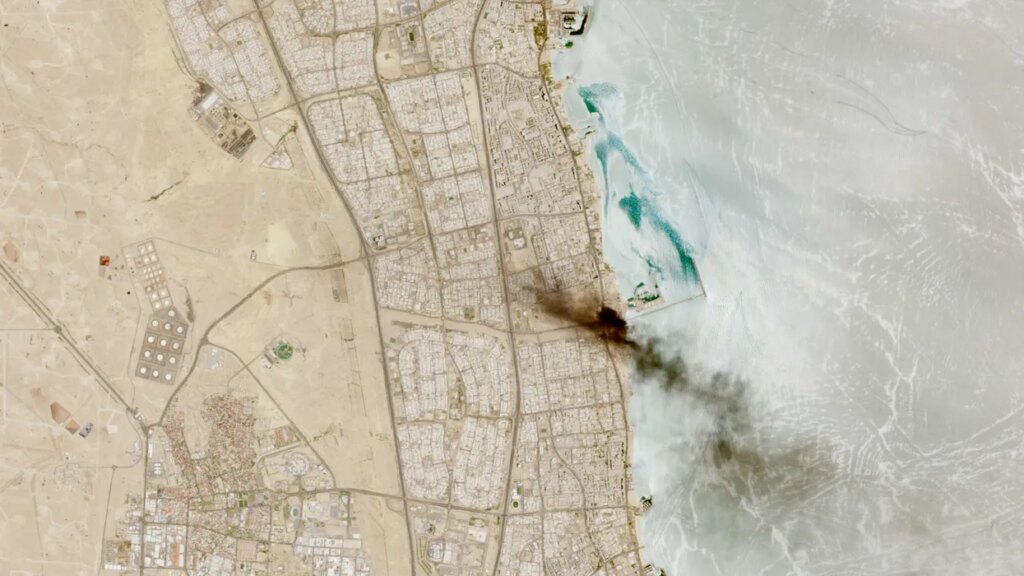
A Pentagon inspector general report found Iranian strikes damaged or destroyed hundreds of structures on U.S. bases in Kuwait, Bahrain, Qatar, the UAE, Saudi Arabia, Iraq, Oman and Jordan between April and June.
U.S. Central Command has declined to publicly disclose most missile and drone attacks, citing operational security concerns. That silence has left families like Odom’s relying on secondhand accounts and smartphone footage to piece together what their loved ones are enduring.
The CENTCOM commander and Defense Secretary Pete Hegseth have said the military’s stockpiles of interceptors remain adequate to protect U.S. bases in the region, though some family members say troops still feel dangerously exposed.
Odom said he has grown increasingly frustrated by how the administration has described the war, particularly President Donald Trump’s recent remarks dismissing the conflict as “small potatoes” and “not a big thing.”
“The president said ‘this is small potatoes.’ Well, I have a small potato over in Jordan that I care a lot about, he’s everything to me, he’s my youngest son, he’s my baby,” Odom said. “I go to sleep every night praying about him. I wake up every morning thinking about him and my worry is, what if he gets hurt down there?”
The post ‘Jump in the bunker and shut the doors’: Dad’s harrowing account exposes Trump’s war appeared first on Raw Story.