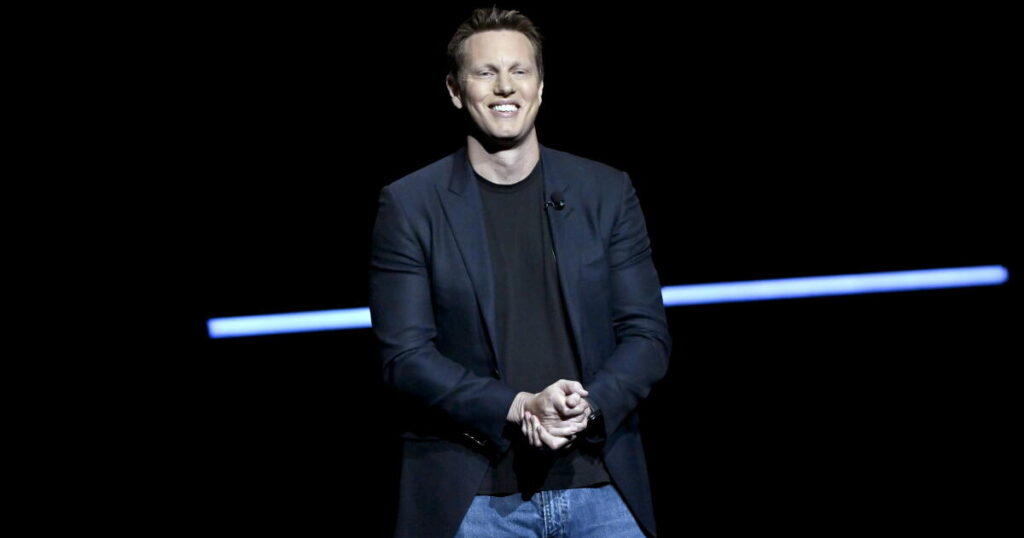
As the Warner Bros.-Paramount merger inches closer to reality, actor-turned-movie mogul David Ellison faces a paradox. He seems to have cleared every regulatory body but still can’t close the deal. As 12 Democratic attorneys general push back on antitrust grounds, not to mention facing thousands of Hollywood artisans protesting, a WGA lawsuit, the Block the Merger group and the constant talk of political cronyism as federal regulators quickly waved the merger through, this entire deal has been given a political framing instead of an industrial one.
It’s easy to read this situation as favoritism or nepotism and leave it there. Ellison is living in the shadow of his father, billionaire Oracle co-founder Larry Ellison, and aligning with his father’s political allies. If David Ellison wants to carve out his own story, he should be courting Hollywood talent and not bureaucrats in Washington. That doesn’t mean Ellison has to change his personal politics, but that he should be building his goodwill within the film industry.
All the right-wing glad-handing that’s been happening, especially at CBS, has created optics that shroud the entire operation. This is a strategic failure that Hollywood moguls throughout history worked to avoid. Movie bosses from Paramount founder Adolph Zukor to Warner Bros. co-founder Harry Warner were courting and jousting with Washington their entire careers, but the story was always in defense of movies. Self-censorship was imposed to keep the government away in the 1920s. Studios defended anti-Nazi movies from isolationist senators in 1941. Hollywood aligned with the government during World War II as the nation banded together. The industry fumbled the early Cold War paranoia with the House Un-American Activities Committee hearings but still managed to stay intact.
For most of Hollywood’s history, the government was a necessary evil working alongside it. Movie moguls must understand how to negotiate with government pressure so business can go on. The industry lost its bid to save vertical integration — the sole control of exhibition, distribution and production — in 1948, but that door has now been reopened following the reversal in 2020. There have never been more venues to exhibit entertainment than there are right now. The possibilities are endless, yet the skepticism over promises of growth are legion.
The prevailing attitude among the entertainment world is that their thoughts don’t matter to Ellison. Constant threats to sell studio lots and move the company don’t land well in Los Angeles. Sharon Waxman wrote in the New York Times, “no one really wants to move from Beverly Hills to Nashville.” Los Angeles is an epicenter of talent that has fed Hollywood for over a century.
The historical grounding cannot be overstated and is worth fighting for. Someone close to the internal thinking at Paramount told the New York Post that, “Ellison loves movies and Warner will eventually be sold to Big Tech if this deal doesn’t go through and they can’t wait for AI to start eliminating jobs.” This all may be true, but why then isn’t Ellison boasting the importance of these studio lots and wrapping himself in the history and importance of Hollywood? Instead, Ellison is threatening to abandon Los Angeles and the latest report predicts the action would result in 58,000 lost jobs and $21 billion in annual revenue in California.
It’s clear that Ellison has been courting the wrong audience all along. If he knew he could waltz through the regulatory process, why spend so much time in Washington flaunting that reality? Look at what Ted Sarandos was doing for months when Netflix had an agreement to purchase Warner Bros. in late 2025. He was talking to the industry trades, going on podcasts, in addition to speaking to leaders in Washington. Even with its own criticisms over conflicting messages on theatrical windows, it was clear that the Netflix offer was grounded in entertainment first and foremost.
Courting Hollywood over Washington would have created a completely different narrative for Ellison, even with the Hollywood-hating Trump allies in his circle. He should be winning over the people who will be working for him. In contrast, Harry Warner was never happy with politicians and other Hollywood leaders’ approval; he needed to make sure the carpenters and grips understood that Warner considered them with every decision he made. Warner looked to defend his company to shareholders, not explain shareholder feelings to the rest of Warner Bros.
Ellison’s New York Times op-ed should have been very early in his bid for Warner Bros. Why wasn’t he joining “The Town” podcast, or speaking with the Hollywood Reporter, in addition to letting Tom Cruise stump for the merger? Cronyism, nepotism and favoritism are old news in Hollywood. What Ellison has all too often forgotten, and what he can still convey if he wants to pull off his vision, is the importance of spending more time with people working in entertainment than those in politics. And not just executives and lawyers. Visit sets. Talk to writers, actors, production assistants, grips, interns, everyone.
The greatest Hollywood moguls didn’t win every battle in Washington. Their focus was always on convincing industry workers that the leaders were one of them. For Ellison, the hurdle is to show that you are more than a billionaire’s son with high-powered political connections. What outlasts any political favor or administration is the industry itself. When the Warner Bros.-Paramount deal probably closes, Ellison will have to make up a lot of ground that he should have covered before courting Washington in the first place.
Chris Yogerst is the author of “The Warner Brothers” and a regular contributor to the Hollywood Reporter and teaches film courses at Marquette University.
The post David Ellison won Washington. He’s losing Hollywood appeared first on Los Angeles Times.