The World Bank said on Thursday that it had attracted $112 billion of private capital in 2026, a 62 percent increase from last year, as the development organization has increasingly turned to private sector investors to help finance projects in developing countries.
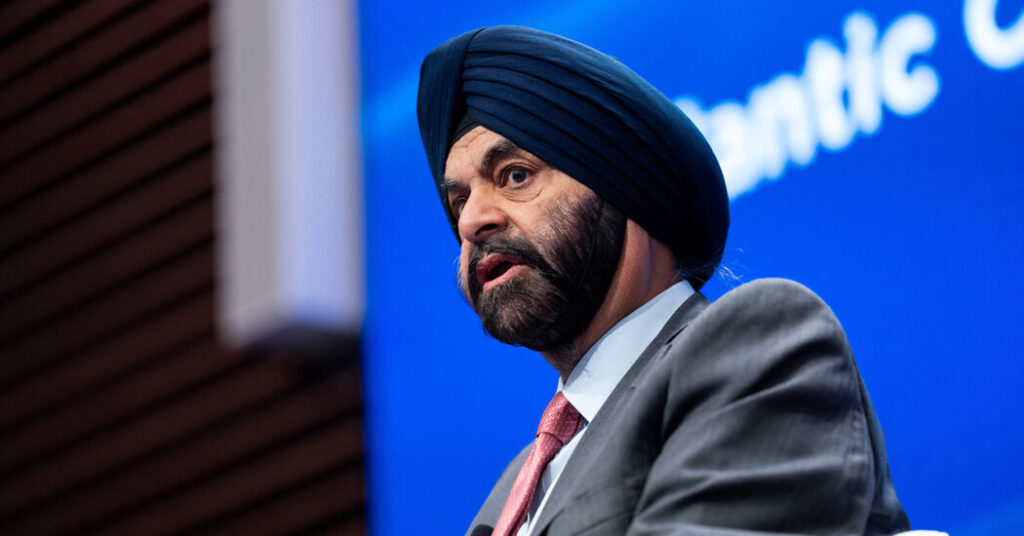
The effort to make the World Bank a magnet for private investment has been a priority for its president, Ajay Banga. The organization has been trying to accelerate its poverty reduction and development goals at a time when poor countries facing tight budget constraints and high interest rates are struggling to new build roads and housing.
The initiative was originally intended to raise trillions of dollars needed to combat climate change. But with President Trump leading the United States, which is the bank’s largest shareholder, Mr. Banga has been shifting the organization’s ambitions toward infrastructure and job creation.
The private investment total has nearly tripled over the last three years since Mr. Banga, who was appointed by former President Joseph R. Biden Jr., assumed leadership of the bank.
“If you’re a rich country or a developing country, everybody’s got fiscal challenges,” Mr. Banga said in an interview at his office at the World Bank in Washington. “The old idea of thinking that public coffers, philanthropic coffers, in some way will fund this development challenge in the world — whether it is education or energy or resilient infrastructure or health care, whichever subscription of it you care about — there’s just too many zeros attached to that demand.”
He added: “You’re not going to get this without the private sector.”
The World Bank has rapidly expanded private investment by tapping pension funds and companies like Nestlé and General Motors, but also asset managers such as BlackRock and local investors and financial institutions in countries around the world. Mr. Banga said that the bank has been expanding its political risk insurance offerings, taking on more financial risk to draw investments to the poorest countries and pushing governments to clarify their investment regulations.
But the immediate impact of the infusion of private capital is hard to quantify and the World Bank has for years tried to leverage public sector funds to finance development work with mixed success.
The fact that the funds are coming from private investors interested in returns and profits has meant that nearly half of the money, about $50 billion, is being directed at upper-middle income countries. Low-income countries got just $3 billion in private investment.
“We’re somewhat skeptical of the development impact of this money,” said Álvaro González, a senior fellow at the Center for Global Development. “If you look at where it’s distributed, it’s in pretty well developed markets, not the tough places.”
Another wrinkle is that the bank’s priorities have shifted sharply over the last two years since Mr. Trump took office. Rather than focusing on climate change and green energy investments, the Trump administration wants the World Bank to be investing in nuclear energy and general poverty reduction initiatives.
“The World Bank must respond to countries’ energy priorities and needs and focus on dependable technologies that can sustain economic growth rather than seek to meet distortionary climate finance targets,” Treasury Secretary Scott Bessent said during a speech in April 2025.
The World Bank is owned and funded by 189 member countries and the United States is the largest shareholder. Mr. Banga, a former executive at Mastercard and Citigroup, has managed to avoid Mr. Trump’s ire by emphasizing the importance of public-private partnerships and downplaying the urgency of climate change.
In June, the World Bank overhauled a key part of its Climate Action Plan and scrapped its commitment to direct 45 percent of its spending to projects with climate benefits.
Mr. Banga noted in the interview that he answers to a broad array of countries and that the change to the action plan was determined after a “hefty” negotiation with the bank’s board. While climate change was a priority of the Biden administration, under Mr. Trump the World Bank has been dedicating its resources to making countries more resilient to volatile climate events rather than trying to slow global warming.
Mr. Banga explained that the World Bank is trying to steer clear from the “emotional” language that charges the climate debate while still working to build roads that are hurricane resistant, homes that are flood resistant and seeds that are heat resistant.
“Let’s get away from the word to what we are actually doing,” Mr. Banga said. “And what are we actually doing? You’re spending money on resilient infrastructure.”
The post World Bank Courts Private Financing Amid Global Debt Burden appeared first on New York Times.