Michael Wagner was a construction worker when he fell 35 feet on a job. He survived, but what came after — nearly 18 years of chronic pain, financial hardship and fighting for help — slowly unraveled his life. In 2018, he died by suicide.
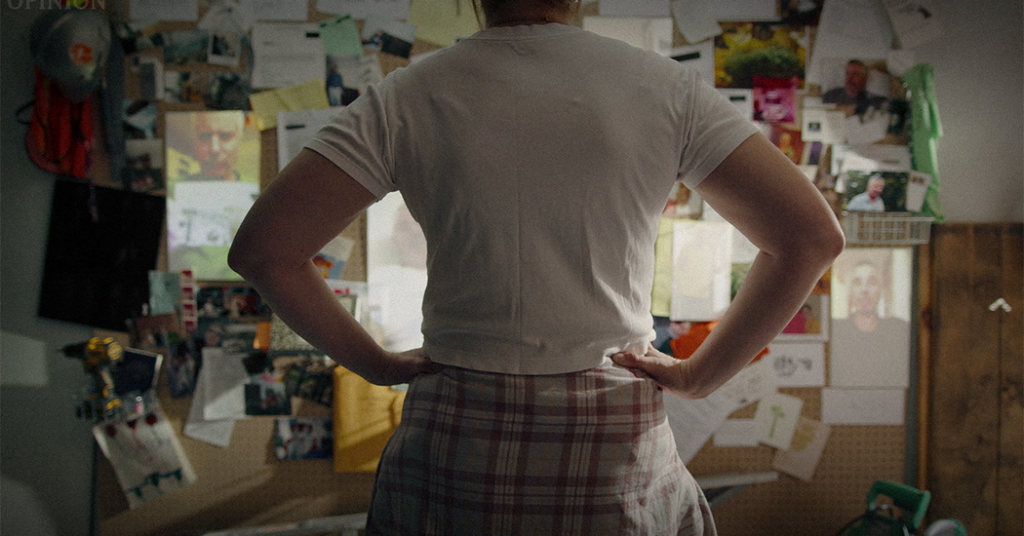
After his death, his daughter, Brittany Wagner, discovered 694 private videos he had recorded over the years, documenting his struggle to navigate workers’ compensation, disability benefits and the health care system. Seven years after finding those video diaries, Brittany pieces together what they reveal about her father’s final years — and how he fell through the social safety net that was supposed to catch him.
If you are having thoughts of suicide, call or text 988 to reach the 988 Suicide and Crisis Lifeline or go to SpeakingOfSuicide.com/resources for a list of additional resources.
Below is an edited transcript of this video. We recommend watching it in its original form for the full effect. You can do so using the video player above.
Brittany Wagner: I thought I understood why my dad took his own life. But he had left me and my sister a cryptic email: “I have 694 videos for you girls. Sorry I can’t be there to discuss.”
Videos? What videos? It’s like he had sent us on a scavenger hunt from the grave, which was very him. And then I remembered: his iPod Touch.
Archival clip of Michael Wagner: Hey, girls, this is Pops. I just want to let you know that I love you and there’s nothing you could have done to have saved me. This is something that the government has created. They have created this problem, and they’re going to kill a lot more loved ones.
Brittany: Turns out, he had been secretly recording videos for years.
Michael: OK, we’re rolling. [Laughs.] OK, I had to get this one rolling while I’m thinking about it.
Brittany: Documenting a battle with government programs that were supposed to be there to help him.
Michael: I kind of want this story to be told about how it is for a worker that gets hurt. I did my job and this company screwed me. My lawyers screwed me. My doctors screwed me. My government screwed me.
Brittany: It’s been seven years since I found these videos. And ever since, I’ve been trying to piece together what’s really to blame for my dad’s death.
Michael: Hey. [Singing.] Happy birthday.
I used to be a carpenter. Just a happy-go-lucky, just hyped-up kind of guy. And I loved the work I did. I wanted to show off one of my pictures that I did, that I took. And this is the work — the actual work that I did. That was really my identity, being a carpenter. I was a strong worker — producing, paying my taxes and doing my thing, supporting my girls. If you’re happy, you’re successful. I was on top of the world.
See, I was on the beam crew, doing these beams, all of these: Boom, boom, boom, boom. And they had a lift. Grove lift — 66-foot man lift that was a telescoping man lift — it went up like click, click, click, click. The lift had been making noises. We were told we had to use it, so me and the other guy got in it. And it popped. And we just dropped.
Brittany: He didn’t break anything or have any scars. No tests showed what was wrong. He looked fine, so he was expected to be fine. But he was in horrific pain.
Michael: It hurts all over my body. I feel miserable. Oh [expletive]. Feeling like this sucks. It’s just ungodly. You know, flesh ripping off your bones, stabs — full body stabs. You feel like your body’s being ripped in — it’s crazy [expletive] weird pain. Pain in the hands, feet, everything. It’s nuts.
Brittany: But here’s what I’ve realized: His pain wasn’t the reason he took his life. It was everything that came next. My dad did what you’re supposed to do: file for workers’ compensation.
It’s a type of insurance that companies are required to have in most states, to cover medical care and even some lost income for injured workers. While my dad’s claim made its way through the system, he went back to work.
Michael: I didn’t want to lose my [expletive] job. I was a single parent. So, yeah, I did. Give me a break.
Brittany: But his employer challenged his claim.
Michael: They lied and said I never told them about how my back was hurt.
Brittany: According to my dad’s journals, they accused him of faking the injury since he had returned to work after the accident. Essentially, he was penalized for trying to tough it out. So my dad hired a lawyer to fight back.
Look, maybe it’s no surprise that a company wouldn’t give a [expletive] about its employees. But the entire reason workers’ compensation was created was to prevent this kind of thing.
More than a century ago, injured workers were stuck covering their own medical bills. They could sue, but most lost in court. Republican President Teddy Roosevelt was outraged. He called this “a great social injustice.” He wanted “those who profit” to bear the financial burden of workplace accidents, not the workers and their families.
So states started building a safety net: Ohio, where we’re from, literally wrote into their state Constitution that it is compulsory for companies to pay for workers’ compensation. At the time, employers actually supported this, because it stopped all the lawsuits.
Michael: Ohio here used to have one of the best workers’ compensation programs in the nation, and now they’ve changed it.
Brittany: Over the past several decades, states have chipped away at workers’ compensation, making it easier to deny claims and a whole lot cheaper for employers.
Archival clip of former Gov. John Kasich of Ohio: Empowering Ohio’s job creators with the kind of climate they need to grow and succeed.
Brittany: Politicians love to say:
Archival clip of Lt. Gov. Jim Tressel of Ohio: Ohio means jobs.
Brittany: But what they really mean is: Ohio loves employers, not workers.
Clip of Mr. Tressel: Let’s get to work.
Michael: That’s how they do it here in Ohio.
Brittany: While my dad was fighting for workers’ compensation, he had a hard time keeping a job. So it was a struggle to take care of my sister and I.
Michael: You go and you’re in so much pain, you pass out from exhaustion. You get your two or three hours of sleep, and then you’ve got to go back to work. I was crying, putting my socks on — ugh, so much. But I had no choice. And you are on your own out there as a hurt worker.
Brittany: Basic things became a challenge. Hot breakfasts turned into Pop-Tarts turned into us getting ourselves to school in the morning.
He wrote letters to the governor, and even the president, about “hard-working Americans” who had to “make a choice” between paying for medical treatments or being able to eat. He saw more than 20 doctors — surgeons, pain specialists, neurologists, chiropractors.
Michael: I tried. I went to all these doctors.
Brittany: Eventually they found deterioration in the disks of his spine and diagnosed him with chronic pain syndrome.
Michael: I had to keep working, feed two kids — single parent.
Brittany: And pushing through did permanent damage.
Michael: I went until I couldn’t walk. Bedridden, for days.
Brittany: He even had two major back surgeries.
Michael: Nothing that the doctors did for me worked.
Brittany: He managed to get some coverage for his treatments, but he had to fight for more when his pain just got worse. After a decade of fighting for workers’ compensation, he needed money.
Michael: That’s the name of the game — starve you out.
Brittany: So he settled for a one-time, lump-sum payment of just $15,000. His employer denied all liability.
Michael: Stuck with a lifetime of ungodly pain. All for doing my job. Ain’t that a [expletive], man.
Brittany: There are 22 million Americans with chronic pain that impacts their ability to work. Eventually, my dad couldn’t work at all.
It was hard, seeing this larger-than-life guy just become so small. And at the time, he tried to shield us from the worst of it.
Michael: Doing what I’ve got to do to stay alive.
Brittany: But now, I can see what he was really going through.
Michael: She didn’t notice how close I was to a countdown.
Brittany: And it’s tough, watching him slowly disappear.
Michael: I feel exhausted. I feel like [expletive].
Brittany: His fight to get help consumed his entire life. But I had no idea how bad it was going to get.
Next, he turned to a different program for help: Social Security Disability Insurance, or S.S.D.I. Almost all of us, as working Americans, pay into it. You could use it, too, if you ever needed to.
S.S.D.I. was created in the 1950s by a Republican president, Dwight Eisenhower. But starting in the 1980s, the government began tightening the rules to make it harder to qualify, in an effort to make people less reliant on government support.
Archival clip of Ronald Reagan: More must be done to reduce poverty and dependency.
Archival clip of Bill Clinton: Those who are able must go to work.
Brittany: S.S.D.I. has become a denial machine. In the 1990s, about half of applicants were rejected.
Archival clip of George W. Bush: Social Security.
Archival clip of Barack Obama: The backlog of disability claims.
Archival clip of Donald Trump: Disability claims.
Brittany: But in the past few years, it’s 71 percent. My dad applied. He was denied. He appealed, and he was denied again.
Michael: I’m so disgusted with government. Both sides. These entitlement programs that you keep cutting and cutting — you’ve cut them so bad.
Brittany: Staffing cuts at the Social Security Administration have created a massive backlog of applications. Some 30,000 people die every year while waiting.
It took my dad four and a half years of appeals, and even filing a complaint in federal court, to finally get approved for disability benefits. But all he received was $1,500 a month. That’s just $18,000 a year. Look, as heavy as all this sounds — and it was, honestly — there was actually a stretch where things got better.
Michael: OK, you may see me moving pretty quick in here, and agile for a disabled guy. These past few months, I had so much fun.
Brittany: And that’s because ——
Michael: Here’s my girls.
Brittany: My dad started growing pot in the basement.
Michael: So I started smoking pot. And it kind of put the pain on a shelf. I don’t really know if it takes a lot away, or if any away. I think it makes me have a better attitude, so mentally, I can deal with it.
Brittany: He was prescribed opioids, but he didn’t love the way they made him feel.
Michael: Marijuana made my life livable. I could take half the medicine or less, and then it just made me less of a zombie, and actually I was able to achieve happiness, which I hadn’t done in 17 years. And we’re out here and I’m having fun.
Brittany: I knew how much pot helped him. But at the time, part of me was mad because I also knew that it might get him into trouble. And it did.
Even though medical marijuana had recently been legalized in Ohio, smoking pot was still considered a possible sign that you were abusing opioids — which is ironic, considering my dad was smoking to cut down on them. Still, when a large amount of THC showed up on his drug test, his doctor dropped him as a patient altogether.
Michael: I’ve got to be able to have pain medicine and the pot. I can’t do without. The only reason that helped me feel like I wasn’t dying was the marijuana.
Brittany: He was just trying to feel like himself again. And the government punished him for it.
Archival clip of Trump’s 2026 State of the Union address: This is the kind of corruption that shreds the fabric of a nation. So tonight, I am officially announcing the war on fraud.
Brittany: Politicians will say that people like my dad are just trying to game the system. Fake it. Milk it. Sure, fraud exists. But government audits have found that less than 1 percent of payments are made in error. And even those are usually clerical errors, not fraud.
Look, my dad wasn’t perfect. He made mistakes. He wrote angry letters to politicians that he probably shouldn’t have sent. But here’s what I saw: a man who lived to work. Until he just couldn’t anymore.
Michael: All I wanted to do was do my job. I was a damn good carpenter, and I worked — I tried to be the best. I know that I tried harder than most.
Brittany: My dad paid into the system. He played by the rules. But the government broke the promise it made more than a century ago to take care of disabled workers like him. That’s why my dad left me these videos.
Michael: This is something that the government has created. They have created this problem and they’re going to kill a lot more loved ones.
Brittany: And it’s the reason he took his life.
Michael: I’m planning on dying later today. OK, B. I can’t move with this pain — the chair.
I don’t know, maybe part of my story will help shed light on things that need to be addressed, whatever they may be.
Brittany: He always used to say: This struggle can’t be for nothing. So I keep asking myself: What would it take to actually fix this?
Plain and simple: My dad shouldn’t have had to fight so hard to get help. If workers’ compensation and disability benefits were easier to access or properly funded, things could have gone differently for him.
If the government had provided him with a health care advocate, like it does for veterans, he might not have lost hope after hitting so many dead ends. There’s no single solution for this complex patchwork of state and federal programs, but the point is that the safety net should have been there to catch him when he fell.
And in Ohio of all places, a Republican has proposed legislation that would help.
Archival clip of State Senator Louis Blessing III of Ohio: Seventy-seven percent of Ohio workers have no access to paid leave. They are faced with a devastating choice: Do they tend to their own health crisis? Or do they keep their paycheck? We’re here today because we believe no Ohioan should have to make that choice.
Brittany: State Senator Blessing’s bill would guarantee paid leave for all workers. This wouldn’t have solved everything for my dad. But it would have helped early on, when he had to push through the pain rather than rest and recover. And that could have made a difference.
People like my dad deserve support, not suspicion. Millions are fighting with pain you can’t see. So I’d ask you to believe them.
Michael: You look at all this stuff that happened to me. Now imagine — close your eyes — it happened to you.
Brittany: Going back through my dad’s videos — all 694 of them — I also found something else I didn’t expect: him.
Michael: Morning, babe. [Laughs.] Or afternoon. OK! Sometimes you’ve just got to get your [expletive] out there and get your butt to it! I’m going to get me a good walk in.
Brittany: The pain stole so much color and joy from his life. But it didn’t get all of him.
Michael: All right, who’s the man? I’m the man. Check it out, baby girl. Ha!
Brittany: He left these videos as proof of a fight that defined both of our lives. But they also gave me back my dad. And I’ll take it.
Michael: I’ll be around. You’ll feel me around. Got to go. I love you.
This video was produced by Brittany Wagner and Alexander Stockton. It was edited by Alexander Stockton. The associate producers are Rebecca Shaid and Amanda Su. Fact-checking by Julie Beer. Cinematography and color by Kyle Kelley. Mixing by Isaac Jones. Original music by Pat McCusker, Isaac Jones, Carole Sabouraud and Sonia Herrero. The postproduction manager is Mike Puretz. Audience strategy by Shannon Busta and Kristina Samulewski. The executive producer of Opinion Video is Erica Berenstein. The director of Opinion Video is Jonah M. Kessel. The deputy director of Opinion Shows is Alison Bruzek. The director of Opinion Shows is Annie-Rose Strasser. The head of Times Opinion is Kathleen Kingsbury. Special thanks to Greg Campbell.
Opinion Video combines original reporting with creative storytelling to produce visually transformative commentary. Pitch a video guest essay here.
The Times is committed to publishing a diversity of letters to the editor. We’d like to hear what you think about this or any of our articles. Here are some tips. And here’s our email: [email protected].
Follow the New York Times Opinion section on Facebook, Instagram, TikTok, Bluesky, WhatsApp and Threads.
The post Before My Dad Died by Suicide, He Recorded 694 Videos to Help Me Understand Why appeared first on New York Times.