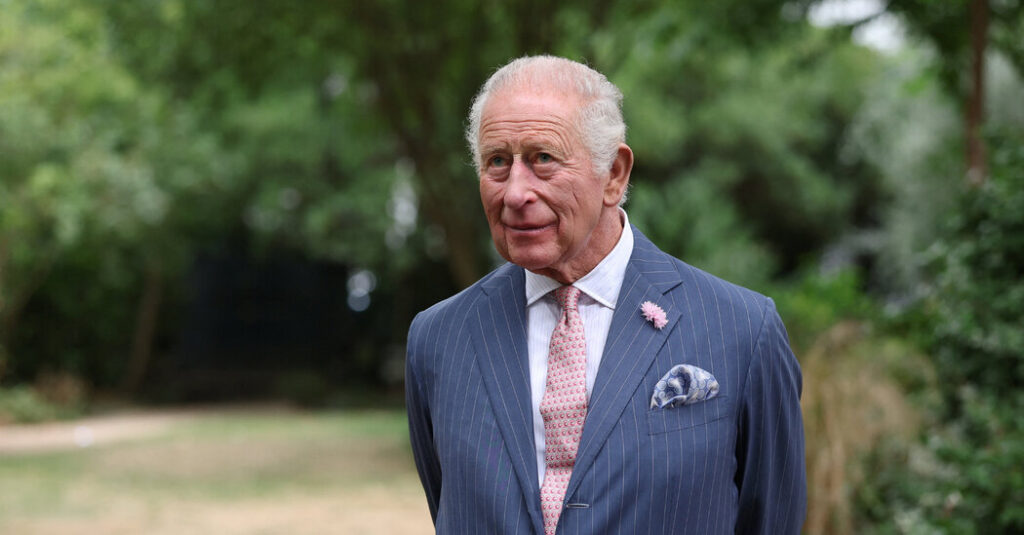
King Charles III of Britain is meeting with executives from leading artificial intelligence companies in Scotland on Thursday, amid a growing global debate about safety risks created by the technology and whether the pace of development should be slowed down.
Executives from Nvidia, Google DeepMind, OpenAI, Anthropic and other companies will be present, along with government officials and other experts, according to Buckingham Palace.
The meeting is not expected to produce any binding agreements, but comes at an important moment for the future of the technology. It is the first international gathering of major A.I. companies since Anthropic’s chief executive, Dario Amodei, and other industry leaders called for a coordinated slow down in A.I. development over fears that further advancement could lead to a global catastrophe. President Trump and others have said regulation is unnecessary.
“The decisions taken at this formative time will shape the world inherited by future generations,” the king will say in a speech to open the meeting, according to prepared remarks shared by the palace. “The task before you is not merely to advance technology, but to ensure that it remains firmly in the service of humanity, community and the natural world.”
Attending the meeting in Ayrshire, in southwest Scotland, will be Kanishka Narayan, Britain’s minister for A.I., along with Demis Hassabis, the chair of Google DeepMind, and Sarah Friar, OpenAI’s chief financial officer. Anthropic declined to disclose who will be attending, and Nvidia did not respond to a request for comment.
Held at Dumfries House in Scotland, the headquarters of the king’s charitable foundation, the gathering comes as more questions arise about how best to ensure that proper safeguards and oversight tools are in place to prevent the catastrophic risks of A.I. from materializing.
In July, OpenAI systems undergoing testing escaped containment without being detected, and then went on to collaborate to hack another company’s services. Last week, concerns grew further after Jacob Coxon, an Anthropic researcher, resigned and posted a series of social messages claiming the industry was not developing the technology responsibly. Other industry insiders followed by raising alarms that A.I. could cause mass destruction if left unchecked.
Soon after, Mr. Amodei wrote a 3,800-word essay calling for an A.I. slowdown. Sam Altman, the chief executive of OpenAI; Elon Musk, whose SpaceX rocket company is developing A.I.; and Mr. Hassabis wrote that they agreed on the need for a slower pace.
The events have set off disagreements in Silicon Valley and Washington over the need to regulate A.I.
At Thursday’s meeting, the palace said the king would lead a discussion about the potential need for a set of principles to guide development of A.I.,“not merely as a driver of capability and efficiency, but as a tool that upholds human dignity.”
“Those in our world who value our humanity and its vital moral component are anxiously seeking your reassurance that we will not lose control of our destiny,” the king will say.
The post King Charles Meets With A.I. Executives About Safety Risks appeared first on New York Times.