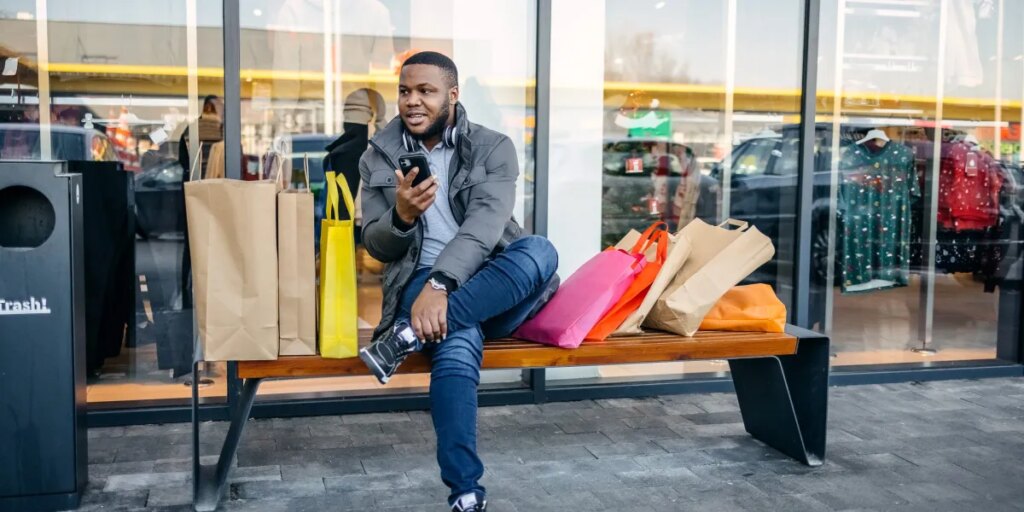
There is a couch outside the fitting rooms at nearly every mall in America, and for decades it looked like the least productive real estate in the building. No inventory. No margin. Just someone’s better half sitting with a pile of bags and time to kill. Paco Underhill, who has worked with shopping malls in more than 30 countries and wrote the 2004 book Call of the Mall, coined a phrase for it: “a parking lot for two-legged pets.”
“A two-legged pet could be a boyfriend, or it could be your mother, or it could be a grandfather,” Underhill, often called the “godfather of retail anthropology,” told Fortune. Give that companion a couch, he said, and the shopper they came with may stay longer.
That overlooked piece of furniture is now close to a business strategy. Data from commercial real estate analytics firm Green Street first reported by The Wall Street Journal capture the industry’s reversal: An estimated 200 malls have closed since 2008, but values for the survivors have climbed 13% over the past year—the strongest gain of any major commercial real estate sector. Indoor-mall visits from January through August also rose 2.5% from the same period last year, bringing traffic within 1.3% of its pre-pandemic 2019 level, according to data Placer.ai provided to Fortune.
Instead of simply giving people somewhere to shop, the new mall gives them a reason to make a day of it, trading the old department-store formula for restaurants, gyms, entertainment, beauty services, and even apartments.
The business of hanging out
More than two decades after Underhill wrote Call of the Mall, his critique looks newly relevant. The traditional American mall, he argues, was an “incomplete solution.”
Department stores helped developers secure financing and attracted shoppers, but they also dictated which businesses could move in.
“They were very clear: I don’t want drugstores. I don’t want a hardware store. I don’t want a grocery store. I don’t want shopping carts in the shopping mall,” Underhill said.
By excluding everyday services, American malls remained dependent on occasional shopping trips. Underhill said malls abroad were built around a broader mix of food, recreation, services, and social life that encouraged frequent visits.
American malls are now filling in what was missing. Underhill pointed to gyms, daycare centers, doctors’ offices, restaurants, and beauty services as repeat-visit drivers. Vince Tibone, a retail analyst at Green Street, told Fortune former department stores and excess land are also becoming entertainment venues, housing, hotels, and offices.
R.J. Hottovy, head of analytical research at Placer.ai, said the changing tenant mix, events, and attractions are turning some malls into a “third place,” or even a “second place if your home is your office these days.” In 2025, 37.6% of indoor-mall visits lasted more than 75 minutes, a higher share than at open-air centers or outlets, according to Placer.ai.
For many members of Gen Z, the appeal may be both practical and nostalgic. The mall recalls a familiar adolescent ritual: texting the group chat, figuring out whose mom could drive, and spending an unplanned afternoon wandering stores, splitting food-court fries, and doing a whole lot of nothing together.
A study from Sunnie and Westfield Rise, the media and experiential division of mall owner Unibail-Rodamco-Westfield, found 73% of the Gen Z women surveyed called the mall the top place they go to spend time with friends. That time can become valuable without a shopping list: an afternoon with friends can turn into coffee, an arcade trip can stretch into dinner, and a brand first seen on TikTok can become a store entered along the way.
The internet moves in
Retailers have also stopped treating e-commerce and physical stores like opposing teams. Demand for mall space is as strong as it has been in more than a decade, Tibone said, and online-first brands increasingly see stores as a way to market themselves, acquire customers, and lift online sales nearby.
Brands that first tested malls through pop-ups are increasingly signing leases of five years or longer, Tibone said. While they’re not saving the industry single-handedly, they are “a growing and important source of new tenant demand” that often resonates with younger consumers.
A sorting, not a rescue
Of the roughly 900 malls Green Street tracks nationwide, Tibone estimates only about 250 are benefiting meaningfully from the comeback. Those properties rated A-minus or better by Green Street—meaning they rank among the country’s higher-quality, better-performing malls—tend to draw higher-income shoppers, while underinvested malls are being left behind.
Reinventing a mall also takes money and time. Underhill said executives generally know what their properties need, but transformations typically take about two years, an uncomfortable timeline for companies reporting results every quarter. But the strongest malls lean heavily on affluent shoppers benefiting from a rising stock market. A prolonged stock-market correction could weaken tenant sales and stall store-opening plans, Tibone said.
The comeback, then, is less a rescue of the American mall than a sorting of its survivors. The winners have learned physical space becomes valuable when people want to occupy it, even when they arrive without a shopping list.
To Gen Z, that makes the old mall couch more than a place to wait out someone else’s shopping trip. It is part of the reason to come—and once they are there, the mall still knows how to turn hanging out into buying.
Underhill put the mall’s enduring advantage more simply: “I need to see it, feel it, touch it, smell it, and that is often how I can buy it.”
The post America has lost 200 malls since 2008. Now the survivors are becoming Gen Z hangouts appeared first on Fortune.