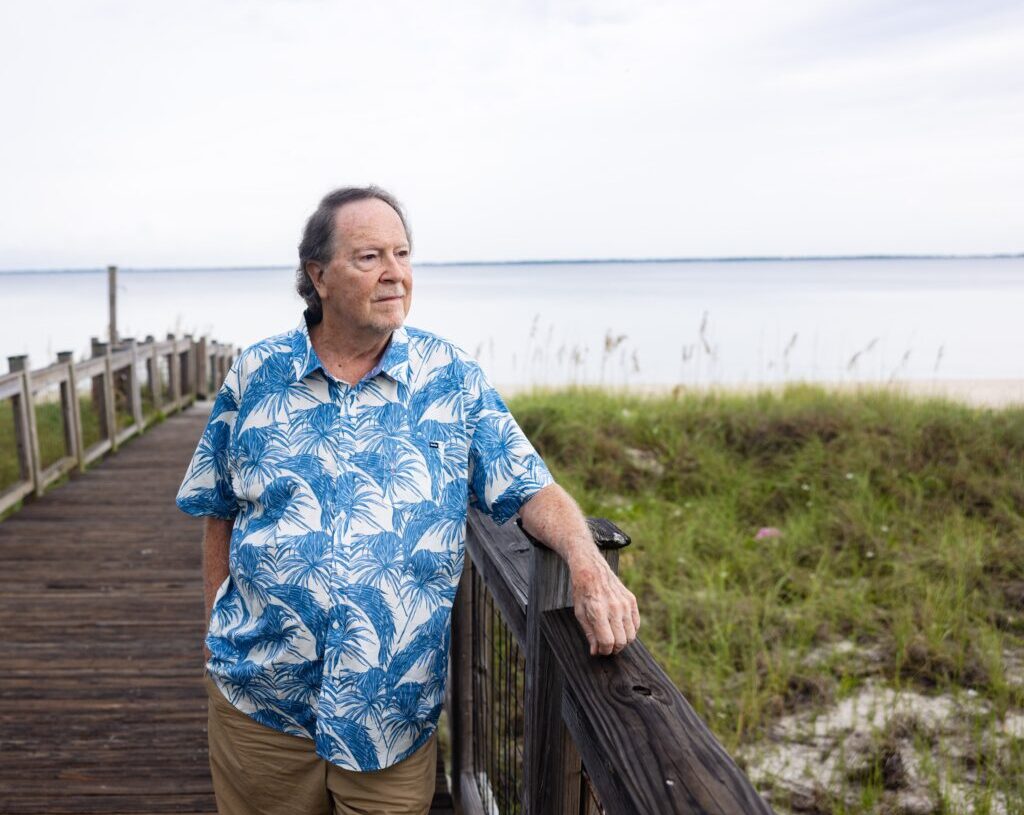
In the beforetimes, when Americans weren’t yet debating whether Starbucks holiday cups were Christmas-y enough or whether bakers should make cakes for same-sex weddings, a lanky Southerner named John Whitehead started something totally new: a Christian religious liberty law firm.
It was hard to raise money, Whitehead recalled, or get support for the firm — even from evangelical leaders — for Christians fighting in court for the right to home-school or a police officer wanting to wear a cross to work.
“They said ‘Christians don’t sue,’ or that ‘Christians shouldn’t get mixed up with the government,’” or they didn’t see the cause as a donor draw, Whitehead said in an interview. “I made appointments with these fancy ministers but no one seemed interested.”
Today the Christian legal movement Whitehead helped pioneer is worth hundreds of millions of dollars and has touched many aspects of American life. Its firms, many sprinkled with his former protégés, have been on a winning spree at the Supreme Court, overturning long-standing legal limits on religious expression by public officials, expanding religious exemptions and elevating the place of religious exercise to its highest point in modern times.
But Whitehead says the movement is not what he envisioned when he launched the Rutherford Institute in 1982.
The cause has become dangerously politicized and intertwined with right-wing politics, he says, wrongly staying quiet as Muslim rightsare under attack and as President Donald Trump allows immigration enforcement officers into houses of worship. While religious-liberties-focused law firms have successfully argued in federal courts to greatly expand what it means to freely exercise one’s faith, Whitehead says the movement has wrongly elevated the rights of conservative Christians over those of religious minorities.
He points to new laws in a handful of states mandating public schools to prominently hang the King James version of the Ten Commandments and threats last month by Texas officials against airports that offer foot-washing stations for Muslim travelers.
“We started out trying to protect the little people,” Whitehead said. Now leaders in the movement are “sitting in the White House with Trump. They’re now part of the nationalist movement. Religious liberty is a constitutional principle, not a political program.”
These days, Whitehead spends his time writing essays and appearing on podcasts from his small Florida town, calling out his former colleagues for appearing at the White House or framing religious liberty as affiliated with a specific political party. He has become “persona non grata” in the movement, one former colleague says, and that is all right with the iconoclastic Whitehead.
“This is not faith. This is blasphemy baptized in nationalism,” Whitehead and his wife, Nisha Whitehead, wrote in March of Trump and Defense Secretary Pete Hegseth’s use of religious language to promote the war in Iran. In October, after then-Homeland Security secretary Kristi L. Noem prayed in public at an ICE facility in Portland, he wrote that her actions were “not Jesus’ Christianity — it is Christianity draped in the flag and wielding the weapons of war.”
Others who have worked with the Christian legal movement are also sounding the alarm.
“It’s become a partisan issue,” said Douglas Laycock, a prominent religious freedom scholar who worked with the Christian legal movement on influential and triumphant Supreme Court cases, including one in 1993 involving a Santeria group’s right to use animal sacrifice in worship. “Religious liberty is for everyone. Making it partisan is not good.”
As a young man, Whitehead was hostile toward religion and the Vietnam War, protesting even while he was serving in the Army in Fort Hood, Texas. He graduated from the University of Arkansas School of Law, and grew his hair long. He was a self-described Marxist and hippie. Whitehead says his life changed forever in the 1970s when he came across the apocalyptic blockbuster “The Late Great Planet Earth.”
The book, by the evangelical writer Hal Lindsay, argued the apocalypse was coming by comparing prophesies in the Bible and current events. Whitehead was enthralled, became a Christian and for a time studied to be a pastor.
Eventually he returned to lawyering and embraced religious liberty cases. Newly zealous, he wrote a book arguing that America should be an explicitly Christian nation — a position embraced in recent years by Hegseth, House Speaker Mike Johnson (R-Louisiana) and other Trump allies.
By the late 1980s, evangelical activists like Focus on the Family founder James Dobson and Campus Crusade for Christ founder Bill Bright were starting to agree with Whitehead’s belief that Christians needed to work to influence the courts and the culture. Rutherford was growing its staff and opening offices across the country. The firm took on mostly small, pro bono cases, representing a Christian girl in Virginia who was told she couldn’t read a Bible on a public school bus and a Hindu who refused jury duty on religious grounds.
But Whitehead’s alliance with conservative Christian activists didn’t last. One breaking point was his decision in the late 1990s to represent Paula Jones, a former Arkansas state employee who said President Bill Clinton had sexually harassed her while he was Arkansas governor. Whitehead said the case was simply about showing even presidents aren’t above the law, but other conservative Christian legal groups saw it as salacious.
“He was going off on various things,” said Mat Staver, founder of Liberty Counsel, one of a slew of Christian religious liberty firms that cropped up after Rutherford. Staver also pointed to Whitehead’s founding of Gadfly, an offbeat culture magazine that “was like a totally different universe” for Christian conservatives. “He didn’t seem to have a clear voice, and it raised a lot of concern.”
The country was becoming more secular and socially liberal. Causes such as abortion, contraception, gay rights and women’s rights were increasingly challenging religious conservatives. Whitehead, who had argued in the 1980s that rights for LGBTQ people threatened Christians, was shifting too.
By the mid-1990s, he was criticizing an amendment to the Colorado state constitution that barred communities from passing laws to prohibit discrimination against gay and transgender people. To him, that case was just as much about constitutional rights as the case of the Virginia girl on the bus. Colorado voters approved the amendment.
He started moving away from Christian nationalism, which he says was the result of thinking differently about who Jesus really was. “We’re here to care for others,” he says now.
After the terrorist attacks of Sept. 11, 2001, some Christian firms — already more focused on conservative causes — began “outright hostile advocacy against non-Christians,” especially Muslims, said Daniel Bennett, a John Brown University political scientist. One sued an Islamic community center trying to open a couple of blocks from the site of the attacks.
The firms broke from left-leaning organizations such as Americans United and the American Civil Liberties Union, which argued that religious liberty needed to be balanced with other individual protections — especially civil rights protections.
The Christian religious liberty movement became “extreme,” said religious liberty scholar Marci Hamilton. She pointed to a legal tussle with advocates who wanted to broaden religious exemptions so landlords would not be required to rent to single mothers or unmarried couples under new fair housing laws.
Whitehead found himself somewhat in the middle, a place that maybe made sense for someone who counted among his best friends the evangelical theologian Francis Schaeffer and the left-wing singer Pete Seeger.
He praises recent Supreme Court decisions affirming the protection of religious exercise, including a 2025 ruling that suburban Maryland parents’ religious rights were violated when the school system refused to let them opt their children out of book readings that involved same-sex couples. And he criticizes some Democratic actions, including covid pandemic-era restrictions on houses of worship that were stricter than those on other public spaces.
He says he finds value in some proposals of the Trump administration’s religious liberty commission, including efforts to create more “Know Your Rights” materials in places like schools and hospitals.
However, he said, the Christian legal movement is part of “a lot of overstepping.” He pointed to the Ten Commandments laws and to a Kentucky clerk who refused to issue marriage licenses to same-sex couples and was represented in court by religious liberties law firms.
“If the government is acting as a Christian nationalist organization as opposed to one representing the Constitution and all Americans, there is a problem,” Whitehead said.
Staver argues that the Christian law firms have stayed true to their mission, which is promoting conservative values and the free expression of religion.
“We haven’t changed,” Staver said. “They have.”
Whitehead says that he now sees other issues — including the rights of immigrants and the growth of Flock cameras and other surveillance — as more urgent than the issue of religious liberty.
He has argued in support of foreign nationals who lost their visas and were deported by the Trump administration after protesting against Israel, as well as universities whose funding was suspended as part of the White House’s campaign against diversity, equity and inclusion initiatives, campus protests and antisemitism. One brief argued against the administration’s decision to allow immigration enforcement inside houses of worship.
Whitehead also advocates through music and art. A recent exhibit included watercolor pieces showing human bodies merged with machines and one of a crying Statue of Liberty with a hand cut off titled “Freedom Amputated.”
These days, when he looks at the movement he helped start, Whitehead sees hypocrisy — people who too often defend religious liberty only on their own side.
“Religious liberty is a constitutional principle, not a political program,” he said. “The moment religious freedom organizations begin aligning themselves with those in power, or framing their work in partisan or ideological terms, they risk weakening the very principle they are trying to defend.”
The post Why a lawyer who launched the Christian legal movement believes it’s gone astray appeared first on Washington Post.