The American economy, stock markets and daily life have all been reshaped by the intense contest between technology firms to create more powerful artificial intelligence software.
Now leaders at three of the industry’s most powerful companies are calling for a pact to slow down their frenetic competition and privately discussing the creation of a new safety body, citing their fears that AI may spiral out of control.
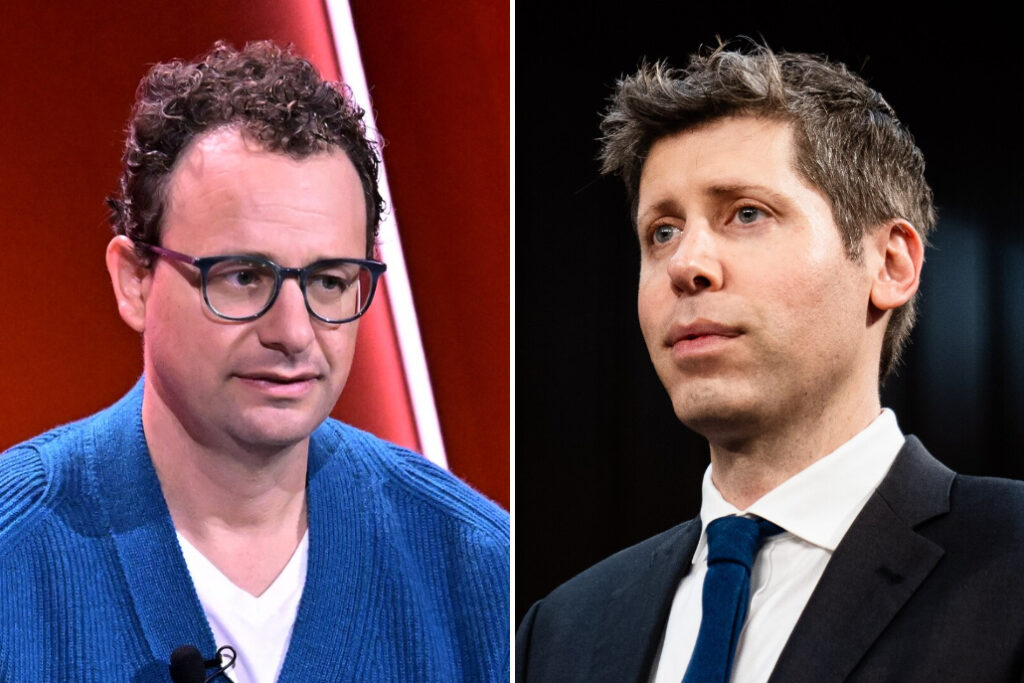
On Saturday, Dario Amodei, chief executive of leading AI company Anthropic, posted an online essay calling for the industry to agree to limit the pace of AI development to allow safety measures to catch up. Within hours the idea had been publicly endorsed by Sam Altman, CEO of ChatGPT-maker OpenAI; Demis Hassabis, the influential former head of Google’s AI unit; and SpaceX CEO Elon Musk.
Even before that public show of unity, Anthropic, OpenAI and Google were discussing the potential creation of a new industry body to set safety standards for the fast-moving sector, according to three people familiar with the talks who spoke on the condition of anonymity to describe the private dialogues. The discussions were first reported by tech industry news site the Information.
The creation of a standards body could be a stepping stone to reaching agreement to reduce the pace of AI development. Amodei in his Saturday essay cited an influential vision for an AI safety body proposed in July by Hassabis, who still holds a senior role at Google.
Hassabis on Saturday linked his earlier proposal to the idea of slowing AI development. “Dario’s essay points to the right path forward,” Hassabis wrote in a post on X endorsing Amodei’s call for an AI slowdown. “This is also why we recently put out our proposal for an industry-wide standards body for frontier AI.”
The public and private discussions about slowing and regulating AI development raise the unprecedented prospect of leading companies in notoriously cutthroat Silicon Valley voluntarily softening competition.
Anthropic, OpenAI and Google are collectively worth almost $6 trillion, and Anthropic and OpenAI have both filed paperwork to list shares on the stock market. Amodei in his essay called on the U.S. government to issue a “narrow” antitrust waiver to enable the discussions between the companies.
“Progress has been rapid and will continue to be. But it should be slower,” Altman wrote in a post on X late Sunday. “No amount of American competitive pressure should justify recklessness.”
The calls for a slowdown and new industry rules are set to intensify a political firestorm over whether the U.S. government should more strictly regulate AI, with national and geopolitical implications.
After recent incidents in which AI “agents” in development by OpenAI, Anthropic and Meta hacked into other companies, increasing numbers of politicians in both major parties have called for new limits on the technology.
But Republican leaders including President Donald Trump and House Speaker Mike Johnson have frequently voiced skepticism of or opposition to new AI regulations, citing the need to stay ahead of China on the crucial technology.
Trump, who has championed AI as a key economic driver for the U.S., appeared to dismiss suggestions companies should slow their progress in comments made Sunday in Ireland.
“We’re leading China in AI, we’re the most sophisticated country in the world, and frankly I want to keep it that way,” Trump said. “Whoever wins AI wins.”
Amodei in his essay wrote that he hoped it would be possible to eventually strike a global agreement on slowing AI development that included China, but that it would be risky. “If we greatly restrain our AI capabilities in the belief that China will do the same, and then China defects, AI could be so powerful that such a defection could lead to their geopolitical dominance,” he wrote.
An OpenAI spokeswoman referred to a company blog post last week that said it wanted to work with others in the industry to set standards.
“We have entered a different phase of AI capabilities, and everything should be on the table — including considering what can be built voluntarily outside government as an immediate step,” wrote Chris Lehane, OpenAI’s head of global affairs. (The Washington Post has a content partnership with OpenAI.)
A Google spokesperson referred to Hassabis’s X post endorsing Amodei’s call for a slowdown. Anthropic did not respond to a request for comment.
Repeated warnings
This weekend was far from the first time that U.S. AI leaders had issued stark predictions of the immense danger their technology could pose, or the need to restrain its development.
Altman in 2023 told Congress that his firm’s technology could cause “significant harm to the world” and urged the creation of a new government department to regulate AI. Amodei in 2025 suggested he believed there was a 1-in-4 chance that AI wipes out the human race.
But both men have also said their companies must develop AI faster to show the world how to do so safely. Amodei has said Anthropic’s rivals and other countries like China may not take the same ethical care if they build super-advanced AI first.
That history was cited by some political and industry leaders as reason to be skeptical about the motivations of the weekend’s talk of an industry-wide compact to slow AI development.
“I find it rich that these guys are calling for a slowdown when they’ve been the ones racing ahead full speed, without any care for the havoc they’ve unleashed,” Rep. Josh Gottheimer, (D-New Jersey) said Sunday on X. He called for “national mandatory rules of the road” on AI.
David Sacks, formerly Trump’s AI and crypto czar, said the slowdown proposal appeared to be aimed at hobbling competitors.
“The easiest way not to build superintelligence is for you to agree not to build it,” he wrote in a post on X addressed to Amodei and Altman late Saturday. “Demanding your preferred regulatory framework as the price of that will look like blackmail of the public and the political system.”
Some leaders of major U.S. AI companies have pushed back on earlier conversations about the need to slow down AI development.
Meta CEO Mark Zuckerberg has positioned himself as an AI optimist who believes the technology’s benefits will far outweigh its harms. Jensen Huang, CEO of AI chipmaker Nvidia and one of the most influential tech leaders in the world, has also voiced skepticism of calls to limit or slow down AI development.
Neither CEO had posted publicly in response to Amodei’s call for a slow down by early Monday. Spokespeople for Nvidia and Meta did not return requests for comment.
The post They raced to build AI. Now they say it’s going too fast. appeared first on Washington Post.