It’s 6:30 a.m. on a Saturday morning and I hear the pat-pat-pat of children’s feet on the hardwood floor above me, then, giggles, and I see two young boys at the top of the staircase. I hear an adult voice call out, “Brush your teeth before going downstairs!” There is a pause, then, “Yes, Mom,” with the “Mom” drawn out, making it clear the boys aren’t thrilled with the request.
Luca Cantua, the then-11-year-old perfectionist and an elder brother, heads to the kitchen and signals with sleepy eyes for a hug and kiss from his mother, Holly Cantua. After their morning embrace, the two perform their daily dance. Luca waltzes to the refrigerator, finding his favorite flavored yogurt drink. Holly walks to the sink, sweeping up a bottle of medication. The two then join, he squirting the yogurt into a bowl, she opening capsules and pouring in the dust of medication.
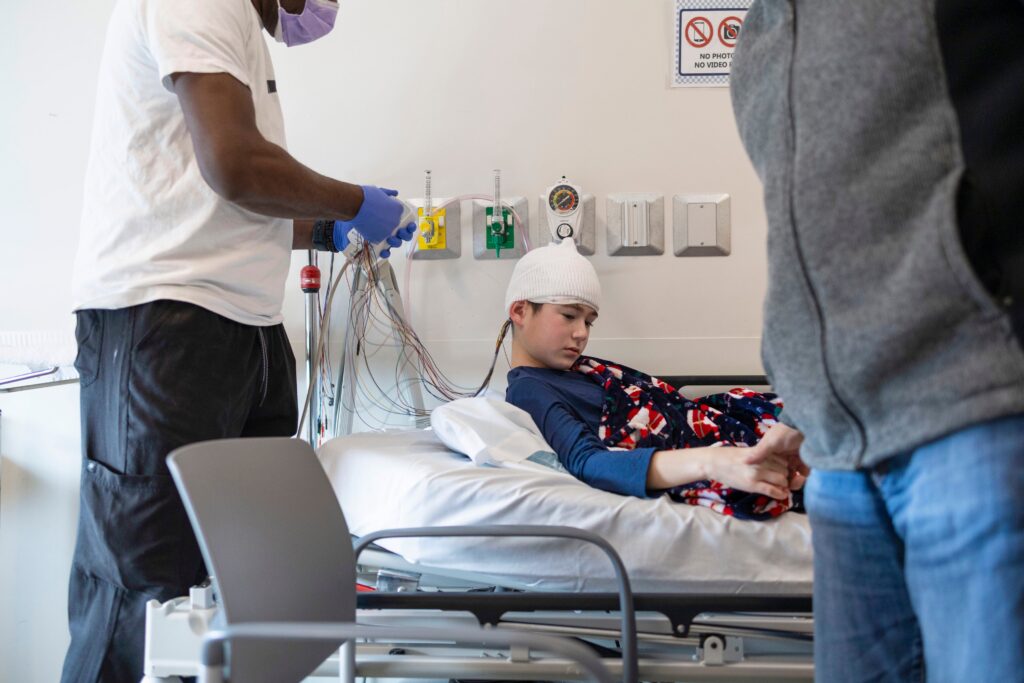
Two years ago, Luca was diagnosed with epilepsy, a neurological disorder that causes recurring seizures, which are bursts of abnormal electrical signals in the brain. Symptoms can include a staring spell, a brief loss of consciousness, confusion, muscle limpness or even uncontrollable jerking movements known as convulsions.
Luca’s seizures consist of staring spells, with flickering eyelids and a loss of consciousness. His seizures can be triggered by flashing lights, or a lack of sleep. He’s able to control his seizures with medication as long as he takes it at the same time each day, morning and night. Though he has been seizure-free for over one year, each member of his family is on edge, prepared for a seizure to occur at any time.
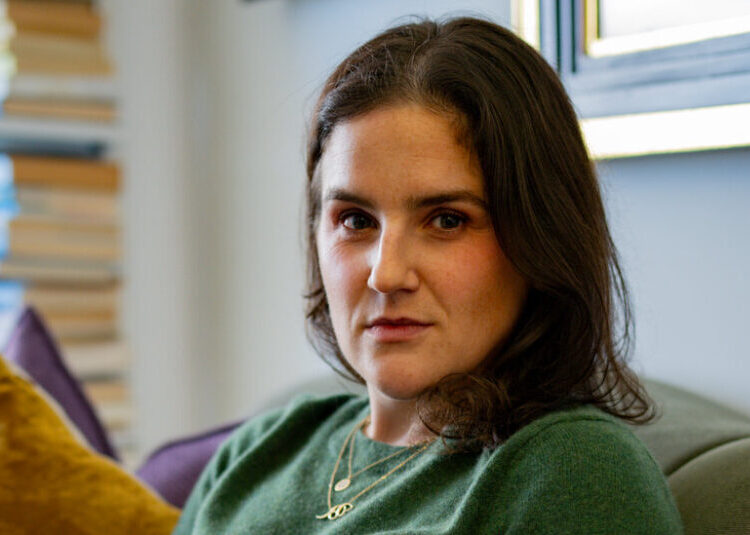
As a photojournalist, I’m here to document the lives of the Cantua family because I want to show what people with epilepsy experience behind closed doors. I have lived with the condition myself for almost 20 years, so I understand its challenges. Living in fear of a seizure is like waiting for a terrible phone call that could come at any time. You don’t know exactly when, so you’re constantly on high alert.
Even if Luca does not have a seizure, epilepsy is a major player in his life and his family’s life every single day.
Living with an invisible illness
After his morning dose of anti-seizure medication, Luca takes a shower with the door slightly ajar. His mom or dad will ask, “Everything okay?” a couple times until they hear the water shut off. I hear this phrase quite often during my time in the Cantua household. Whether Luca is staring out the window on a long car ride, taking a shower or watching television, he’ll be prompted with an “Everything okay?” to which he often responds, “Yes, why are you asking?” like any preteen boy would.
Luca describes a feeling of deep frustration with his parents’ concern because he wants to be treated “normally.” At the same time, he feels exasperated because the people outside his family cannot see how his condition complicates his life.
Luca looks healthy, so he must constantly explain, in detail, how the seizures cause sleepiness, confusion and temporary lapses in attention, among other symptoms. Some days, he’s completely drained of energy. He pushes through it and finishes the school day or does the extra lap on the soccer field, feeling both physically and emotionally exhausted.
Luca uses one word, lonely, to describe this complex situation of desperately wanting normalcy while attempting to come to terms with the fact that he needs to rely on the help of others. He says knowing more people with epilepsy — people who “know what it’s like” — is what he truly wants. While he’s done his own internet research and knows that a lot of people in the world have epilepsy, he had never encountered another person with the condition until he and I met.
Why seeing and talking openly about epilepsy matters
Luca’s experience is not uncommon. About 3.4 million people in the United States, or about 1 percent of the population, have epilepsy. Yet, as Kira Eyring, Epilepsy Foundation executive director for the D.C. region, explained, the shame surrounding being “different” causes many people with epilepsy to refrain from speaking about their condition. As a result, many people diagnosed with epilepsy have not met another person with the disorder, or if they have, they don’t know it.
“I believe there’s still a stigma attached to having epilepsy,” Eyring said. “I think that’s very isolating. I think just the fear of being judged can make someone feel very alone.”
This stigma could be part of the reason it receives significantly less funding from the National Institute of Health than other major brain disorders, such as Alzheimer’s disease — which affects about twice as many people in the United States as epilepsy does, but received almost 18 times the amount of funding in 2025.
Researchers have made significant progress in their understanding of the disorder: Up to 75 percent of people with epilepsy now are able to manage the condition effectively using available treatments, including anti-seizure medications and surgery. With more research, epilepsy specialists can work toward better treatments and, ideally, a cure.
When Luca speaks of his loneliness, he does not speak with finality. Instead, he talks about his experience as something temporary; he says he feels alone “right now.” When asked what he sees for his future, he says that he knows he will one day meet and become friends with another person with epilepsy.
When Luca grows up, he wants to be a neurologist who treats people with epilepsy. By that time, he hopes that there is a cure and that he can give it to his patients.
“I want to help make people with epilepsy better because I care about everyone with epilepsy,” says Luca. “Even if I don’t know them, they are my friends. It feels good to know that I have so many friends. Even though I haven’t met them yet.”
The post Epilepsy is an invisible illness. This is what daily life with it looks like. appeared first on Washington Post.