The Los Angeles City Council launched a new committee created to address the decline of film and television production on Wednesday, with permitting fees related to the city’s fire and police departments among the first topics tackled.
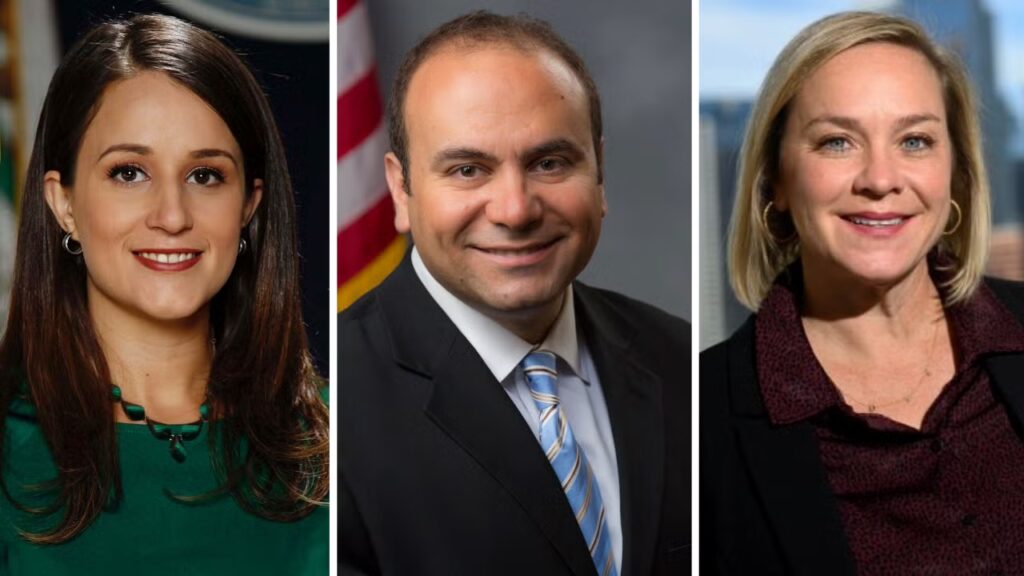
The committee consists of San Fernando Valley councilmembers Adrin Nazarian and Imelda Padilla alongside Westside councilmember Traci Park.
During the committee meeting Wednesday afternoon, the councilmembers heard from representatives from the LAFD, LAPD and the Board of Public Works and discussed ways to reduce fees related to on-location shooting. Such fees have become a major complaint among independent producers who lack the budget and resources to absorb the additional costs of shooting in Los Angeles, leading them to shoot in other cities and sometimes in other states.
Last year, indie producer Dustin Harris told TheWrap that he had to pay more than $10,000 for a three-day shoot in Griffith Park, including more than $4,500 for a cursory “spot check” inspection from a fire marshal despite using no pyrotechnics and only a small generator to provide power.
“He shows up, looks around, says ‘great,’ and then spends the rest of the shoot sitting in the car doing crossword puzzles,” Harris said. “As a resident, I understand the need for fire protection and to preserve our parks, especially now. But there’s got to be a better way to do this. I’m paying almost $1,500 a day for a guy to sit in his car for most of the time.”
Independent producers, crew members and organizers with the grassroots group Stay in LA have also told TheWrap that byzantine permitting rules and a lack of clarity on when permits will be cleared have also discouraged independent production, as it makes it difficult for producers to arrange shooting schedules with cast and crew without the security that shooting sites will be ready for them.
“This is a very short window we have to make it easy and predictable to film, and if we don’t act, we will lose more jobs and productions to other states,” said producer and Stay in LA organizer Noelle Stehman.
Nazarian told reporters that the City Council is coordinating with city departments to find ways to waive inspection fees for shoots that do not have significant safety risks. The city through its contracted permitting agency, FilmLA, also recently launched a pilot program for a low-impact permit that would allow productions that meet certain criteria to enter an expedited permitting process. The program’s requirements include cast and crew size as well as no use of shooting sites that involve public roads or are located in high-risk fire areas, among other criteria.
“We need to be honest with the people about what city hall can do and can’t do. We can’t control mergers. We can’t control changing technology, and we can’t control the tax credits that other states and countries offer. But what we can do, we can part the red sea of red tape, and we can move things quicker,” Nazarian said.
“We can cut permitting costs. We can deliver certainty and predictability, which is key to business decisions, so that productions know exactly what it takes to shoot in Los Angeles,” he continued.
“We need to ask a really simple question: What is City Hall doing that makes it harder to do business in LA? Permits, fees, delays, bureaucracy? If City Hall is part of the problem, then we need to be the ones to fix it,” Park added. Since last year’s wildfires, officials, unions and grassroots organizers have made a concerted push to reverse the trend of production flight from Los Angeles and California at large. Last year, California legislators passed a dramatic expansion of the state’s production incentive program, though its impacts may be curtailed by new changes to how the program works for major studio productions due to a new statewide cap on annual business tax credits.
Plans are also in motion for a bipartisan federal production tax incentive with a 20% base rate on eligible spending to be introduced in Congress later this month after President Trump gave his public support for the legislation. Southern California Reps. Laura Friedman and Linda Sanchez are expected to be the key House Democrats working on the bill alongside Republicans like Georgia Rep. Brian Jack and Texas Rep. Nathaniel Moran.
But while federal and state tax incentives are expected to primarily benefit major studio productions that have the resources to employ large crews, the permitting reform being done on the City Council is expected to be critical to reversing the ongoing decline in on-location LA shooting. Despite the passage of the expanded California tax credit, FilmLA reported a 12% year-over-year drop in shoot days for the second quarter of 2026, with the 4,711 days logged standing 36% below the five-year average.
The post LA City Council Launches Committee to Address Production Flight appeared first on TheWrap.