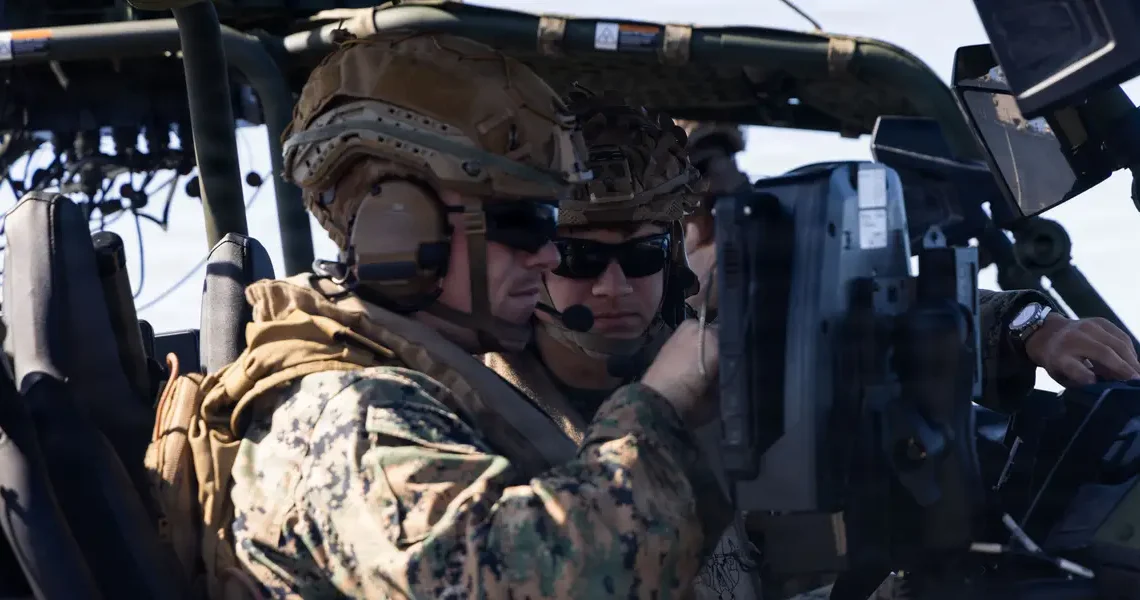
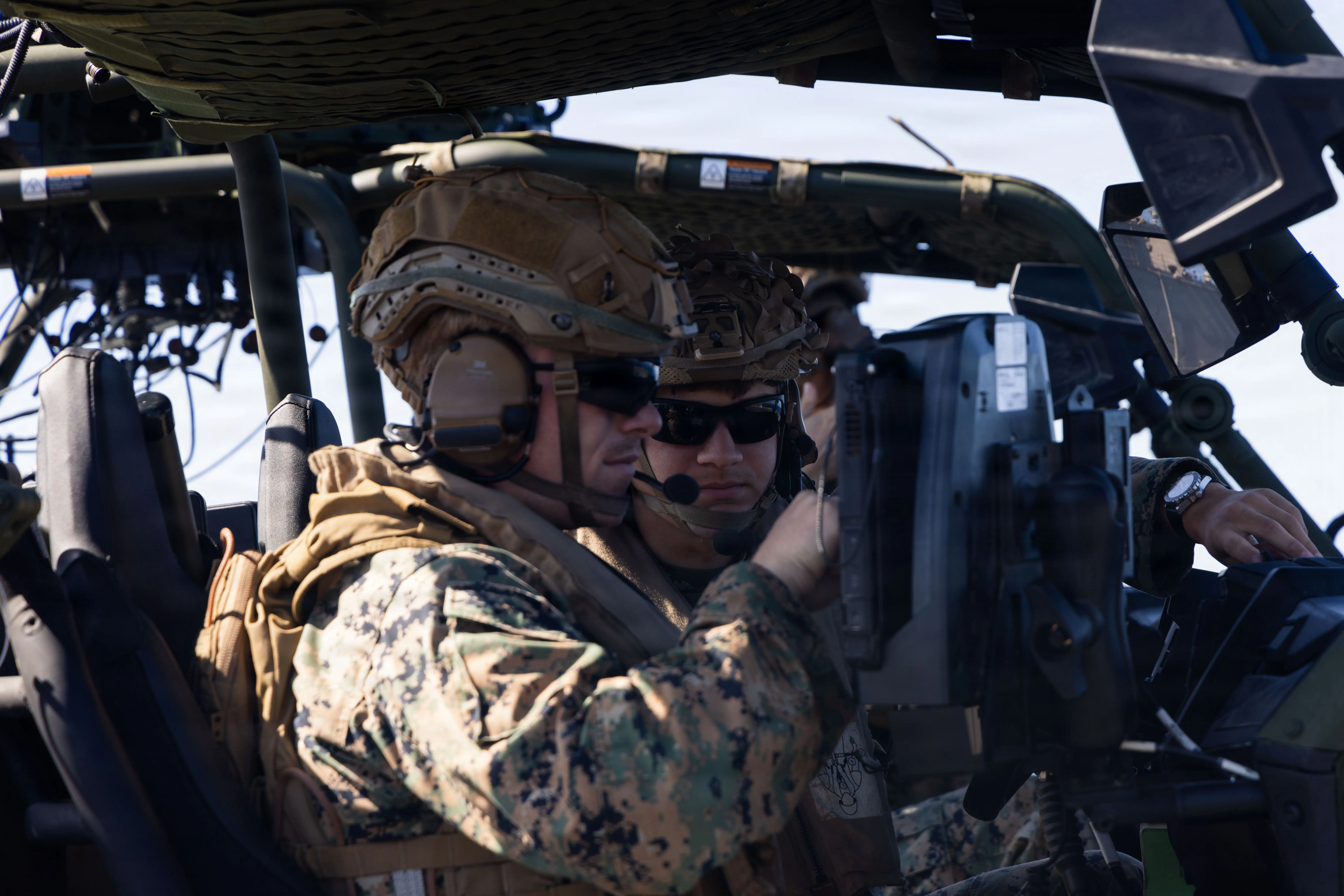
On a warm August morning, a team of Marines watched the sky, waiting for a hostile drone to buzz by. Their task was to stop it if it did.
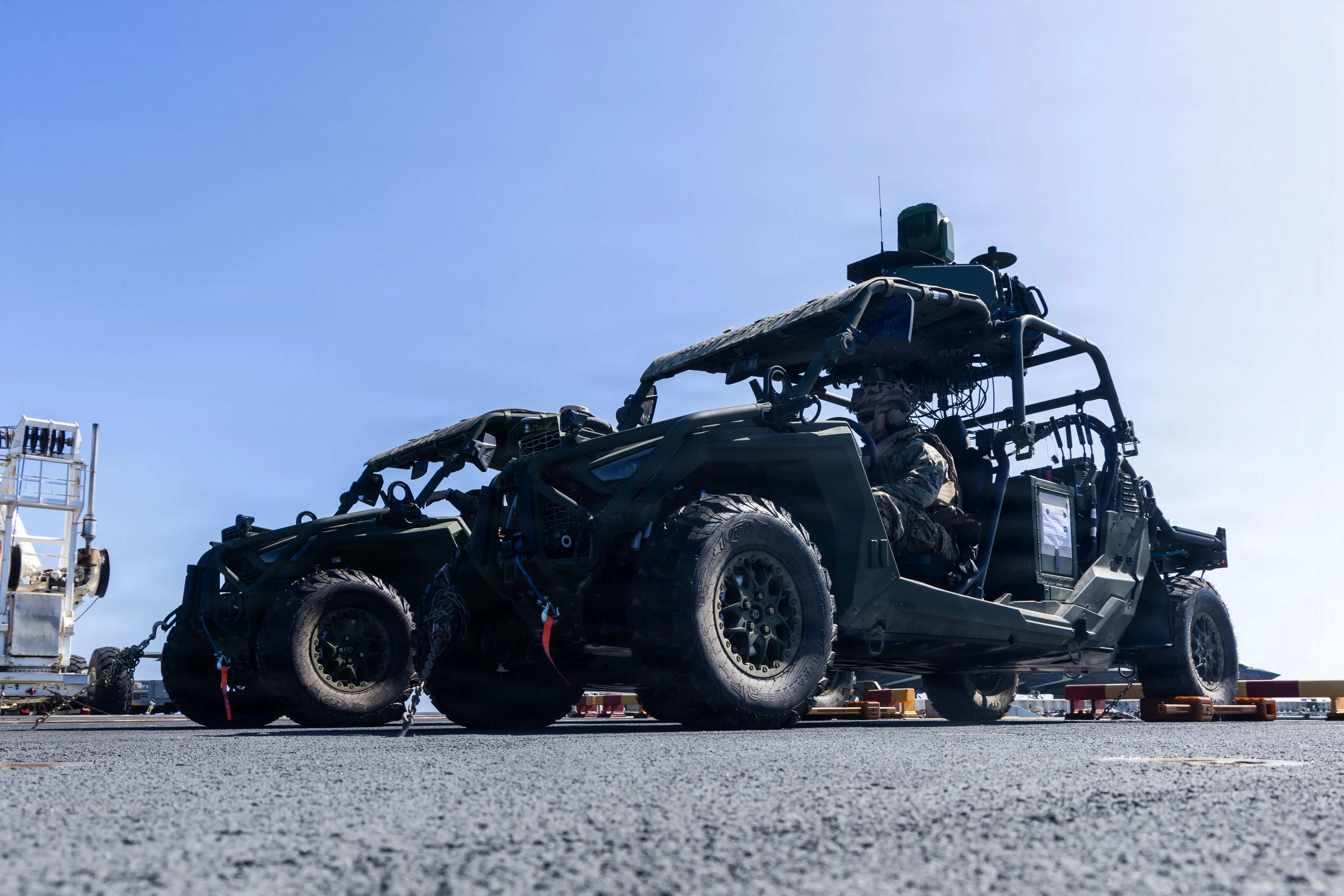
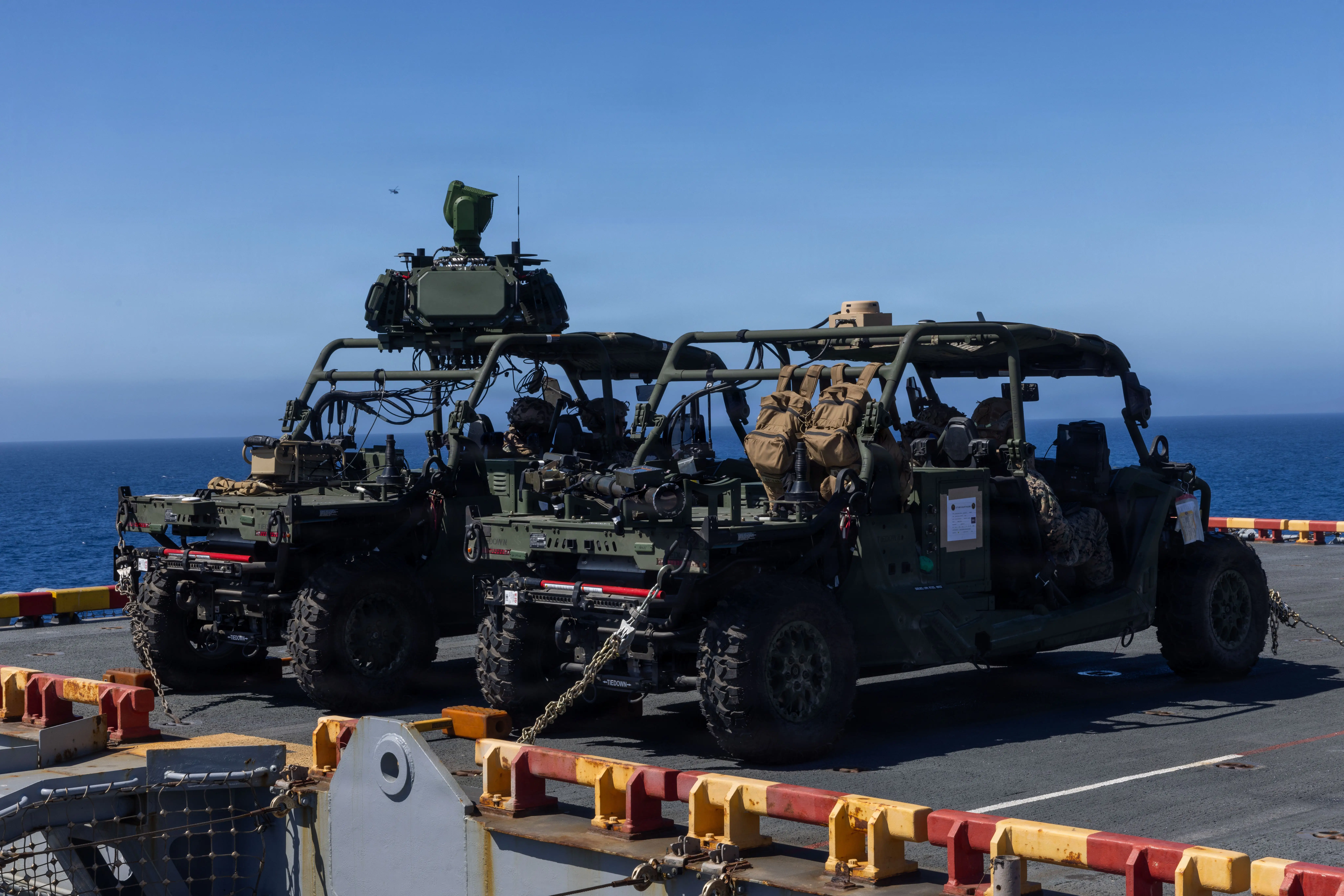
The team sat in a pair of small tactical vehicles resembling wartime golf carts, chained tightly to the deck of a Navy warship. The vehicles, together known as a Light Marine Air-Defense Integrated System, or L-MADIS, were packed with detectors and sensors for finding and tracking hostile drones.
None ever came.
The uneventful defense played out off the coast of California aboard the amphibious assault ship USS Makin Island as part of deployment preparation training with the 13th Marine Expeditionary Unit, a rapid-reaction force. Business Insider spent three days on the ship last month with Marines and sailors to learn about how their training is changing as drones emerge as a growing threat across land, air, and sea.
Had a one approached the Makin Island during the workup, L-MADIS operators said, one Marine would have jammed the drone, effectively cutting it off from its operator. Once the connection was severed, delivering a “near-kill” effect, the drone might have either crashed or hovered in place, depending on the type. The hovering drone becomes an easy target for a Marine equipped with a rifle and special anti-drone ammunition.
What exactly happens depends on how the drone is designed and programmed, the Marines said. After the onboard control link is disrupted, a drone might also return to its operator, creating new opportunities by exposing an enemy position.
The Corps is rushing counter-drone equipment to units after watching small, inexpensive drones reshape battlefields in Ukraine and the Middle East. Lt. Gen. Jay Bargeron, the Marine Corps’ deputy commandant for plans, policies, and operations, told reporters last week that giving squads, platoons, and companies a way to defend themselves from one-way attack drones is “maybe one of the biggest holes in our swing.”
That makes systems like L-MADIS increasingly important as the Marines look for ways to detect and defeat drones before they can threaten troops, vehicles, or ships. L-MADIS is one piece of the broader counter-drone effort, giving a small team of Marines a way to spot and disrupt a drone before it gets close enough to strike.
While the Corps has used this counter-drone system for several years, the Marines on the Makin Island received a new, upgraded L-MADIS package two months ago, replacing the older version with lighter, more mobile vehicles and updated sensors and jamming equipment, said 1st Lt. Adelaide Ortiz, a low-altitude air defense officer overseeing Marines assigned to the system.
One vehicle acts as a command-and-control hub, using radar, optics — including a large, irregular orb mounted on top of the vehicle — and a radio-frequency sensor to build a picture of nearby small drones. The other vehicle carries electronic warfare equipment intended to interfere with the radio link between a drone and its operator.
The SkyView sensor can listen for drone signals without transmitting, allowing Marines to search for threats without revealing their own position to the enemy, an increasingly important concern for the US military given the risks of electronic emissions. In Ukraine, both sides have used these to find and target opposing forces.
“All these systems on this vehicle aid the operator in finding drones before they get too close to you to kill you,” said Cpl. Julian Moore, one of the L-MADIS operators.
Once L-MADIS senses a drone, it checks a military database of drones known to fly in the region, Ortiz said. If it identifies a match, it creates a track showing key details like type, direction, distance, and operating frequency.
The air defense Marines operating the system can tune their jammer to that frequency and turn it on, flipping the “buzzer on” switch and broadcasting interference to disrupt the drone’s connection. This form of electronic warfare involves flooding a radio frequency with noise, hindering operations, a common tactic for combating first-person-view drones in Ukraine.
With L-MADIS, Marine air defense gunners operate the camera, jammer, and weapons, while systems technicians keep the equipment connected and secure and feed its picture to commanders aboard ship. The Marines can use other weapons, including Stinger missiles, against larger drones, helicopters, and small aircraft; however, the main focus for those on the Makin Island was breaking the connection between enemy drones and their remote operators.
Moore said L-MADIS is surprisingly intuitive despite its complex-sounding tools, but he cautioned that the equipment is only part of the answer.
“You’re only as lethal as the operators that you have sitting in it,” he said, adding that while pricey tech systems may appear to easily solve battlefield challenges, they’re only useful when employed by the right people. “If you take someone and put them in the driver’s seat who has no idea what they’re doing, you’re going to be dead.”
“The better and the more training we get, and the more expertise we get in the seats operating the vehicle is what’s going to lead to us being pretty badass with this thing,” he said.
Read the original article on Business Insider
The post US Marines are training to jam enemy drones before they can reach US amphibious assault ships appeared first on Business Insider.