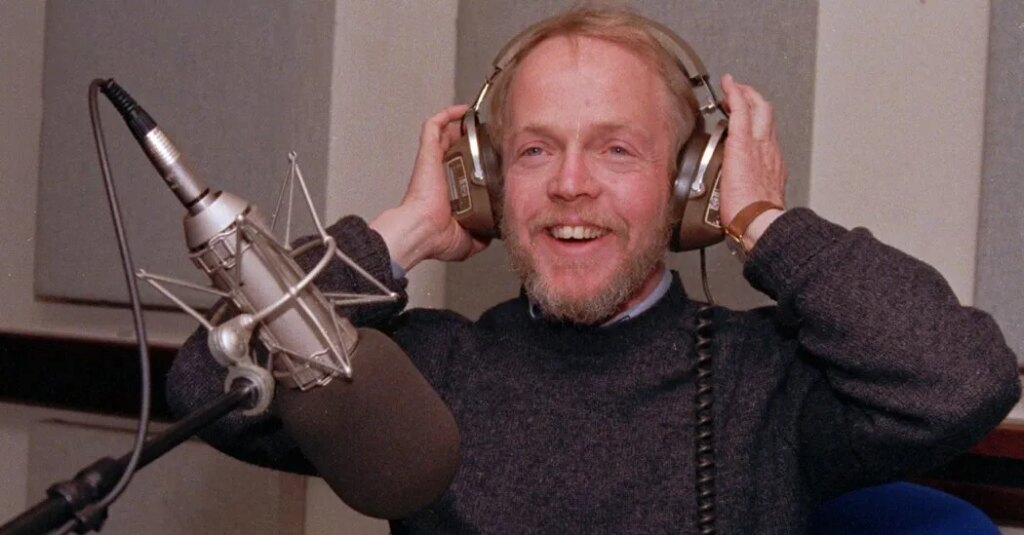
Noah Adams, a longtime host of NPR’s “All Things Considered” whose quiet baritone and empathetic ear brought listeners stories of back-roads America not often heard on the national airwaves, died on Oct. 16 at his home in Yellow Springs, Ohio. He was 84.
The cause was complications of a benign brain tumor removed eight years ago, his wife, Neenah Ellis, said.
Mr. Adams was a postman’s son from Kentucky who never finished college, and he worked hard to lose the Appalachian accent that he knew conjured up negative stereotypes about his native region.
But he never lost his respect for rural and working-class Americans, and he delighted in leaving Washington, where NPR is based, to travel around the country interviewing miners, farmers, single mothers and factory workers.
In the morning meetings, where the day’s events and newsmakers were discussed, Ms. Ellis, who worked in production at NPR, recalled, “He was looking for who was yearning, who was in pain, who needed help out in the country.”
Mr. Adams abhorred interviewing officials with pat talking points, though that was often part of his job as host of the weeknight edition of “All Things Considered,” NPR’s flagship news and interview show, a position he held for 18 years. He preferred to seek out regular people whose lives were affected by national events.
“The best stories come from west of the Potomac,” he once said.
His respect for his sources came through in interviews of those unaccustomed to a microphone.
“He was wonderfully warm and conversational with people,” said Melissa Block, another host of “All Things Considered,” who worked as a producer for Mr. Adams early in her career. “I don’t know that anyone talking with him would think, ‘Oh, the interview is about to start.’ It would just be a conversation.”
From 1982 to 1987, Mr. Adams’s co-host on “All Things Considered” was Susan Stamberg, an emotive, brainy New Yorker. It was a matchup that showed how opposites attract.
“He is the most genuine, uncontrived voice in broadcasting,” Ms. Stamberg wrote in the introduction to a 1992 book that Mr. Adams wrote about a year of his work for NPR.
After a short hiatus, he returned to host “All Things Considered” with Robert Siegel and Linda Wertheimer from 1989 until 2002.
“He was a very private and shy person,” Mr. Siegel said in an interview.
After Mr. Adams wrote a book about learning to play the piano at 51, “Piano Lessons” (1997), Mr. Siegel recalled Mr. Adams’s distress at realizing that he would have to perform on his book tour: “I watched him at a Borders, and he was terrified. But he loved what he did. He pulled it off very beautifully.”
During his time away from NPR, from 1987 to 1989, Mr. Adams was recruited to host a replacement show for the much-loved “A Prairie Home Companion,” whose creator, Garrison Keillor, had left. The replacement, “Good Evening,” was another folksy variety show broadcast live from a theater in St. Paul, Minn. It was enlivened by Mr. Adams’s essays about the community on the St. Croix River where he had settled, but it struggled to replicate Mr. Keillor’s audience.
The show lasted less than a year, and Mr. Adams announced his departure shortly before it ended. “I never felt people were saying, ‘Gee, that’s not Garrison Keillor,’” he later said somewhat defensively.
Noah Donald Adams was born on Sept. 15, 1942, in Ashland, Ky., the elder of fraternal twin boys. His father, Roy Adams, and his mother, Edith (Wellman) Adams, a secretary, divorced soon after, and Noah and his brother, James, were raised by their mother and maternal grandparents.
Noah graduated from Ashland High School (now Paul G. Blazer High School) and attended Eastern Kentucky State College (now Eastern Kentucky University) for 18 months before being asked to leave because he was living in unauthorized off-campus housing and writing term papers for football players.
He knocked around doing various jobs, — including construction and car sales, before joining the University of Kentucky’s public radio station, WBKY (now WUKY), in Lexington. There, he hosted a progressive rock show and worked the control board for other shows.
After writing a letter to NPR, he was hired in 1975 as a production assistant on “All Things Considered,” which had been introduced four years earlier. In 1978, he became a weekend co-host for the show.
A 90-minute documentary that he co-wrote about the mass suicide at Jonestown in Guyana in 1978, “Father Cares: The Last of Jonestown” (1981), received wide notice for its innovative format and subject. It was based on 900 hours of recordings that the cult leader Jim Jones and his followers had made before their deaths. Mr. Jones’s voice was so chilling, The Minneapolis Star Tribune noted, that “a listener might cling to the rational tone of narrator Noah Adams as to the hand of a friend.”
Though he preferred feature reporting, Mr. Adams did not shy away from hard news at home or abroad. He won an award from the Overseas Press Club of America in 1994 for work he did in Serbia on the roots of the country’s national extremism.
On Sept. 11, 2001, he was on the air from the morning until after dark, updating millions of listeners about the terrorist attacks. He called it the most important day of his career, when he could “feel the audience” intent on understanding the shocking events, Ms. Ellis said.
The following year, Mr. Adams took a leave of absence to research a book about the Wright brothers, one of five nonfiction books he wrote. When he returned, it was as a contributing correspondent on NPR’s national desk. He roamed widely but regularly returned to stories in Appalachia.
Ms. Ellis, who married Mr. Adams in 1987, recalled visiting Appalachia for the first time with him. They were on assignment — she was his producer — and he instructed her and an engineer on how to approach strangers wary of outsiders. You don’t knock on their doors, he told them: “You drive up, get out of the car and stand there until they come out.”
Mr. Adams’s first two marriages ended in divorce. In addition to Ms. Ellis, he is survived by his brother.
Among the thousands of stories that Mr. Adams reported, the one that got the most enthusiastic response was when he visited a New York recording studio and sang a wobbly version of the Eagles song “Take It to the Limit.”
He played the tape on the air for Ms. Stamberg, who squealed, “It’s adorable!”
One of the hundreds of listeners who wrote in said, “I was getting ready to drop out of law school and we were thinking about getting a divorce, but if you have the courage to stand in that studio and play it for Susan on the radio, then I know we can do anything we really set our minds to.”
The post Noah Adams, Longtime Host of ‘All Things Considered,’ Has Died at 84 appeared first on New York Times.